Electricity typically accounts for 20–30% of total operating costs in a plastic injection molding factory. For a facility running 20 machines across three shifts, even a 10% reduction in energy per machine saves tens of thousands of dollars annually. The energy saving injection molding machine achieves this through servo hydraulic systems that draw power only when the machine is actively moving — unlike conventional fixed-pump hydraulic machines that run at full power continuously.
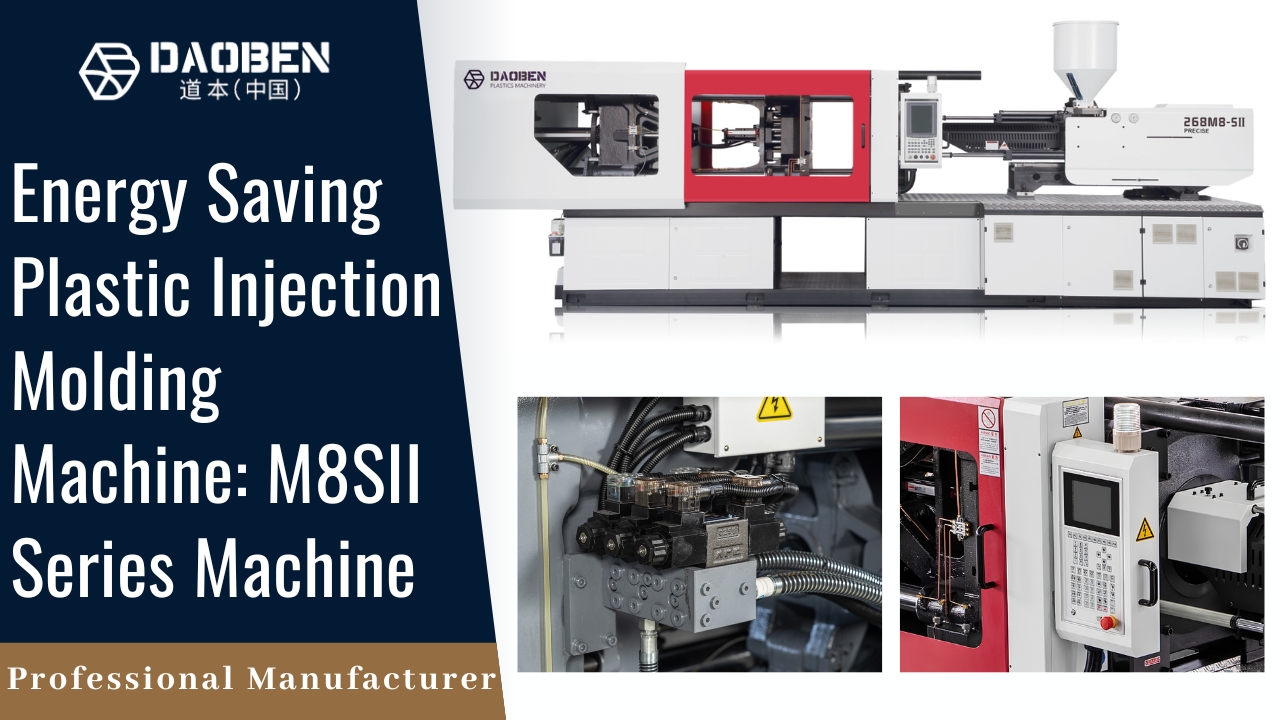
Daoben’s M8SII series is the second generation of their high-efficiency servo hydraulic platform. It covers clamping forces from 900 kN to 17,000 kN — one of the widest ranges available in the energy-saving category. The series also features a reinforced clamping structure, up to four injection unit sizes per tonnage, and key electrical components from Schneider, ABB, and OMRON.
This article covers how the M8SII achieves its energy savings, what structural improvements separate the second generation from standard designs, and which factory conditions make this machine the best investment.
Quick Answer: An energy saving injection molding machine uses a sync servo motor with digital closed-loop control instead of a constant-speed pump. The Daoben M8SII draws power only during active machine movements and drops to near-zero draw during cooling and idle phases. It covers 900 kN to 17,000 kN clamping force with up to four injection unit sizes per model, while meeting GB2530 safety standards.
How an Energy Saving Injection Molding Machine Reduces Power Consumption
An energy saving injection molding machine replaces the conventional fixed-displacement hydraulic pump with a servo-driven variable pump. In a conventional machine, the hydraulic pump motor runs at constant speed throughout the entire cycle — including cooling time, when no hydraulic work is being performed. The pump just recirculates oil through a relief valve, converting electrical energy into waste heat.
The M8SII uses a synchronous servo motor matched with a dedicated servo driver under full digital closed-loop control. The motor speed and torque adjust in real time to match the exact flow and pressure that each cycle phase demands. During mold close, the motor ramps up. During cooling, it slows to a crawl or stops entirely.
This is the same operating principle behind the ISO 20430 standard for energy classification of injection molding machines, as referenced by EUROMAP. Machines with servo-driven pumps consistently achieve the highest energy efficiency ratings in standardized tests because idle-phase power consumption approaches zero.
For the M8SII specifically, the increased motor power design also speeds up mold-open, ejection, and mold-close movements. So the machine does not just use less energy — it runs faster at the same time.
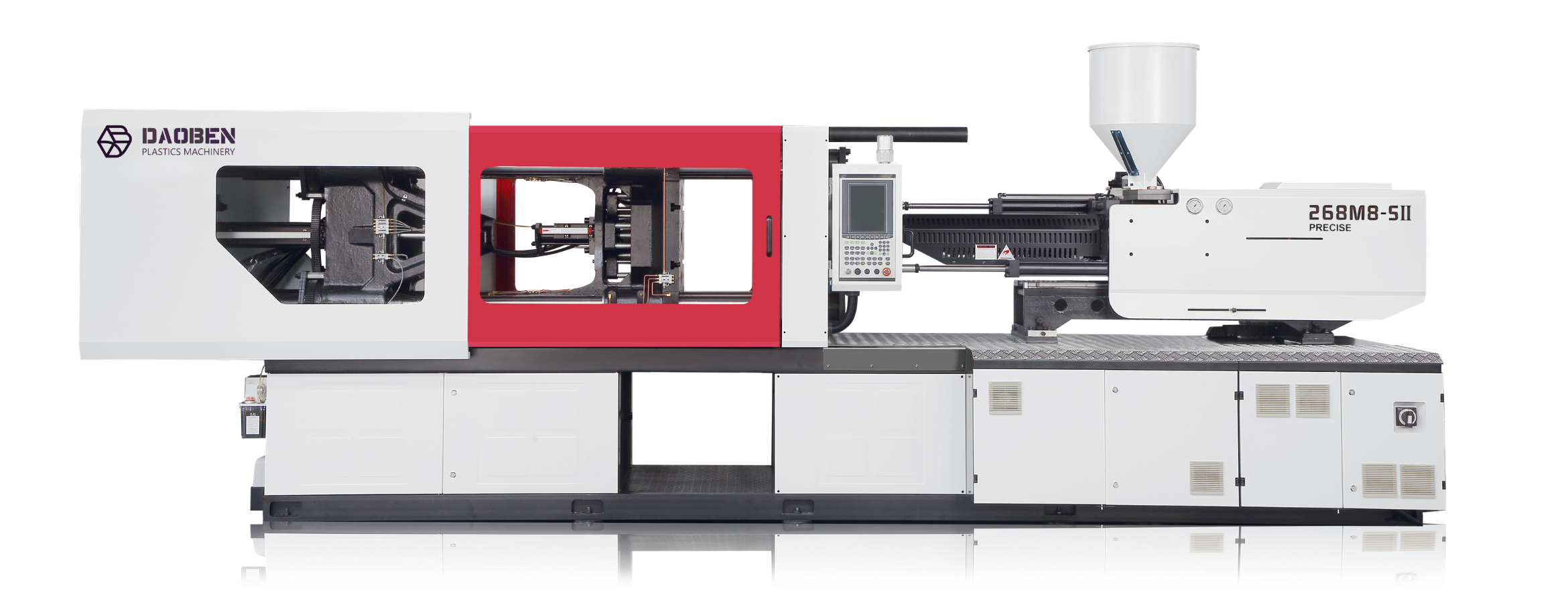
M8SII Structural Improvements: What Changed in the Second Generation
The M8SII is not a firmware update. It is a full mechanical and structural redesign based on real-world production feedback and finite element analysis (FEA). Here are the main upgrades.
Finite Element Optimized Toggle Clamping
The clamping unit uses a middle-part reinforced design on both the clamping structure and the tie bars. FEA simulation identified stress concentration points in the first-generation design, and the M8SII addresses each one. The result is a smoother, faster toggle movement with less platen deflection under full clamping load.
Reinforced Injection Components
The injection piston rod, injection driving platen, and coupler are all strengthened. In high-cycle production, these components experience enormous repetitive stress. The M8SII’s reinforced design significantly reduces the risk of piston rod fracture — a failure mode that causes unplanned downtime and costly repairs.
Up to Four Injection Unit Sizes Per Model
Most manufacturers offer one or two injection unit sizes per machine tonnage. The M8SII offers up to four — A, B, C, and D sizes — on the same machine frame. This allows a manufacturer to configure exact shot volume for each application. One M8SII frame can serve multiple product families and resin types without changing the base machine.
M8SII Energy Saving Injection Molding Machine: Full Specification Range
The M8SII covers an exceptionally wide clamping force range. Below is a snapshot of key specifications.
| Feature | M8SII-90 | M8SII-538 | M8SII-1700 |
| Clamping Force | 900 kN | 5380 kN | 17,000 kN |
| Injection Units | Up to 4 sizes | Up to 4 sizes | Up to 4 sizes |
| Drive System | Sync servo | Sync servo | Sync servo |
| Control Loop | Digital closed | Digital closed | Digital closed |
| Safety Standard | GB2530 | GB2530 | GB2530 |
| Key Components | Schneider/ABB/OMRON | Schneider/ABB/OMRON | Schneider/ABB/OMRON |
Standard delivery for models up to 538 tons is within 15 days. Larger tonnage machines require 15 days to 2 months depending on configuration. All models carry a 24-month whole machine warranty.
Who Should Buy an Energy Saving Injection Molding Machine
The M8SII fits any factory where electricity cost, cycle time, or both are key production metrics. But some operations benefit more than others.
Factories running long cooling times gain the most from servo energy savings. A thick-wall part with a 30-second cooling phase means the conventional pump runs at full power for 30 seconds doing nothing. The M8SII motor drops to near-zero draw during that same period.
Operations with a wide product mix benefit from the four injection unit sizes. Rather than buying separate machines for small-shot precision parts and larger-shot structural parts, one M8SII handles both by swapping the injection unit configuration.
Facilities exporting to regions with strict energy efficiency regulations — including the EU’s energy audit requirements under ISO 50001 — can use the M8SII’s documented energy performance as compliance evidence.
For applications that require even higher precision at lower tonnages, the EV Hybrid series provides servo-electric injection response. For large parts above 1,000 tons where floor space is a concern, the DU series two-platen machine offers a significantly shorter overall machine length.
Frequently Asked Questions
How much energy does the M8SII save compared to a standard hydraulic machine?
The M8SII energy saving injection molding machine typically reduces power consumption by 30–60% compared to a conventional fixed-pump hydraulic machine of the same clamping tonnage. The exact savings depend on cycle time, cooling duration, and resin type. Parts with long cooling phases see the largest percentage savings.
What safety standards does the M8SII meet?
Every M8SII model meets the Chinese national GB2530 safety standard as base equipment. Safety relay, safety hydraulic valve, metal cover protection, thermal master switch protection, and five-hole plug protection are all included. These features are standard on every unit, not optional add-ons.
What clamping force range does the M8SII cover?
The M8SII energy saving injection molding machine covers 900 kN (90 tons) to 17,000 kN (1,700 tons). This range handles applications from small connector molds to large automotive bumper tools. Up to four injection unit sizes per tonnage allow precise shot volume matching across this full range.
Which electrical components does the M8SII use?
The M8SII uses key electrical components from Schneider, ABB, and OMRON. These internationally recognized brands supply the control relays, motor protection, and safety elements throughout the machine. The controller features a high-performance platform with a large-format color LCD display for easy setup and process monitoring.
What is the delivery time for the M8SII?
Standard M8SII models up to 538 tons ship within 15 days. Models above 538 tons require 15 days to 2 months depending on the specific configuration and injection unit selection. Every M8SII carries a 24-month warranty on the whole machine, with screw and barrel covered for 6 months.
Lower Energy Bills Start With the Right Machine
Energy costs are not going down. Electricity prices have risen across most manufacturing regions over the past five years, and regulatory pressure on industrial energy use is increasing. An energy saving injection molding machine is not just a nice-to-have feature — it is a competitive necessity for any factory that wants to protect its per-part margins.
The Daoben M8SII delivers documented energy savings through servo hydraulic technology, while also providing faster cycles, a stronger clamping structure, and more injection flexibility than its predecessor. From 90-ton connector molds to 1,700-ton automotive tools, the M8SII covers the range.
Review the full M8SII series specifications and brochure, or contact Daoben directly to request a quote for your specific tonnage and application.