A new 100 ton injection moulding machine price starts near $15,000 for a Chinese servo-hydraulic model. At the top end, a European or Japanese all-electric machine can pass $150,000. Both machines clamp with the same 100 tons of force. Yet one can cost ten times more than the other.
The answer sits in the drive system, the brand, the options, and the costs that arrive after delivery. Freight, import duty, moulds, and power bills can shift the real cost by thousands of dollars.
This matters for buyers in the USA, the UK, Türkiye, Malaysia, Saudi Arabia, the UAE, Qatar, Yemen, South Africa, and Morocco. Each market also adds its own power supply, certification, and duty rules.
Below, you will find the 2026 ranges for each machine type. You will also see the factors that move a 100 ton injection moulding machine price, the hidden costs most buyers miss, and a simple way to compare total cost of ownership.
Quick Answer: A new 100 ton injection moulding machine price is about $15,000–$28,000 FOB China for a servo-hydraulic model, $28,000–$45,000 for a Chinese hybrid, and $90,000–$170,000 for a European or Japanese all-electric machine. Used units sell for roughly $10,000–$50,000. Freight, duties, moulds, and auxiliaries usually add 20–40%.
What Is the 100 Ton Injection Moulding Machine Price in 2026?
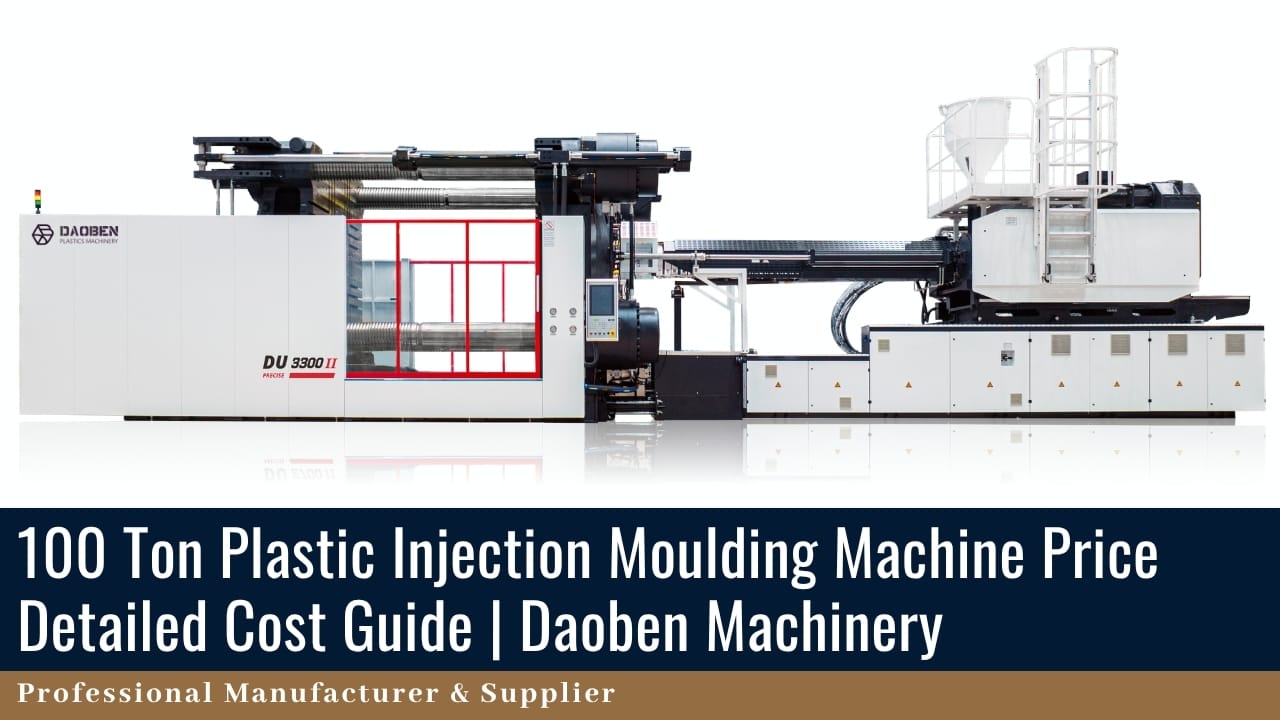
The 100 ton injection moulding machine price in 2026 ranges from about $15,000 to $170,000 for new equipment. Chinese servo-hydraulic machines sit at the low end. Hybrid machines fill the middle, while premium all-electric machines from Europe and Japan sit at the top. Used machines cover a wide band below all of them.
The table below shows how the 100 ton injection moulding machine price changes by machine type. Prices are typical market ranges for a base machine, FOB or ex-works, before freight and tax. Your final quote will still shift with screw size, options, and order volume.
| Machine type (about 100 t) | Typical new price (USD) | Energy use vs. fixed-pump hydraulic | Best fit |
|---|---|---|---|
| Standard hydraulic (fixed pump), China | $12,000–$18,000 | Baseline | Simple parts, short shifts |
| Servo-hydraulic, China | $15,000–$28,000 | 30–60% lower | General-purpose production |
| Hybrid (electric injection, hydraulic clamp), China | $28,000–$45,000 | 40–60% lower | Thin-wall and precision parts |
| Hydraulic or hybrid, European brand | $70,000–$130,000 | 30–60% lower | Tight tolerances, local service |
| All-electric, Japan or Europe | $90,000–$170,000 | 50–75% lower | Medical, cleanroom, electronics |
| Used 100 t machine (5–12 years old) | $10,000–$50,000 | Depends on drive | Start-ups, backup capacity |
Chinese Servo-Hydraulic Machines
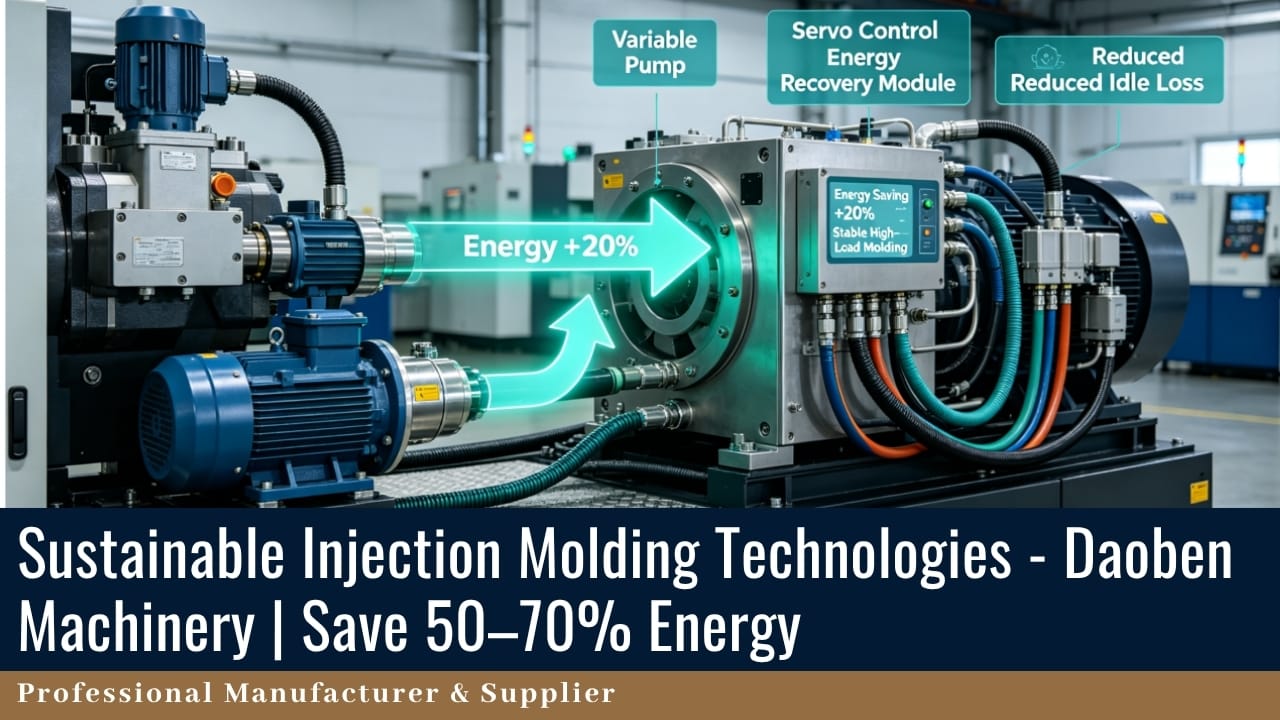
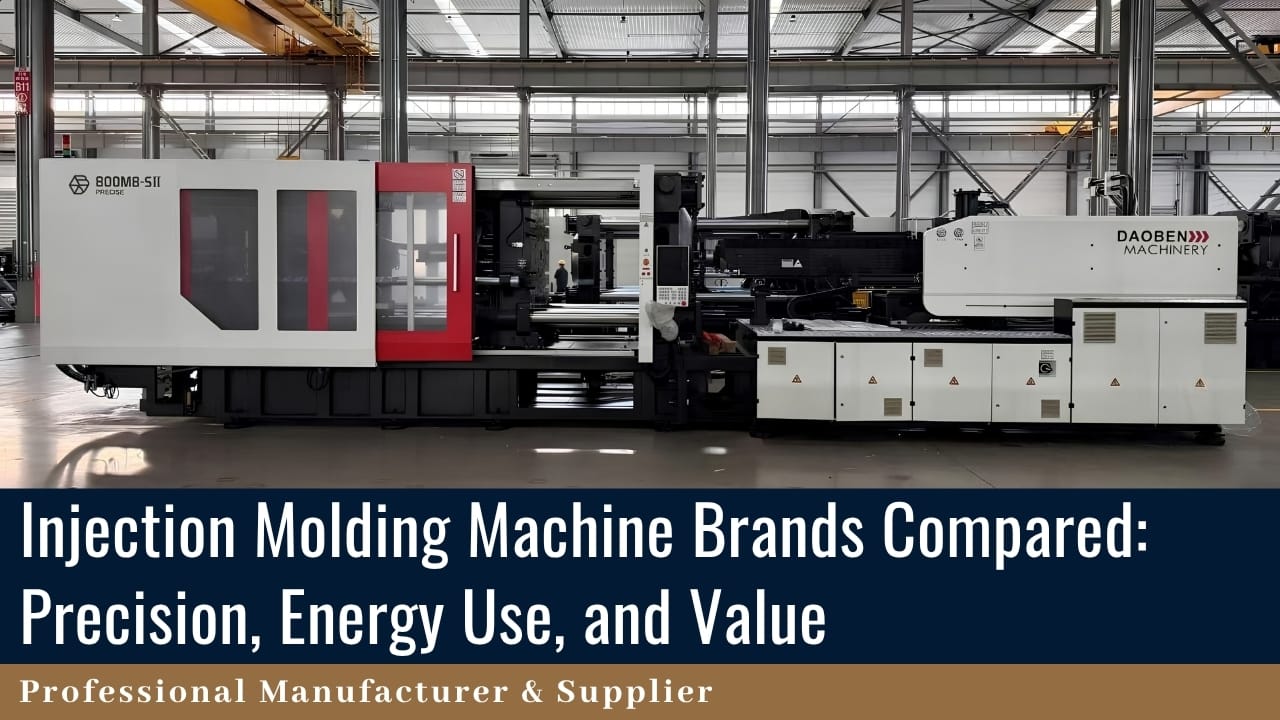
Most first-time buyers start here. Chinese export listings for 100–110 ton energy-saving machines commonly show FOB prices between about $13,000 and $20,000. Well-equipped models with branded parts, larger injection units, or better controllers reach $25,000 or more. For example, the Daoben M8SII series pairs a sync servo motor with digital closed-loop control and starts at 90 tons.
Hybrid and All-Electric Machines
Hybrid machines use an electric servo for injection and hydraulics for clamping. As a result, they inject faster and repeat each shot more precisely. The Daoben EV Hybrid series, for instance, covers 90–268 tons and reaches injection speeds of 440 mm/s. All-electric machines go further, with a servo motor on every axis. However, they cost three to six times more than a Chinese servo-hydraulic machine of the same size.
Used 100 Ton Machines
Buying used cuts the 100 ton injection moulding machine price sharply, but the market is wide. In 2026, a German dealer listed a 2015 FANUC Roboshot S100iA with about 49,000 operating hours at €46,500 ex-works. Meanwhile, older hydraulic machines from smaller brands sell for $10,000 or less. Still, used machines carry hidden risks, such as worn screws, tired hydraulics, and controllers that no longer get support.
What Factors Change an Injection Molding Machine Price?
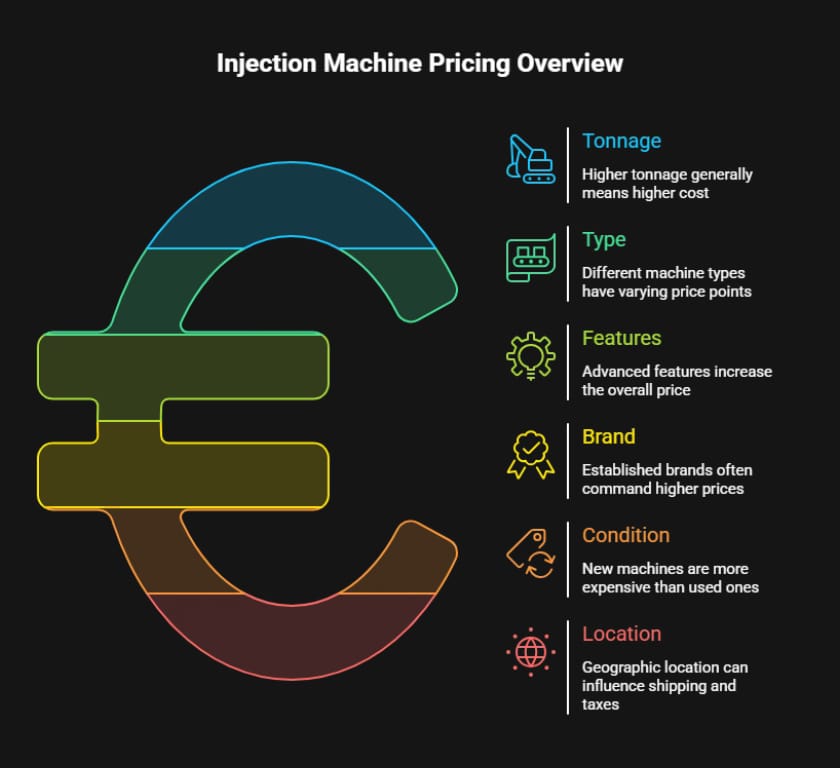
Five factors drive most of the injection molding machine price: the drive system, the injection unit, the brand, the options list, and the destination market. Two quotes for “100 tons” can differ by $10,000 or more because of these choices. Therefore, always compare full specifications, not just tonnage.
Drive System
The drive system moves the 100 ton injection moulding machine price more than any other choice. A fixed-pump hydraulic machine costs the least to buy but the most to run. A servo-hydraulic pump adds only a small premium. Meanwhile, hybrid and all-electric drives add much more cost up front, but they cut energy use and noise.
Injection Unit, Screw, and Barrel
Many builders offer two to four injection unit sizes on one clamp. A larger screw raises shot weight and price. Similarly, a bimetallic barrel or a hard-chrome screw costs more. In return, it lasts longer with glass-filled or recycled resins.
Brand and Country of Origin
European brands such as Engel and Arburg charge more for local service, long controller support, and strong resale value. Chinese builders such as Haitian, Yizumi, and Daoben compete on price and fast delivery. For a side-by-side view, see this comparison of leading injection moulding machine brands.
Controller, Safety, and Options
Options add up fast. Core pulls, a robot interface, hot-runner zones, and extra mould temperature circuits each add cost. Also check the safety design. The ISO 20430:2020 standard sets the safety requirements for the design and construction of injection moulding machines.
Power Supply and Certification
Your market shapes the quote as well. The USA and Saudi Arabia run on 60 Hz power, while the UK, Türkiye, Malaysia, South Africa, and Morocco use 50 Hz. So custom voltage, CE or UKCA marking, and Saudi conformity certificates through the SABER platform can each add a small surcharge.
What Hidden Costs Add to the 100 Ton Injection Moulding Machine Price?
Hidden costs typically add 20–40% to the 100 ton injection moulding machine price. Freight, insurance, import duty, the mould, auxiliary equipment, and installation all sit outside the machine quote. Buyers who budget only for the machine often run short before the first good part.
Shipping and Import Duties
A 100-ton machine weighs about 4–5 tonnes and measures roughly 4.5 m long. It usually ships in one 20-foot or 40-foot container. Duties, however, vary widely by country. US importers should check current Section 301 tariffs on Chinese machinery under HTS heading 8477.10. Meanwhile, Gulf states such as Saudi Arabia, the UAE, and Qatar apply a shared GCC customs tariff. Always confirm the rate with a customs broker before you sign.
Moulds and Auxiliary Equipment
The mould often costs as much as the machine. A simple single-cavity steel mould from China may cost $5,000–$20,000, while multi-cavity hot-runner moulds can pass $50,000. In addition, most plants need a hopper dryer, an auto loader, a chiller, and a mould temperature controller. A Chinese auxiliary set for one machine typically adds $3,000–$10,000.
Installation, Training, and Spare Parts
Factory engineers usually charge travel costs plus a daily fee for on-site start-up and operator training. A starter spare parts kit with heater bands, thermocouples, seals, and a check ring costs a few hundred to a few thousand dollars. Even so, that kit can save a week of downtime.
How Does Energy Use Change Injection Molding Machine Cost Over Time?
Energy use can change total injection molding machine cost more than the purchase price does. A machine runs for 15–20 years, so the 100 ton injection moulding machine price is only part of the story. According to Plastics Technology, servo-driven hydraulic pumps save up to 35% energy compared with conventional drives.
Likewise, all-electric machines can cut energy use by 50–75% versus hydraulic machines.
Here is a simple example. Suppose a fixed-pump 100-ton machine averages 9 kW. A 35% saving cuts that by 3.15 kW. Over 6,000 running hours, the plant saves 18,900 kWh per year. At $0.12 per kWh, that equals about $2,270 each year. Over ten years, the saving tops $22,000, which is more than the price of a servo upgrade.
For a fair comparison, ask each supplier for energy data measured under Euromap 60.1. This European recommendation uses a standard test cycle, so you can compare machines from different builders on equal terms. For more ways to cut power and waste, read about eco-friendly injection molding machine technologies.
Is a 100 Ton Machine the Right Size for Your Part?
A 100 ton machine suits parts with a projected area of roughly 130–320 cm² (20–50 in²), depending on resin and wall thickness. Most moulders size clamp force at 2–5 tons per square inch of projected area. Picking the right tonnage protects both your budget and your part quality.
For example, a polypropylene lid with a 30 in² projected area needs about 75–90 tons at 2.5–3 tons per square inch. So a 100 ton machine gives a healthy safety margin. By contrast, a glass-filled nylon part of the same size may need 4–5 tons per square inch, or 120–150 tons. In that case, a 100 ton press would flash the part.
Shot weight matters too. Most 100-ton machines deliver roughly 60–200 g of polystyrene per shot, depending on screw size. Ideally, your part and runner should use 30–80% of the barrel capacity. Also check the tie-bar spacing, often about 360–460 mm at this size, so your mould fits between the bars.
Oversizing wastes money twice: first on the purchase price, then on power. Undersizing, on the other hand, causes flash, short shots, and rejected parts. In short, the 100 ton injection moulding machine price only pays off when the part fits.
Get More Machine for Every Dollar You Spend
The lowest 100 ton injection moulding machine price is rarely the lowest cost. Instead, focus on landed cost plus ten years of power, parts, and downtime. A servo-hydraulic or hybrid machine from a proven builder usually wins that math.
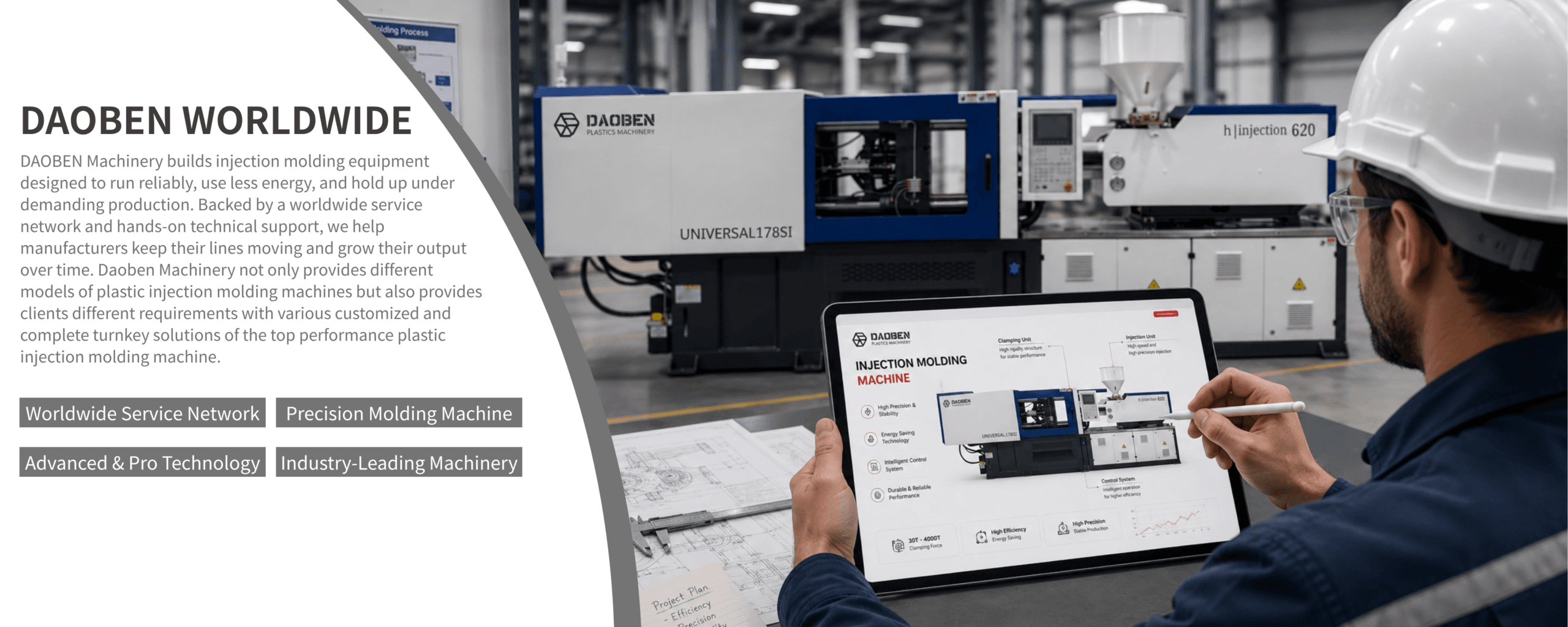
Daoben builds injection molding machines from 30 to 4,000 tons in Ningbo, China. Both the M8SII servo-hydraulic line and the EV Hybrid line start at 90 tons. Because each tonnage offers several injection unit sizes, you pay only for the shot weight you need. If you plan to add robots later, these automation trends in modern plastic molding equipment show what to plan for now.
The fastest way to get a real 100 ton injection moulding machine price for your project is a direct quote. Explore Daoben Molding Machines or review Daoben’s 100 ton machine overview. Then send your part drawing, resin, and yearly volume. The team will match the machine, voltage, and certification to your market.
Frequently Asked Questions
How much does a used 100 ton injection moulding machine cost?
A used 100 ton injection moulding machine price usually runs from about $10,000 to $50,000. Age, brand, operating hours, and drive type set the value. A ten-year-old Japanese all-electric machine can still cost more than a new Chinese servo model. So compare warranty and spare parts support before you buy.
Why is a Chinese 100 ton machine cheaper than a European one?
Lower labour costs, local component supply, and high production volume keep the 100 ton injection moulding machine price lower in China. European builders also price in local service networks and long controller support. However, many Chinese machines now use branded parts from Schneider, ABB, or OMRON, which narrows the quality gap.
How much does shipping add to the price?
Shipping from China usually adds a few thousand dollars to the 100 ton injection moulding machine price, depending on route, season, and container size. One machine typically fits in a 20-foot or 40-foot container. Then add marine insurance, port fees, inland trucking, and import duty to find your true landed cost.
Does a servo motor raise the price of a 100 ton machine?
A servo-hydraulic pump adds only a small amount to the 100 ton injection moulding machine price compared with a fixed-pump design. In return, it can cut energy use by 30% or more. As a result, many plants recover the extra cost within one to three years through lower power bills.
What products can a 100 ton injection moulding machine make?
A 100 ton machine makes caps, closures, small containers, cutlery, electrical housings, automotive clips, toys, and medical parts. These parts usually have a projected area under 320 cm². Because so many plants need this size, the 100 ton injection moulding machine price stays competitive, and used units resell easily.
How long does a 100 ton injection moulding machine last?
With regular maintenance, a 100-ton machine lasts 15–20 years or more. Screws, barrels, seals, and heater bands wear out sooner and need planned replacement. Spreading the 100 ton injection moulding machine price over that lifespan shows why build quality and parts support matter more than the lowest quote.