As global carbon neutrality goals and environmental regulations grow increasingly stringent, the plastic manufacturing industry is undergoing a profound green transformation. Traditional injection molding processes are often criticized for high energy consumption, resource waste and environmental pollution. Modern sustainable injection molding relies on upgraded eco-friendly machine technologies to balance production efficiency, product quality and low-carbon development. Advanced equipment innovations effectively reduce energy loss, material waste and pollutant emissions, becoming the core driving force for the sustainable development of the plastics processing industry.
Quick Answer: Sustainable injection molding uses eco-friendly machine technologies to cut energy, material waste and emissions. Full-electric servo drives save 50% to 70% of power compared with hydraulic machines. Hybrid systems save more than 20%, while aerogel barrel insulation cuts heating energy by nearly 40%. Hot runners, recycled-material screws and oil-free designs reduce waste further.
Energy-Saving Drive System Upgrades for Low-Carbon Operation
The energy consumption of injection molding machines accounts for most of the carbon footprint of plastic production. Optimized drive systems eliminate invalid energy loss and drastically reduce overall power consumption throughout the production cycle.
Full-Electric Servo Drive Technology
Full-electric injection molding machines replace traditional hydraulic systems with high-precision servo motors, cutting energy consumption by 50% to 70% compared with conventional hydraulic equipment. Different from hydraulic machines that maintain continuous power output, servo systems dynamically adjust power output according to actual molding actions, realizing zero energy consumption during standby stages. In addition, electric drive structures generate less heat and noise, improving workshop production environments while reducing indirect energy consumption from factory cooling systems.
Intelligent Hybrid Energy-Saving Hydraulic System
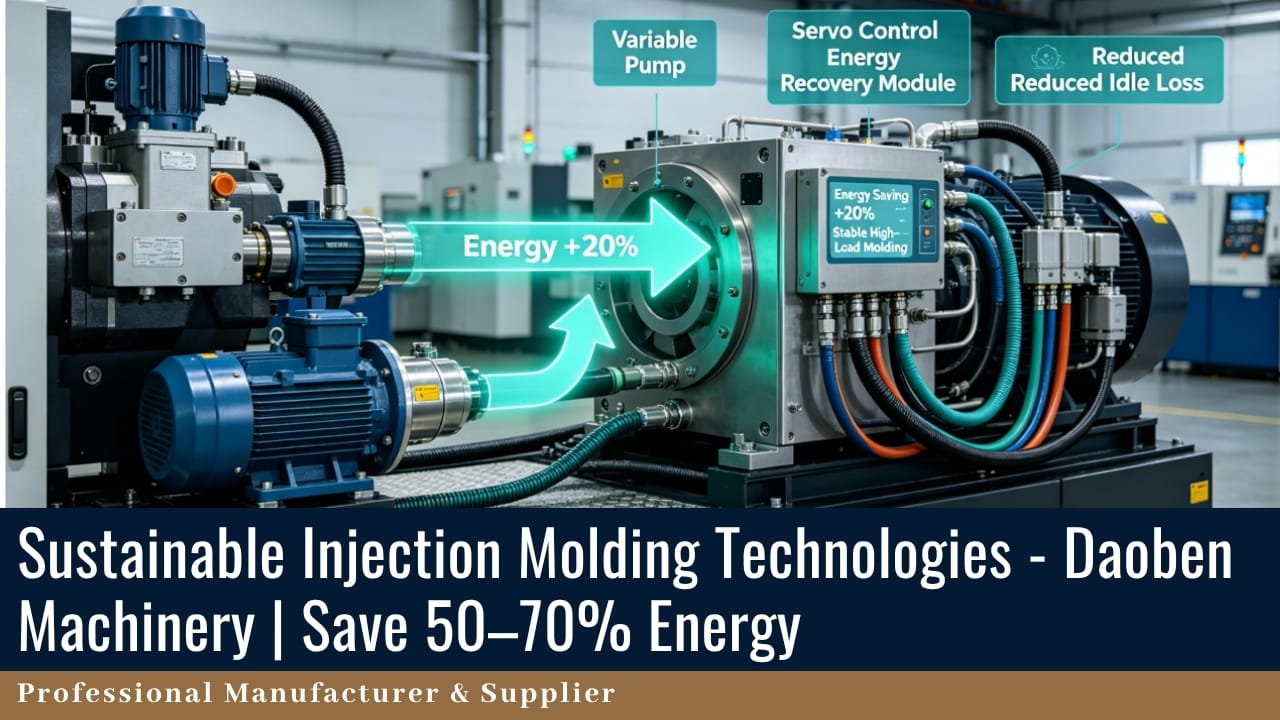
Hybrid drive technology combines the stability of hydraulic systems and the efficiency of servo control, perfectly adapting to high-load and large-scale molding scenarios. Equipped with variable pump and energy recovery modules, the system avoids frequent pressure buildup and idle energy waste of traditional fixed pumps. The braking energy generated during mold opening and closing is recycled and reused, further reducing comprehensive energy consumption by more than 20%. This technology solves the energy-saving pain point of large-tonnage injection molding machines that cannot be fully electrified.
High-Efficiency Thermal Insulation and Constant Temperature Control
Traditional injection molding barrels suffer from serious heat loss, leading to repeated heating and energy waste. Modern eco-friendly machines adopt aerogel thermal insulation structures and sealed heating systems, which maintain stable barrel temperature and reduce heating energy consumption by nearly 40%. Matched with intelligent constant-temperature water circulation systems, the equipment precisely controls mold temperature, avoids excessive water and power consumption caused by frequent cooling and heating, and realizes green and low-consumption temperature regulation.
Energy-saving machine technologies compared
| Technology | How it saves energy | Energy saving | Best fit |
|---|---|---|---|
| Full-electric servo drive | Servo motors replace hydraulics and draw power only during molding actions | 50% to 70% vs conventional hydraulic machines | Precision parts on machines that can run fully electric |
| Intelligent hybrid hydraulic system | Variable pump plus recovery of braking energy from mold opening and closing | More than 20% | High-load, large-tonnage molding |
| Aerogel barrel insulation with sealed heating | Holds barrel heat and stops repeated reheating | Nearly 40% of heating energy | Any machine with long heating cycles |
Material-Saving Machine Technologies to Reduce Resource Waste
Plastic waste is a major environmental burden of injection molding production. Innovative machine technologies optimize molding processes and structural design to improve material utilization and support the recycling and processing of green materials.
Precision Micro-Injection and Thin-Wall Molding Technology
Upgraded machine control systems achieve micron-level injection precision and stable pressure output, supporting ultra-thin-wall and lightweight product molding. This technology reduces the wall thickness of plastic parts on the premise of ensuring product performance, directly cutting raw material usage per product. Meanwhile, precise filling control eliminates defects such as short shots and shrinkage cavities, reducing defective rates and effectively avoiding material waste caused by unqualified products.
Hot Runner System Optimization for No-Waste Molding
Traditional cold runner molds produce a large number of useless sprue and runner wastes. Eco-friendly injection machines are matched with optimized hot runner systems, which keep the plastic melt in a molten state in the runner channel without generating solid waste. This technology fundamentally saves raw materials, simplifies the production process of waste recycling, and reduces secondary energy consumption and pollution caused by material reprocessing.
Professional Recycled Material Molding Adaptation
Modern sustainable injection molding machines are optimized for recycled plastic processing. The upgraded plasticizing and shearing structure can fully melt recycled materials with unstable quality, ensuring uniform melt fluidity and stable product quality. Special parameter adaptation procedures enable the equipment to efficiently process various recycled plastics and biodegradable materials, helping manufacturers realize resource recycling and reduce reliance on new raw materials.
Material-saving technologies and the waste they remove
| Technology | Waste it removes | Result for the factory |
|---|---|---|
| Precision micro-injection and thin-wall molding | Extra wall thickness, short shots and shrinkage cavities | Less resin per part and fewer rejected parts |
| Optimized hot runner system | Solid sprue and runner scrap from cold runner molds | No runner waste and no reprocessing step |
| Recycled material molding adaptation | Reliance on new raw materials | Stable parts from recycled and biodegradable plastics |
Intelligent Environmental Control for Clean Production
Green injection molding not only focuses on energy and material conservation, but also realizes clean production through intelligent equipment management, reducing pollutant emissions and environmental impact.
Real-Time Intelligent Process Monitoring System
Eco-friendly injection machines are equipped with AI intelligent monitoring modules, which real-timely collect and analyze core parameters such as injection speed, pressure and temperature. The system automatically corrects parameter deviations to avoid product defects caused by process fluctuations, reducing waste and pollutant emissions from defective products. The digital data management mode also realizes traceable green production, meeting international environmental certification standards.
Low-Pollution Lubrication and Oil-Free Design
Traditional hydraulic injection machines are prone to hydraulic oil leakage, causing workshop pollution and material contamination. New-generation eco-friendly equipment adopts oil-free transmission structures and low-carbon lubrication technologies, reducing grease discharge by more than 50%. The closed-loop hydraulic system effectively prevents oil leakage, eliminates environmental pollution risks, and realizes cleaner production operations.
Low-Noise and Low-Emission Structural Optimization
Through optimized mechanical damping and transmission structure design, modern green injection molding machines greatly reduce operating noise and vibration, meeting industrial environmental noise standards. Meanwhile, the sealed heating and exhaust structure effectively collects and filters trace volatile gases generated during plastic processing, reducing exhaust emissions and minimizing the impact of production on the workshop and atmospheric environment.
Sustainable injection molding machine technologies cover energy saving, material saving and clean production in an all-round way. With the continuous upgrading of servo drive, precision molding and intelligent environmental protection technologies, injection molding manufacturing will achieve a qualitative leap in green and low-carbon development, helping the plastics industry move towards sustainable and high-quality development.
Best Seller High Yield Molding Machine Options From Daoben Machinery
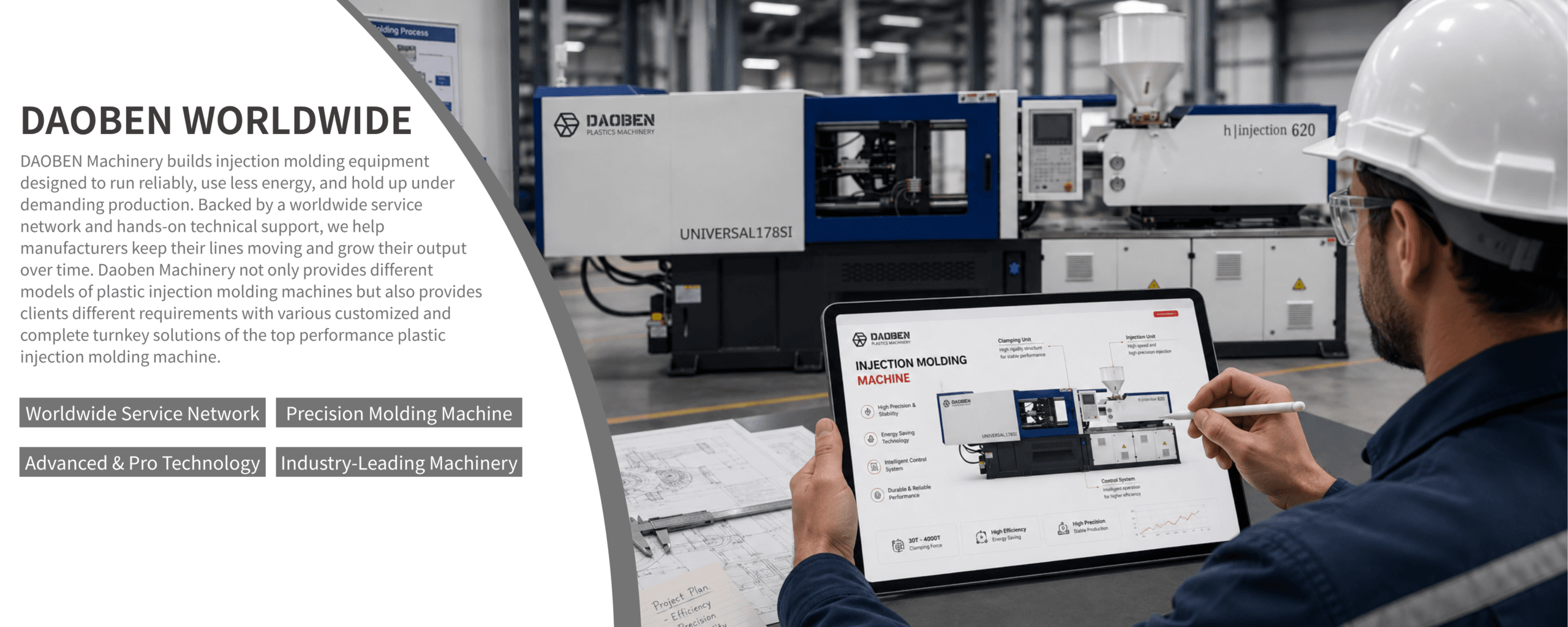
A best seller high yield molding machine turns more good parts out of each kilowatt-hour and each kilogram of resin. Daoben Machinery builds seven series from 30 to 4,000 tons in Ningbo, China. Each series targets a specific job, so buyers match the machine to the part.
High yield means three things in practice. First, the machine fills every cavity the same way, so fewer parts fail inspection. Second, it runs short, stable cycles. Third, it uses less power per part. Therefore, yield and sustainability point in the same direction.
For example, the M8-SP6 is Daoben’s sixth-generation high-speed precision machine for thin-wall products. Thin walls use less resin, as the material-saving section above explains. Similarly, the EV Hybrid combines a servo-electric injection drive with a hydraulic clamping unit. So it brings electric precision to the injection side and keeps hydraulic clamping strength.
Daoben series matched to sustainable production goals
| Daoben series | What it is | Sustainable production fit |
|---|---|---|
| EV Hybrid | Servo-electric injection drive with a hydraulic clamping unit | Lower energy use on the injection side with strong clamping |
| M8SII | Second-generation high-efficiency, energy-saving machine | Lower power cost on general parts |
| M8-SP6 | Sixth-generation high-speed precision machine for thin-wall products | Less resin per part in packaging |
| M7 | Smart machine with a 10.4-inch control system and high-precision servo hydraulics | Stable process control and fewer rejects |
| PET | High-speed machine built for PET preform production | High output on preform lines |
| DU Two-Platen | Two-platen clamping design | Large molds in a shorter machine footprint |
| UNIVERSAL | Economical, user-friendly machine for stable production | Reliable daily output at a lower purchase cost |
Three Checks Before You Choose a Series
First, size the clamping force to the projected area of the part. Second, check the resin, because PET and recycled grades need the right screw. Third, compare energy use per kilogram of processed plastic. EUROMAP 60.1 gives a standard way to measure that figure across brands.
What Sets Best Seller Injection Molding Machine Exporters Apart
Best seller injection molding machine exporters win repeat orders through proof, not price alone. They document energy data, ship on time and support the machine after installation. Daoben Machinery has built machines in Ningbo since 2014 and exports to more than 35 countries, with OEM label and logo options.
Location also matters for exporters. Ningbo sits on the East China Sea coast, and its port ranks among the busiest in the world. As a result, the route from factory to vessel stays short.
Daoben also supplies turnkey projects and auxiliary machines. Therefore, one exporter covers the press, the equipment around it and the line setup. Fewer suppliers mean fewer shipments, and fewer shipments mean a smaller transport footprint.
What to Ask an Exporter Before You Order
Buyers who care about sustainability should ask four questions. First, request energy data measured under EUROMAP 60.1. Second, ask how the machine meets ISO 20430, the safety standard for injection molding machines. Third, confirm CE marking if the machine ships to Europe. Finally, check that machine data can feed your ISO 50001 energy plan and your ISO 14001 reporting.
How a Best Seller Plastic Injection Machine Producer Supports Your Green Goals
A best seller plastic injection machine producer supports green goals long after delivery. The producer matches the machine to the part, trains the team and keeps the process stable. Daoben Machinery backs each machine with technical assistance, troubleshooting and maintenance, so energy and scrap savings hold over time.
Daoben serves automotive, packaging, medical, household and electronics factories. Each sector has a different waste problem. For instance, packaging plants fight resin cost, while medical plants fight rejects. So the producer’s first job is to ask about the part, not to quote a tonnage.
The company also states its own approach clearly. It favors energy-efficient equipment, closed-loop cooling and smart scrap reduction. Moreover, its team helps buyers choose a machine by project needs, production volume and target results.
Start with one part and one number. Send Daoben your part drawing, resin and yearly volume. Then the team can suggest a series and tonnage that fit. Browse the full machine range or contact the Daoben team to request a quote.
Frequently Asked Questions About Sustainable Injection Molding
What is sustainable injection molding?
Sustainable injection molding is plastic part production that uses less energy, less resin and creates fewer emissions. It relies on machine upgrades such as servo drives, hot runners and barrel insulation. Factories also process recycled plastics and track each cycle with monitoring software. Together, these steps lower cost and carbon at once.
How much energy does an electric injection molding machine save?
A full-electric machine cuts energy use by 50% to 70% compared with a conventional hydraulic machine. Servo motors draw power only when the machine moves, so standby use drops to zero. Therefore, electric drives are often the first upgrade in a sustainable injection molding plan. Hybrid systems save more than 20% on large-tonnage machines.
Can injection molding machines process recycled plastic?
Yes. Modern machines process recycled and biodegradable plastics with upgraded plasticizing and shearing screws. These screws melt uneven material fully and keep melt flow uniform. In addition, special parameter settings keep part quality stable. As a result, sustainable injection molding lines reduce their reliance on new raw material.
What is a best seller high yield molding machine?
A best seller high yield molding machine produces more good parts per hour with less energy and scrap. It combines stable clamping, precise injection and fast cycles. For example, Daoben’s M8-SP6 targets thin-wall products at high speed. Buyers should compare energy use per kilogram of plastic before they choose.
How do I choose among best seller injection molding machine exporters?
Choose best seller injection molding machine exporters by proof. Ask for energy data under EUROMAP 60.1, safety compliance with ISO 20430 and a clear after-sales plan. Also check export experience. Daoben Machinery, for instance, ships machines from 30 to 4,000 tons to more than 35 countries from Ningbo, China.
What should I expect from a best seller plastic injection machine producer?
A best seller plastic injection machine producer offers a full tonnage range, application advice and lasting support. Daoben Machinery, founded in 2014, builds seven series for automotive, packaging, medical, household and electronics parts. Its team also provides technical assistance, troubleshooting and maintenance, plus complete turnkey projects.