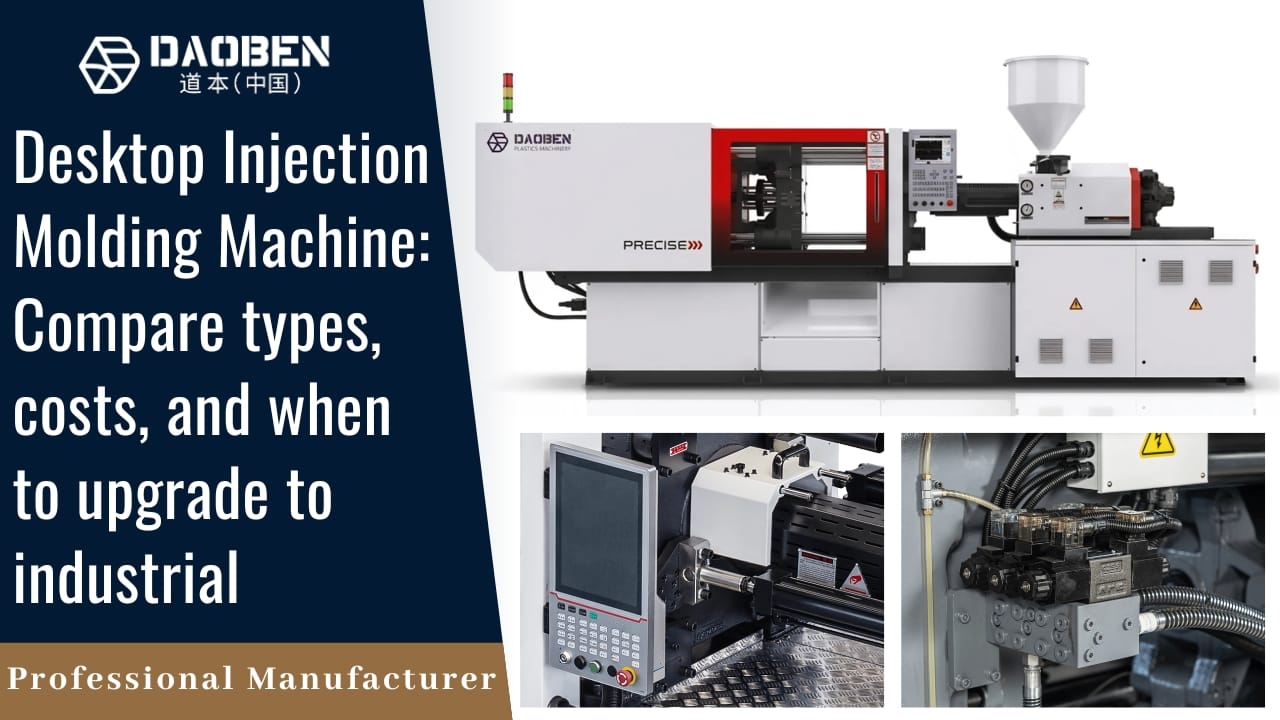
A desktop injection molding machine is a compact, benchtop system that melts plastic and injects it into a mold to make small parts in low volumes. It suits prototyping, education, jewelry, and short production runs. Clamping force typically ranges from about 1 to 15 tons, and shot weights usually stay under 30 grams.
This guide explains what desktop machines do well, where they fall short, what they cost, and the exact point at which a compact industrial machine becomes the smarter buy. Daoben Machinery manufactures injection molding machines from 30 to 4,000 tons, so we see this crossover decision every week — and we’ll be straight with you about which side of it you’re on.
What Is a Desktop Injection Molding Machine?
A desktop injection molding machine is a small benchtop machine that produces plastic parts using the same melt–inject–cool cycle as industrial equipment. It fits on a workbench, runs on standard power, and targets prototypes, small components, and low-volume runs rather than mass production. Most units weigh under 100 kg.
The category also goes by desktop molding machine and desktop plastic injection machine. All three names describe the same thing: a scaled-down injection molder built for accessibility, not throughput. The trade-off is simple. You gain a low price, a small footprint, and an easy learning curve. You give up shot size, cycle speed, automation, and the ability to run all day without wear.
Quotable definition: A desktop injection molding machine uses industrial molding physics at hobbyist scale — same process, a fraction of the force, output, and cost.
How Does a Desktop Injection Molding Machine Work?
A desktop injection molding machine works in six steps: it heats plastic to a melt, clamps a mold shut, injects the melt into the cavity, holds pressure, cools the part, then ejects it. On manual units the operator drives injection with a lever; automatic units use a motor or air cylinder. One cycle takes seconds to a couple of minutes.
Here is the full cycle, step by step:
- Load resin. Plastic pellets or granules go into the barrel or a top hopper.
- Heat and melt. A heated barrel brings the plastic to injection temperature.
- Clamp the mold. The two mold halves close and hold under clamping force.
- Inject. The melt is forced into the mold cavity.
- Hold and cool. Pressure packs the cavity while the part solidifies.
- Eject. The mold opens and the finished part drops or is pushed out.
The physics match a full-size machine. The difference is scale — a desktop unit simply moves less material with less force.
What Can You Make With a Desktop Molding Machine?
A desktop molding machine makes small, lightweight plastic parts in low quantities. Typical products include prototypes, enclosures, connectors, gears, buttons, jewelry, dental and medical trial parts, and educational samples. It works best for parts under roughly 30 grams and batch sizes in the tens to low thousands, not continuous mass production.
Common real-world uses:
- Prototyping new part designs before committing to a production mold
- Low-volume production of niche or custom components
- Education and R&D in schools, makerspaces, and engineering labs
- Small parts like clips, caps, fittings, and electronic housings
- Jewelry and hobby items in resins and specialty plastics
If your part is larger than a coffee cup or you need thousands of pieces a day, a desktop machine will bottleneck you fast. That is where compact industrial equipment takes over.
Desktop vs. Compact Industrial Injection Molding Machine
A desktop injection molding machine wins on price and footprint; a compact industrial machine wins on output, part size, and reliability. Desktop units suit prototyping and short runs. Compact industrial machines — starting around 30 tons — handle real production volumes with automation and consistent quality. The table below shows where each fits.
| Feature | Desktop Machine | Compact Industrial (30–90 ton) |
|---|---|---|
| Clamping force | ~1–15 tons | 30–90 tons |
| Max shot weight | Under ~30 g | Tens to hundreds of grams |
| Output | Low, often manual pace | High, automated cycles |
| Automation | Manual or semi-auto | Semi- to fully automatic |
| Part size | Small parts only | Small to mid-size parts |
| Best for | Prototyping, education, low volume | Ongoing production runs |
| Footprint | Fits on a workbench | Requires floor space |
| Typical price | Hundreds to ~$30,000 | Higher — see price guide below |
For a full breakdown of industrial pricing tiers, see Daoben’s plastic injection molding machine price guide 2025 and the current injection molding machine price list.
How Much Does a Desktop Plastic Injection Machine Cost?
A desktop plastic injection machine costs anywhere from a few hundred dollars for a manual hobbyist unit to around $30,000 for a fully automatic benchtop system. Price rises with automation, heating control, and shot capacity. Manual units are cheapest; motorized, temperature-controlled models cost the most within the desktop class.
Rough desktop price tiers:
- Manual / lever units: low hundreds — hobby and classroom use
- Semi-automatic (pneumatic): low thousands — small workshops
- Fully automatic benchtop: up to ~$30,000 — steady low-volume production
Keep in mind that a desktop machine’s low sticker price hides a cost-per-part penalty at volume. Once you are running production quantities, the per-piece economics of a 30-ton-plus industrial machine usually beat a desktop unit — even though the machine costs more upfront. Compare full pricing in the injection molding machine price list.
Types of Desktop Injection Molding Machines
Desktop injection molding machines come in four main types, sorted by how they generate injection and clamping force:
- Manual (hand-lever): Cheapest and simplest. The operator pushes the melt by hand. Best for education and occasional prototyping.
- Pneumatic (air-powered): Uses compressed air for injection. Faster and more repeatable than manual, still affordable.
- Hydraulic: Higher, more consistent pressure for tougher resins and better part quality. More expensive and larger.
- Electric (servo): The most precise and repeatable desktop class, with programmable control. The priciest desktop option.
Rule of thumb: the more consistent your parts must be, the more you should move from manual toward electric — and eventually toward a full industrial machine.
When Should You Upgrade From a Desktop Machine?
You should upgrade from a desktop machine when volume, part size, or quality demands outgrow it. The clearest signal is cost-per-part: once a desktop unit’s slow cycles and manual labor make each piece more expensive than an automated machine would, the desktop machine is holding you back. Larger parts and tight tolerances force the same decision.
Use this simple framework — the Molding Ladder — to place yourself:
- Desktop tier (~1–15 tons): Prototypes, learning, and runs in the tens to low thousands.
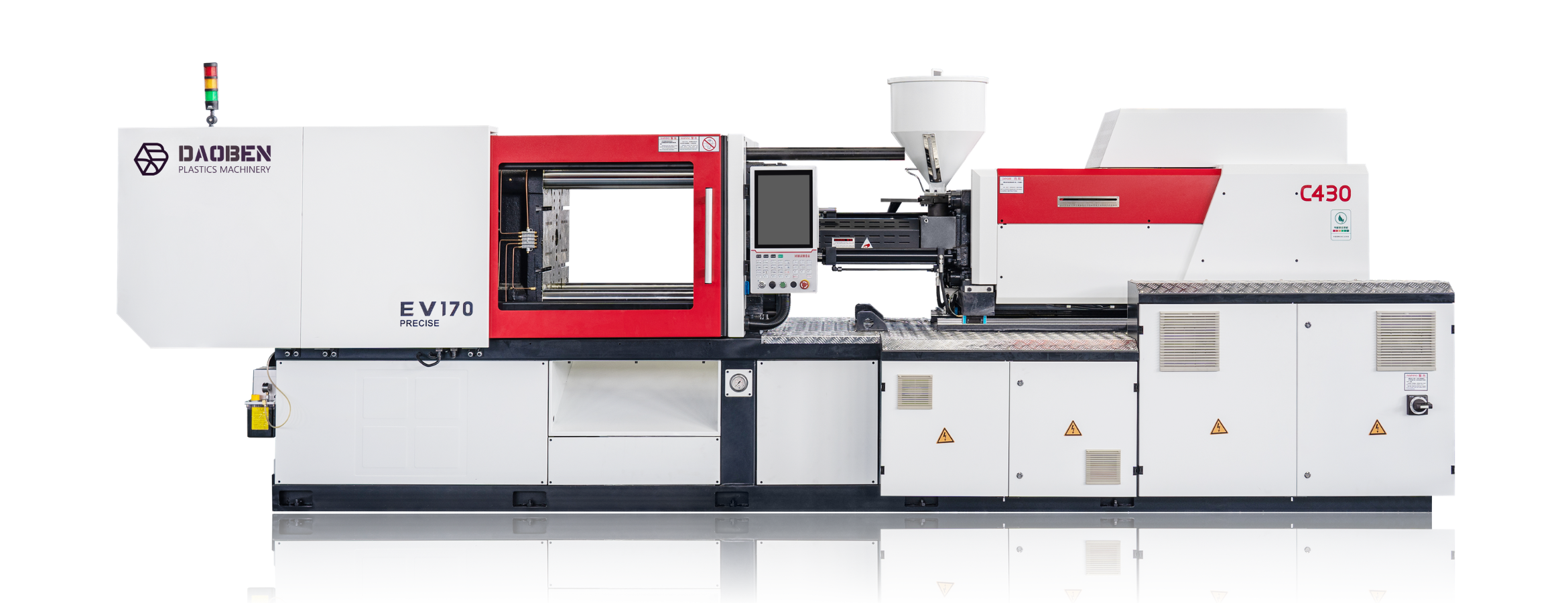
- Compact industrial (30–90 tons): Steady production of small parts. This is Daoben’s entry class and the most common upgrade destination.
- Mid-range (100–500 tons): Larger parts, multi-cavity molds, higher output.
- Large-tonnage (500–4,000 tons): Big parts and high-throughput manufacturing — for example, a plastic chair making machine needs far more clamping force than any desktop unit can provide.
Three questions tell you it is time to move up the ladder:
- Volume: Are you struggling to keep up with orders?
- Size: Is your part too large for the desktop shot capacity?
- Quality: Do you need repeatable tolerances a manual unit can’t hold?
If you answer “yes” to any one, a compact industrial machine will pay for itself faster than most buyers expect. Energy efficiency also improves sharply at industrial scale — modern energy-efficient injection molding machines cut running costs in ways a desktop machine simply can’t.
How to Choose a Desktop Injection Molding Machine
Choose a desktop injection molding machine by matching four specs to your parts: clamping force, shot weight, plastic compatibility, and automation level. Confirm the machine can mold your resin, produce your largest part, and hit your daily output. Then weigh price against how soon you’ll outgrow it.
A quick buyer’s checklist:
- Clamping force — enough tonnage to hold your mold closed
- Shot weight — must exceed your largest part’s weight
- Resin compatibility — ABS, PP, PE, PLA, or your target material
- Automation — manual for learning, automatic for repeat runs
- Upgrade path — buy from a supplier who also builds industrial machines, so scaling up is simple
That last point matters more than most buyers realize. Starting with a manufacturer like Daoben Machinery means your desktop-to-industrial transition is one supplier conversation, not a fresh vendor search.
Written and reviewed by the Daoben Machinery engineering team. Daoben manufactures plastic injection molding machines from 30 to 4,000 tons and supplies buyers worldwide, from first-time workshop owners to high-volume factories.
4. FAQ Section
What is the smallest injection molding machine?
The smallest injection molding machines are manual desktop units with clamping force around 1 ton or less. They are hand-operated, fit on a workbench, and are used mainly for education, prototyping, and very small plastic parts under a few grams.
Can a desktop injection molding machine be used for production?
Yes, but only for low-volume production. A desktop injection molding machine can make hundreds to a few thousand small parts, ideal for niche or custom runs. For daily production in the thousands, a compact industrial machine of 30 tons or more is more cost-effective.
What plastics can a desktop molding machine use?
Most desktop molding machines handle common thermoplastics such as ABS, polypropylene (PP), polyethylene (PE), and PLA. Higher-end desktop units with better temperature control can run more demanding resins. Always confirm the machine’s melt temperature range matches your material.
How much does a desktop plastic injection machine cost?
A desktop plastic injection machine costs from a few hundred dollars for a manual unit to about $30,000 for a fully automatic benchtop model. Price depends on automation, heating control, and shot size. Manual units are cheapest; servo-electric units cost the most.
Is a desktop injection molding machine worth it?
A desktop injection molding machine is worth it for prototyping, education, and low-volume custom parts, where its low price and small footprint pay off. It is not worth it for mass production — at volume, an industrial machine delivers a lower cost per part despite the higher purchase price.
Desktop vs. industrial injection molding machine — which is better?
Neither is universally better; it depends on volume. A desktop machine is better for prototyping and small runs. An industrial machine — starting around 30 tons — is better for production, larger parts, and tight tolerances, thanks to automation and consistent quality.