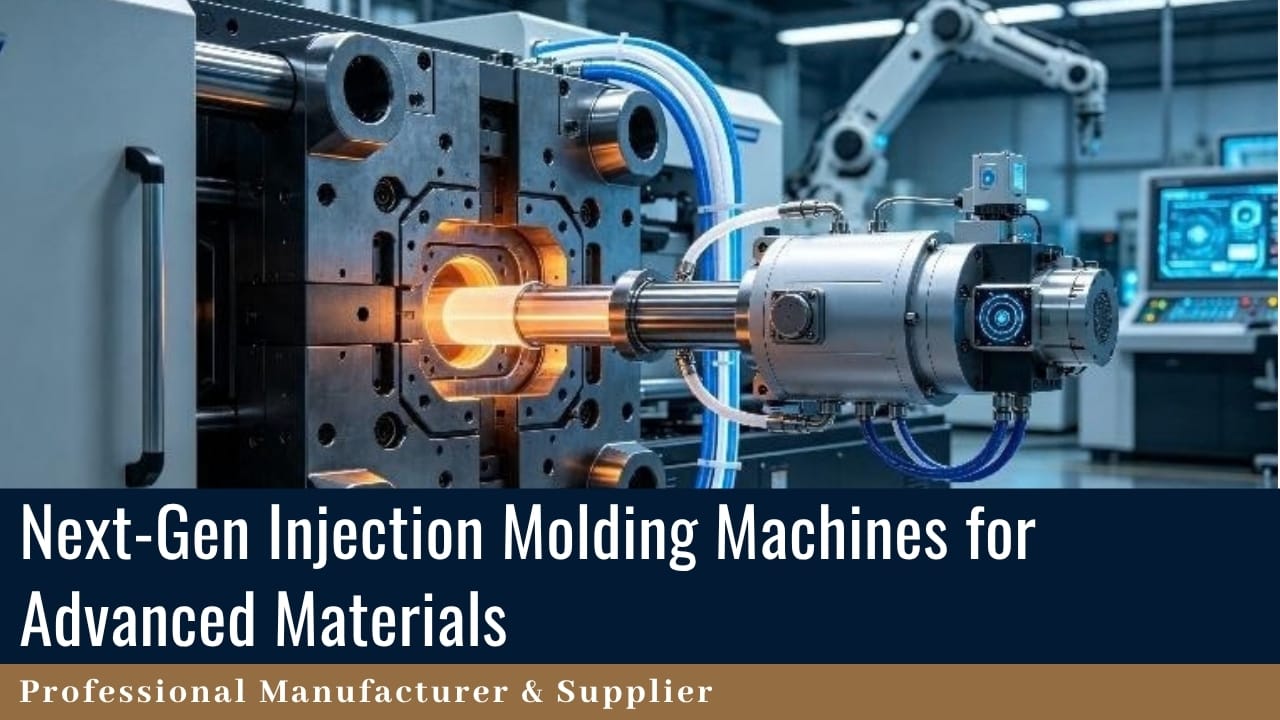
New materials are changing plastic manufacturing fast. Carbon fiber composites, PLA, PHA and high-heat engineering plastics are now standard in EVs, electronics and medical devices. However, older machines often struggle to mold them well.
A next-gen injection molding machine solves this problem. It combines servo drives, precise heating and smart process control. As a result, it can mold sensitive and tough materials with high accuracy, less waste and lower energy use.
This guide explains how these machines work, which materials they handle, and what buyers should check before they invest.
Quick Answer: What is a next-gen injection molding machine?
A next-gen injection molding machine is a servo-driven, digitally controlled machine built to mold advanced materials. It uses precise barrel heating, multi-servo motion control and adaptive software. These features let it process composites, biodegradable plastics and engineering resins with stable quality and lower energy use than traditional hydraulic machines.
Key Takeaways
- Precise temperature control protects heat-sensitive materials like PLA and PHA.
- Multi-servo drives give smooth, accurate injection for fiber-filled composites.
- Adaptive software corrects process drift in real time, so yield goes up.
- Servo power systems can cut energy use by 20% or more compared with fixed-pump hydraulics.
- Multi-material molding removes secondary assembly steps.
What Makes a Next-Gen Injection Molding Machine Different?
A next-gen machine differs from a traditional one in three ways: how it heats, how it moves and how it thinks. Traditional machines rely on basic heater bands, a single hydraulic pump and manual setup. In contrast, next-gen machines use targeted heating, several servo motors and self-adjusting control software.
| Feature | Traditional Machine | Next-Gen Machine |
|---|---|---|
| Barrel heating | Standard resistance bands | Zoned or far-infrared heating with tight control |
| Drive system | Single hydraulic pump | Multiple servo motors working together |
| Process setup | Manual trial and error | Adaptive, self-correcting parameters |
| Material range | Standard commodity resins | Composites, bioplastics, engineering plastics |
| Energy use | Pump runs even when idle | Power on demand only |
| Multi-material | Needs secondary assembly | One-shot 2K and multi-material molding |
So the gap is not only speed. It is control. And control is exactly what advanced materials demand.
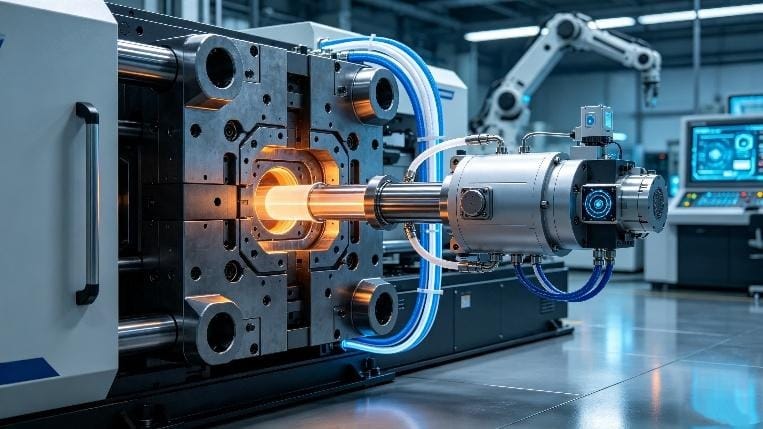
Core Hardware Upgrades That Enable Advanced Materials Processing
1. Precise Barrel Temperature Control
Melt temperature decides part quality. If it drifts, materials can degrade, parts can warp and strength drops.
That is why next-gen machines move beyond basic heater bands. Many now use far-infrared or zoned heating to hold a steady temperature along the full barrel. The system also adjusts heating power to match each material’s melting behavior.
This matters most for two groups:
- Heat-sensitive materials, such as PLA, PHA and some medical grades. They break down if they overheat.
- High-viscosity materials, such as filled engineering plastics. They need even heat to melt fully.
Moreover, better heating wastes less energy. Less heat escapes into the air, so running costs fall.
2. Multi-Servo Drive System
Traditional machines often use one power source for every motion. As a result, injection, screw recovery and clamping can interfere with each other.
A next-gen machine uses several servo motors instead. Each one controls a separate action: injection, holding pressure, clamping or ejection. Therefore, each step runs smoothly and precisely.
This is a big win for tough materials. For example, carbon fiber and long glass fiber compounds are hard to push into a mold evenly. A servo system delivers steady force, so the melt fills the cavity at an even speed. This reduces uneven filling and lowers internal stress. In turn, parts hold tighter tolerances.
3. Heavy-Duty Balanced Clamping
Large, thick-walled parts need strong and even clamping force. If the force is uneven, the mold can flash or the wall thickness can vary.
Next-gen machines solve this with a stronger clamping structure and dynamic pressure control. Two-platen designs are a common choice for big tonnage. They spread force evenly across the mold and take up less floor space.
This makes them a good fit for large, rigid parts made from composites and filled resins.
Which Advanced Materials Can Next-Gen Machines Process?
Next-gen machines can process a wide range of advanced materials. The table below shows the main groups, their key challenge and the machine feature that solves it.
| Material | Main Processing Challenge | Machine Feature That Helps |
|---|---|---|
| PLA, PHA (biodegradable) | Narrow process window, degrades with heat | Precise temperature curves, fast cycles |
| Glass fiber composites | Fiber breakage, uneven filling | Low-shear screw, servo injection |
| Carbon fiber composites | High viscosity, internal stress | Multi-servo drive, steady pressure |
| PEEK, PPS, PA (engineering plastics) | Very high melt temperatures | High-heat barrel, stable heating |
| Plastic + silicone / hard + soft | Poor bonding between materials | Multi-material and 2K molding |
| Recycled plastics | Batch-to-batch variation | Adaptive process control |
Biodegradable Plastic Injection Molding
Demand for PLA and PHA keeps growing because brands want greener packaging and products. But these materials are tricky. They are heat sensitive and have a narrow molding window. So older machines often cause degradation or cracked parts.
Next-gen machines handle this with an optimized screw design and tuned temperature curves. They support low-temperature, fast-cycle molding. They also control plasticizing speed and holding time precisely.
As a result, factories can produce compostable packaging and daily-use goods that meet international environmental standards.
Injection Molding Machines for Composites
Glass and carbon fiber give parts high strength at low weight. However, long fibers break easily during melting. Broken fibers mean weaker parts.
To prevent this, next-gen machines use a low-shear plasticizing process. It protects fiber length, so the part keeps its strength and toughness.
Some systems also use vibration-assisted injection. This method controls how the fibers align in the skin and core layers. Consequently, both tensile strength and impact resistance improve. These parts suit lightweight automotive structures and small aerospace components.
Multi-Material Injection Molding
Many products combine two materials. For example, a device may have a hard plastic body with a soft seal. Traditionally, factories molded each part separately and then glued or assembled them.
Next-gen machines mold them together in one cycle. This includes two-color (2K) molding, hard-soft combinations and plastic-silicone parts. The bond between materials is stronger, and sealing improves. Also, the extra assembly step disappears.
This process is ideal for waterproof electronics parts and functional home appliance components.
How Smart Process Control Improves Quality and Yield
Adaptive Process Control
Raw material batches vary. Room temperature changes. Molds wear over time. Each of these shifts can cause defects.
Next-gen machines use adaptive control software to handle this. The system tracks the process and adjusts temperature, pressure, speed and cycle time automatically. Therefore, operators do not need to retune the machine again and again.
For precise parts and materials that deform easily, this real-time correction is key. It cuts warpage, sink marks and bubbles. So yield rises clearly compared with older equipment.
Inline Compounding (Mix, Extrude and Inject in One Step)
Normally, compounding and molding happen in two separate steps. The material is mixed, cooled, pelletized and then melted again for molding. Each extra heating cycle weakens it.
Inline compounding changes this. A buffer storage cylinder links mixing, extrusion and injection into one continuous process. As a result:
- The material is heated only once, so it keeps more of its strength.
- Fewer transfer steps mean less material loss.
- Production can become significantly faster, with gains of up to 30% reported in some setups.
- Overall costs drop.
Liquid Color and Fast Color Change
Liquid color is replacing traditional masterbatch in many plants. It mixes more evenly and often uses less colorant.
In addition, an improved melt path makes color changes faster. There is less downtime and less purge waste. This is a strong advantage for factories that run many small batches in different colors.
How Next-Gen Machines Cut Energy Use and Waste
Next-gen machines make production greener in three ways.
1. Lower energy use. Servo motors supply power only when the machine needs it. Traditional fixed-pump hydraulics keep running even when idle. So servo systems can cut total energy use by 20% or more.
2. Less material waste. Precise plasticizing reduces overheating and degradation. More of the raw material ends up in good parts.
3. Cleaner production. Multi-material and in-mold processes remove extra steps like spray painting and secondary finishing. This removes a source of pollution.
Furthermore, stable process control lets these machines run recycled plastics and circular composite materials. That supports a closed-loop plastics economy.
Where Advanced Materials Processing Adds the Most Value
Next-gen injection molding machines deliver the most value in industries with strict quality demands:
- New energy vehicles: lightweight structural parts, battery housings and connectors
- Precision electronics: thin-wall housings, waterproof seals and connectors
- Medical devices: tight-tolerance parts from heat-sensitive medical grades
- Aerospace: small, high-strength composite components
- Packaging: compostable PLA and PHA products
- Home appliances: multi-material functional parts
In short, anywhere materials are costly and tolerances are tight, precise control pays for itself.
How to Choose the Right Machine for Advanced Materials
Before you buy, check these six points with your supplier:
- Material list: Confirm the machine has processed your exact resin, not just a similar one.
- Screw and barrel design: Ask for low-shear screws for fiber materials and wear-resistant barrels for filled grades.
- Temperature range and accuracy: Engineering plastics like PEEK need very high, stable barrel temperatures.
- Drive type: Compare full servo, hybrid and all-electric options against your cycle time and energy targets.
- Clamping force and platen design: Match tonnage to part size, and consider two-platen machines for large parts.
- Control software: Check for adaptive control, data logging and remote support.
Daoben Machinery builds servo, hybrid and two-platen injection molding machines from 30 to 4,000 tons. Our team can match a machine to your material, part size and output goals. [Contact Daoben for a machine recommendation →]
Frequently Asked Questions
What is advanced materials processing in injection molding?
Advanced materials processing means molding high-performance or specialty materials. These include fiber composites, biodegradable plastics and engineering resins like PEEK. They need tighter control of heat, pressure and speed than standard plastics.
Can a standard injection molding machine process PLA?
Yes, but results are often poor. PLA is heat sensitive and has a narrow process window. A machine with precise temperature control and a suitable screw gives far more stable results.
Why do fiber composites need a special injection molding machine?
Long glass and carbon fibers break under high shear. Broken fibers reduce part strength. A low-shear screw and smooth servo injection help keep the fibers long and the part strong.
How much energy does a servo injection molding machine save?
A servo machine typically saves 20% or more energy compared with a fixed-pump hydraulic machine. Savings depend on cycle time, part size and how often the machine idles.
What is multi-material injection molding?
Multi-material injection molding combines two or more materials in one molding cycle. Common examples include two-color parts, hard-soft grips and plastic parts with silicone seals. It removes the need for gluing or assembly.
Which industries use next-gen injection molding machines most?
The main users are new energy vehicles, precision electronics, medical devices, aerospace and green packaging. These industries need precise parts from costly or sensitive materials.
Partner With Daoben Machinery
Advanced materials are raising the bar for plastic manufacturing. Traditional machines often fall short on precision, material range and energy use.
A next-gen injection molding machine closes that gap. Precise heating protects sensitive resins. Multi-servo drives handle tough composites. Adaptive software keeps yield high. And servo power cuts energy costs.
For manufacturers, the result is simple: better parts, less waste and a faster path to new material markets.
Ready to process advanced materials with confidence? Talk to the Daoben Machinery team about the right machine for your application.