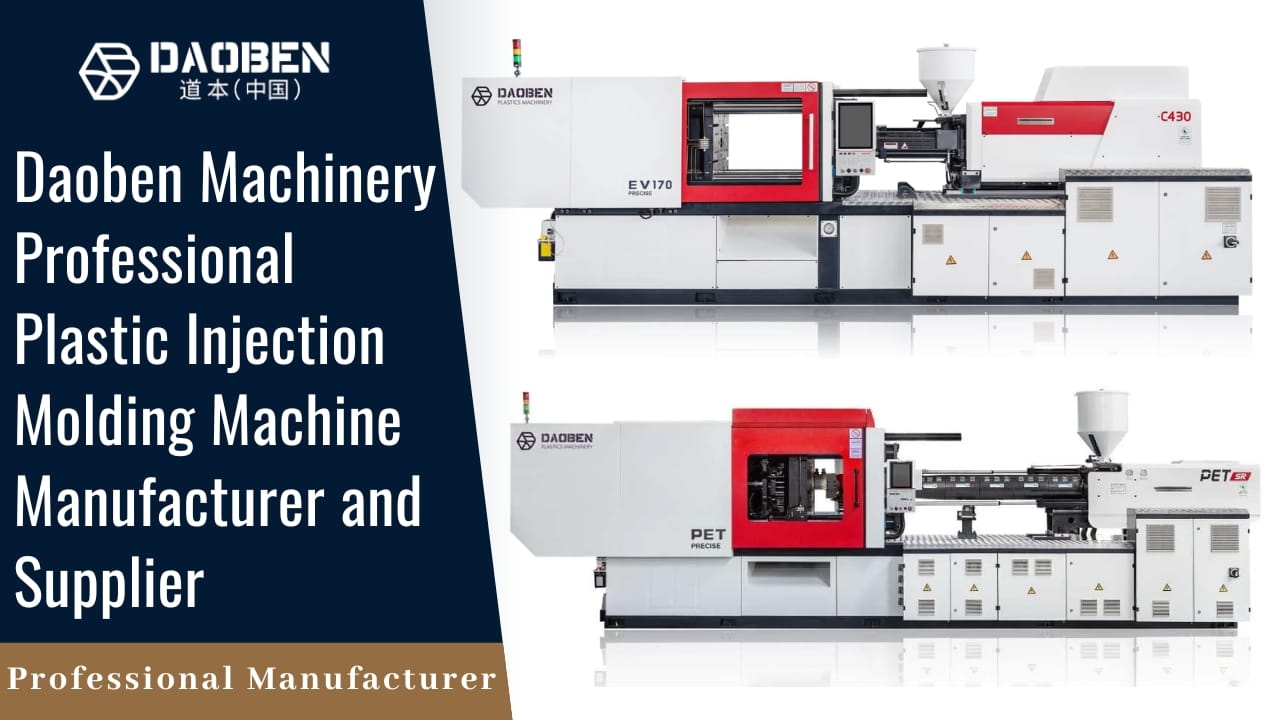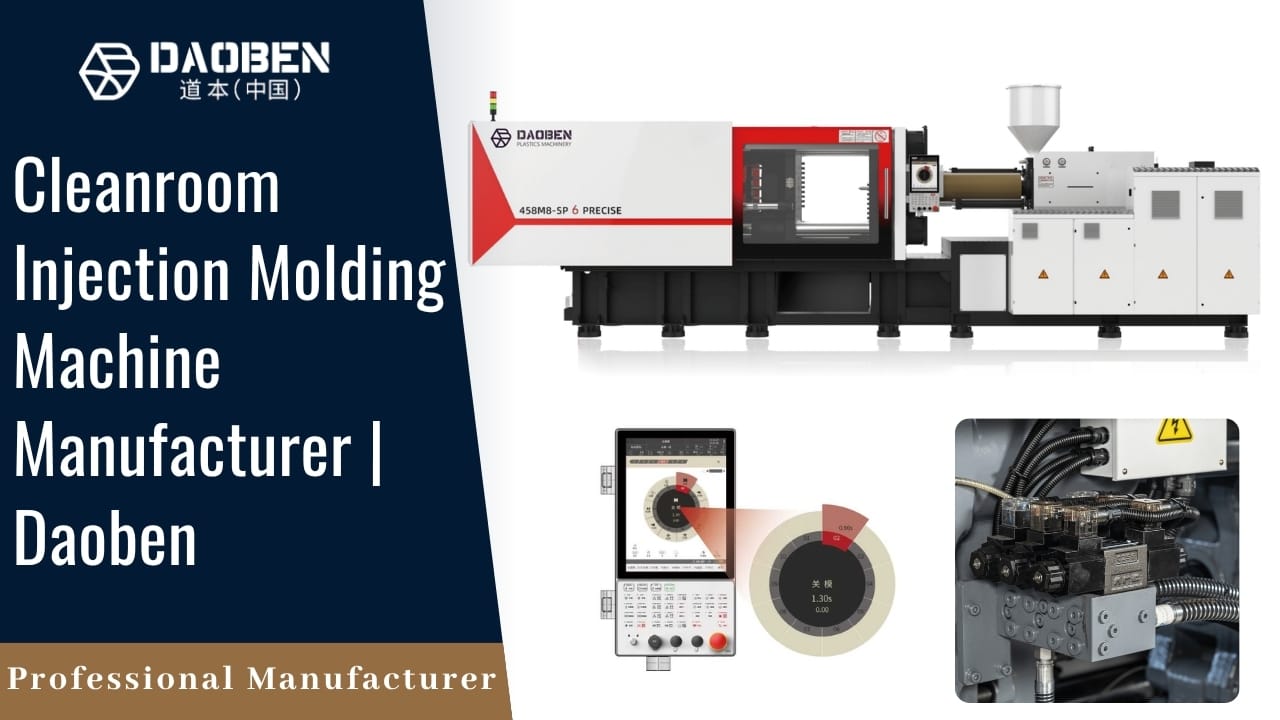

In the competitive world of plastic manufacturing, choosing the right injection molding machine can make or break your production line’s efficiency, quality, and profitability. That’s why leading manufacturers and brands rely on Daoben Machinery—a name that has carved out a reputation for precision, reliability, and innovation in injection molding solutions.
Why Daoben Machinery Is a Top Choice for Injection Molding Machines
Experience & Track Record:
Daoben Machinery (Ningbo, China) is a specialist in injection molding machines, producing machines from 30 tons to 4,000 tons. Their product line covers a broad spectrum of tonnages and applications, which speaks to their maturity in handling diverse use cases.
They emphasize:
- Rapid delivery globally
- Customization to meet specific requirements
- Stringent quality control, including 72‑hour test runs before shipment
- A standard 12‑month warranty, plus spare parts for critical components (excluding wear parts like screw and barrel)
These factors lend them credibility: they’re not just selling machines, but committing to long‑term support and reliability.
Broad Product Range & Specialization:
Daoben’s catalog includes multiple series designed for distinct needs: SLA high-speed series, HRL general series, VR‑T5 precision, VR‑E3, PET preform, HRK thin‑wall high speed, and auxiliary machines.
This depth means whether you’re producing small, high-precision components, PET preforms, or thin-wall consumer packaging, Daoben likely has a machine designed for that niche. Their specialization in certain sub-types (e.g. PET, thin-wall) gives them technical authority in those domains.
Performance, Efficiency & Innovation:
Daoben markets its machines as energy-saving (often promising 25%–60% power reduction) while still maintaining high speed, precision, and stability. Daoben That’s a powerful selling point in an era of rising energy costs and sustainability pressure.
They also promote fast cycle times, precise control systems, and modern features (automation, connectivity) to improve production throughput and consistency.
All of this supports the notion that Daoben’s machines are not basic or entry-level—they aim to deliver high-end performance.

Understanding Key Features of Daoben Injection Molding Machines
To appreciate what makes a Daoben injection molding machine top-notch, let’s look at their core attributes, and what you should watch out for when evaluating such equipment.
1. Tonnage & Clamping Force
Daoben offers machines in a wide tonnage range. Clamping force is critical: it ensures the mold halves stay tightly closed during injection to prevent flash or weld lines. Choosing a machine with too little force leads to defects; too much force can lead to wasted capacity and cost overhead.
2. Shot Size & Injection Capacity
The machine must be able to melt and inject sufficient plastic to fill your mold. Daoben’s models are built to accommodate varying shot volumes tailored to part size and complexity.
3. Precision & Stability
High-precision parts demand machines with fine resolution control, minimal vibration, tight tolerances, and stable motion. Daoben’s VR‑T5 and SLA series are tailored for precision and high-speed operations, which suggests their engineering focus on stability.
4. Cycle Speed & Efficiency
Faster cycle times reduce cost per part. Daoben invests in machine designs that support short cycles, rapid response in the injection system, and optimized thermal management. Their high-speed lines (e.g. SLA, HRK) reflect this push.
5. Energy Consumption & Sustainability
Power efficiency is no longer optional. Daoben claims energy savings of 25%–60% on selected models. That’s a meaningful margin, especially in high-volume manufacturing environments.
6. Customization & Adaptability
One of Daoben’s strengths is offering custom solutions—you can request tailor-made configurations, control architectures, or special features to match your production needs.
7. After‑Sales Support & Service
Even the best machine is only as good as the service behind it. Daoben promises overseas engineers to assist with installation and commissioning, remote support (especially where travel is constrained), and spare parts provision.
These support guarantees increase trust and help reduce risk for buyers.

Use Cases & Industry Applications
Daoben’s machines are widely applied across multiple industries—this diversity underscores their capability and authority.
Automotive Components
From interior trim to structural plastic elements, automotive parts often require tight tolerances and durability. Daoben machines can handle such demands through rigidity, precise control, and long-term reliability.
Consumer Electronics & Appliances
Small, intricate parts—like buttons, housings, connectors—demand precision and repeatability. Machines from Daoben’s VR and SLA lines are likely candidates here.
PET & Packaging
Daoben’s PET series is engineered for preform and packaging production, which is a high-demand niche requiring fast cycles and stable injection. Daoben
Thin-Wall & Lightweight Packaging
The HRK series targets thin-wall, lightweight production—critical in packaging, containers, and some food‑grade applications. Thin-wall molding demands tight thermal and injection control to avoid warpage or misfills.
Medical Devices & Precision Parts
In medical applications, quality, repeatability, and compliance are paramount. Daoben’s warranty, QA processes, and ability to deliver precise machines give them credibility in such sensitive sectors.
What to Watch Out For / Tips When Choosing Daoben Machines
While Daoben offers strong advantages, selecting the right machine still requires scrutiny. Here are key tips from an experienced perspective:
- Validate real-world performance
Request examples, performance data, case studies, or client references in your industry. Ask for cycle times, defect rates, energy consumption. - Ensure component quality & spares
Verify the suppliers for hydraulic systems, electronics, servo motors, sensors, etc. You want global part availability. - Check the warranty and maintenance terms
The 12‑month warranty is good, but clarify coverage limits, what happens with wear parts, servicing protocols, and response times. - Plan for installation & training
Even a perfect machine fails if your operators aren’t well-trained. Make sure Daoben or their agents support installation, tuning, and ongoing training. - Simulate & test your mold with their machine
Use mold flow analysis and pilot runs early to ensure the machine you pick can handle your part’s geometry, flow, cooling, and cycle constraints. - Consider power, infrastructure & footprint
Large machines need strong foundation, power supply, cooling and space. Make sure your facility can host the machine you choose. - Look for upgradeability & connectivity
As smart manufacturing evolves, having a machine that supports IoT, sensor feedback, remote monitoring, and future upgrades is an advantage.
Sample Highlight: Daoben’s 3,000‑Ton Dual Platen Machine
Daoben’s publicity shows a 3,000-ton, two‑platen injection molding machine in action, illustrating their capability for extremely large-scale molding tasks.
Dual platen machines are ideal when you need maximum clamping force in a more compact footprint. For heavy structural or large components, such machines can be game-changing. The fact that Daoben manufactures and demonstrates such large machines speaks to their technical depth and credibility in heavy-duty molding.
Why “Top‑Notch” Is a Justifiable Descriptor
Putting together Daoben’s experience, product range, performance claims, and support model, I’d argue “top-notch” is not just marketing flair—it has substance. Here are the foundations for that claim:
- Depth of product lineup, covering many tonnages and specialty niches
- Performance & energy efficiency claims backed by real use cases
- Customization & flexibility, making the machines suit more use cases
- Quality assurance & service support, reducing customer risk
- Demonstrated capacity for large and precise machines, such as the 3,000-ton model
Still, “top-notch” doesn’t mean “perfect.” Every buyer must carefully validate spec sheets, real-world performance, and service terms.
Recommendations
If you’re in the market for an injection molding machine and considering Daoben Machinery, here’s a checklist to guide you:
- Match tonnage & shot volume precisely to your part
- Demand performance data and client references
- Ensure your infrastructure (power, floor, cooling) supports the machine
- Negotiate for installation, training, and service terms
- Check for future readiness (connectivity, upgrades)
- Pilot test your mold under real conditions
Daoben offers compelling value, especially when you need tailored solutions, wide tonnage coverage, and robust support. Their positioning in the market, together with visible large-scale demonstration (like the 3,000-ton machine), adds to their authority and trust.
FAQ’s
The price of a 400-ton injection molding machine typically ranges from $40,000 to $100,000, depending on brand, features, and configuration.
The four main steps are clamping, injection, cooling, and ejection—each critical to forming and releasing the molded part.
Injection molding machines generally cost between $10,000 to $200,000, based on size, tonnage, precision, and technology (hydraulic vs. electric).