Top Injection Machine Manufacturers & Injection Molding Machine Suppliers: How to Choose — and Why Daoben Machinery Stands Out
If you’re evaluating injection machine manufacturers and injection molding machine suppliers, the stakes are high: the right press can reduce cycle times, improve part quality, and cut energy bills for years. This guide explains what to look for, common pitfalls, and how Daoben Machinery—a professional plastic injection molding machine manufacturer and supplier producing 30‑ton to 4000‑ton machines—supports real‑world production.
Manufacturers vs. Suppliers: What’s the Difference?
When you search for injection machine manufacturers and injection molding machine suppliers, you’ll see both “makers” and “resellers.”
Manufacturers design and build the machines. They control the bill of materials, core engineering, and many after‑sales decisions.
Suppliers (or distributors) sell machines—sometimes multiple brands—and often provide local service, spare parts, and training.
Daoben Machinery operates as both: a manufacturer and supplier of plastic injection molding machines, giving you a single, accountable partner from specification through after‑sales support.
Key Buying Criteria
Choosing the right IMM isn’t just about tonnage. Use the criteria below to shortlist the best injection molding machine suppliers.
Clamping Force & Tie‑Bar Spacing
Clamping force must resist the cavity’s opening force during packing.
Tie‑bar spacing should accommodate the mold footprint and any future tools you plan to run.
Shot Size & Plasticizing Rate
Match the shot size to 30–80% of the barrel capacity for stable processing.
Ensure the plasticizing rate supports your cycle time target.
Injection Speed & Control
Thin‑wall packaging and micro‑features demand high, repeatable speeds with multi‑stage control.
Check for precise control loops and stable V/P switchover.
Precision & Repeatability
Look for rigid platens, responsive hydraulics or electrics, and stable temperature control to reduce scrap and weight variation.
Energy Efficiency
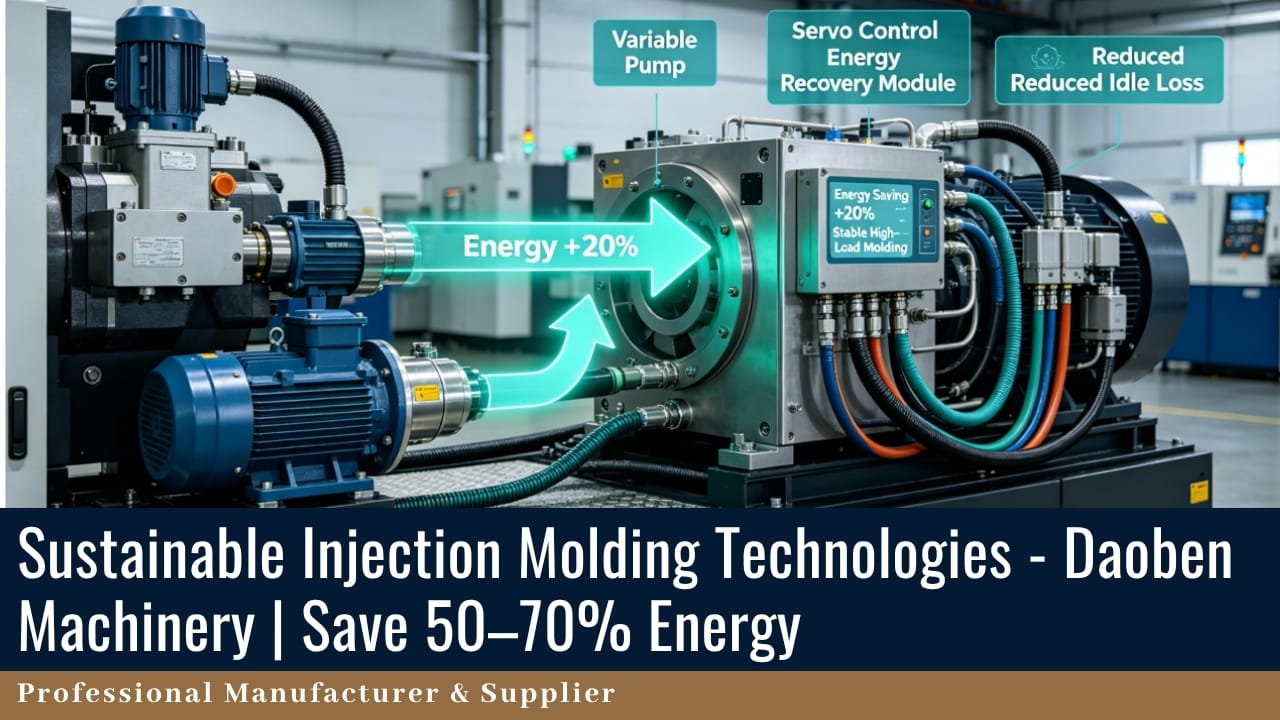
Servo‑hydraulic and all‑electric systems can significantly lower consumption versus legacy hydraulics.
Factor in your local electricity costs when modeling ROI.
Uptime & Serviceability
A machine is only as good as its maintenance plan. Evaluate spare‑parts availability, remote diagnostics, and technician response times.
Daoben Machinery at a Glance (30–4000 Ton Range)
Daoben Machinery is a professional plastic injection molding machine manufacturer and supplier offering presses from 30 Ton to 4000 Ton. That wide span helps molders standardize on one partner across tooling families—from precision micro parts to large structural components.
Highlights (depending on configuration and model):
Tonnage options suited for pilot lines, high‑speed packaging, general‑purpose molding, and large‑part production.
Options for servo‑hydraulic, hybrid, or high‑speed configurations (availability varies by model).
User‑friendly controls designed for repeatability and process transparency.
Lifecycle support focused on setup, training, optimization, and parts.
Why this matters: Beyond performance, buying from a single source for 30–4000 Ton simplifies training, spare‑parts management, and maintenance schedules.
Typical Applications by Tonnage
Below is a practical (not exhaustive) mapping you can use during early scoping.
Tonnage Band
Typical Parts & Sectors
Notes
30–150 Ton
Precision gears, medical disposables, electronics housings, connectors
Emphasis on precision, high injection speed, small shot sizes
160–350 Ton
Caps & closures, home goods, mid‑size electronics, light auto interiors
Balanced shot size and clamp; general‑purpose workhorse
400–1000 Ton
Appliance cabinets, logistics totes, thick‑walled parts, medium auto exteriors
Focus on platen rigidity and plasticizing throughput
1200–4000 Ton
Bumpers, instrument panels, pallets, large bins, industrial panels
Mold handling, safety, and tie‑bar spacing become critical
Technology Options to Consider
Your parts and resin dictate the best platform. Common options (availability varies by model):
Servo‑Hydraulic: Great all‑rounder; strong energy savings vs. legacy hydraulics, robust for most resins.
Two‑Platen: Compact footprint for higher tonnage; easier mold changes on large tools.
High‑Speed/Thin‑Wall: Optimized injection units, responsive control, and cooling for packaging.
(Where Applicable) All‑Electric: Exceptional precision and energy efficiency for cleanrooms and micro‑features.
Cost of Ownership
Price is the starting line, not the finish line. Model total cost of ownership (TCO) across 5–10 years:
Energy: Servo or electric drives, heat management, and recovery systems.
Cycle Time: Faster fill, optimized cooling, and quick mold change can boost annual output.
Scrap & Rework: Stable process windows and repeatability reduce waste.
Uptime: Preventive maintenance, remote diagnostics, and spare‑parts access.
Training & Usability: Intuitive controls and recipes cut startup curves and operator error.
How to Specify the Right Press (Quick Worksheet)
Use this to align requirements before contacting injection molding machine suppliers.
Part & Tooling
Part resin(s), wall thickness, projected area (include runners).
Number of cavities and expected mold family changes.
Critical dimensions/tolerances and surface finish.
Tonnage (Rule‑of‑Thumb Example)
Many molders estimate clamp using 3–5 tons per square inch of projected area (higher for thin‑wall/engineering resins).
Example: Part area = 25 in², 2 cavities ⇒ projected area = 50 in².
Bring this worksheet to your first call; it speeds up recommendations and quotes.
Questions to Ask Injection Machine Manufacturers & Suppliers
What tonnage and screw/barrel combinations fit my parts and resins?
How do you ensure repeatable V/P switchover and stable cushion?
What are typical energy‑consumption figures at my cycle time?
How quickly can you provide critical spare parts?
What’s included in installation, training, and warranty?
Can we run a mold trial or share process data from similar parts?
Why Choose Daoben Machinery
One partner, broad range: From 30 Ton pilot tools to 4000 Ton large‑part production.
Fit‑for‑purpose engineering: Configurations to match precision, speed, or footprint needs (varies by model).
Support mindset: From specification and commissioning to optimization and parts, the focus is on long‑term uptime.
Whether you’re shortlisting injection machine manufacturers or comparing injection molding machine suppliers, Daoben’s 30–4000‑ton coverage and practical engineering help streamline both CapEx and day‑to‑day operations.
FAQs
What’s the difference between an injection machine manufacturer and an injection molding machine supplier?
Manufacturers design and build the machines. Suppliers sell and service them—sometimes representing multiple brands. Daoben Machinery does both.
How do I estimate the clamping force I need?
A common rule of thumb is 3–5 tons per square inch of projected area (use more for thin‑wall or engineering resins). Validate with mold trials or simulation.
Which machine type should I consider—servo‑hydraulic, hybrid, or all‑electric?
Match platform to your parts and environment. Servo‑hydraulic is versatile; high‑speed configurations suit thin‑wall; all‑electric (where applicable) excels in precision and clean environments.
What information should I provide to get a quote quickly?
Part drawings, resin(s), projected area, number of cavities, shot size, target cycle, and any facility constraints (power, water, crane).
Next Steps
If you’re comparing injection machine manufacturers or vetting injection molding machine suppliers, share your part data and throughput goals. Daoben Machinery can recommend the right press within the 30–4000‑ton range and outline commissioning, training, and parts support.