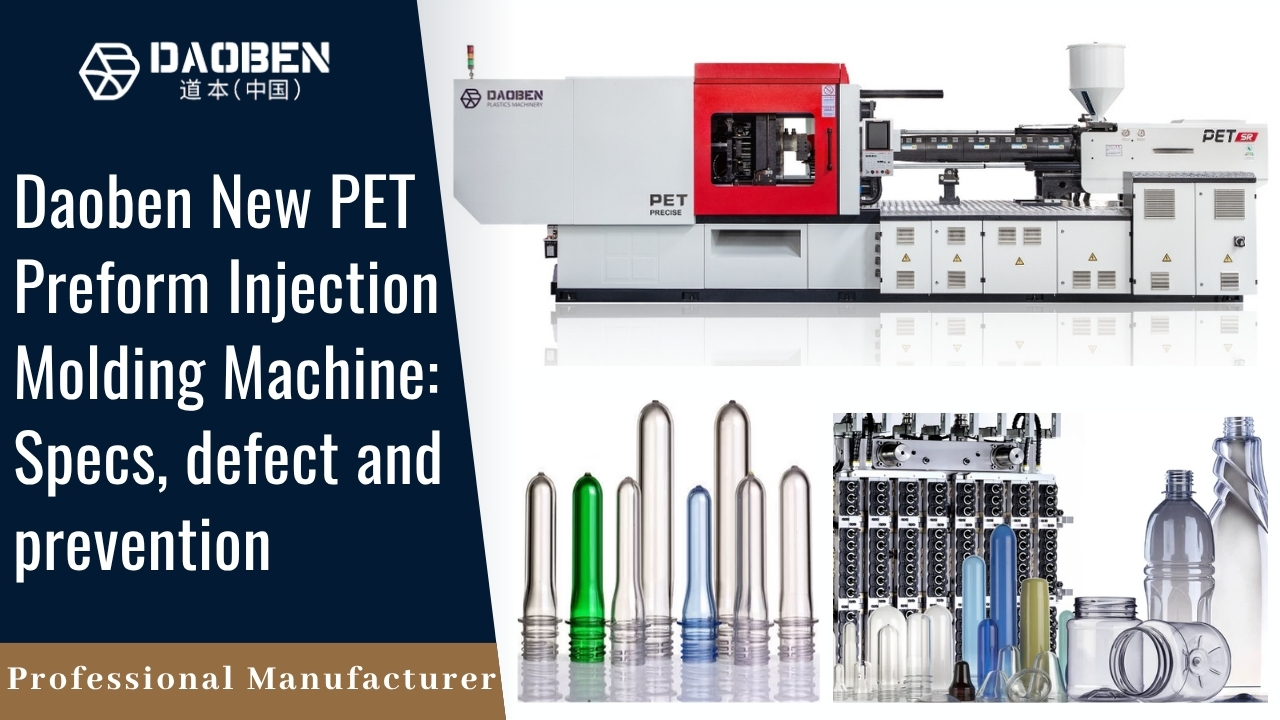
Global PET resin demand reached over 30 million metric tons in 2024, and beverage packaging accounts for the largest share. Every water bottle, soda bottle, and cooking oil container on a store shelf started as a PET preform — a test-tube-shaped blank molded on a PET preform injection molding machine before being blown into its final shape. The machine that molds that preform determines the bottle’s clarity, weight consistency, and production speed.
Most general-purpose injection molding machines can process PET resin. But running PET preforms on a general-purpose machine means accepting compromises — longer cycle times, higher acetaldehyde (AA) levels, and inconsistent cavity fill across high-cavity molds. That is why leading preform producers use machines designed exclusively for this application.
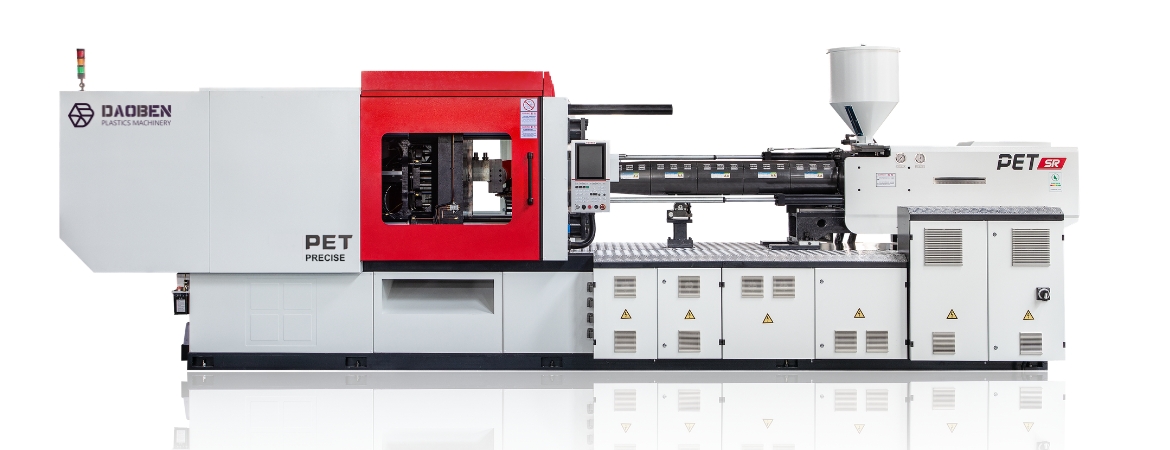
Daoben’s PET series injection molding machine was built from the ground up for preform production. Four models cover clamping forces from 2180 kN to 7000 kN, with mold compatibility from 16 to 72 cavities. This article covers what to look for in a PET preform injection molding machine, how the Daoben PET series addresses common preform defects, and which features matter most for your production volume.
Quick Answer: A PET preform injection molding machine is a high-speed injection molder built specifically to produce PET preforms for bottle blowing. Key features include a dedicated 25:1 L/D screw for PET resin, a high-rigidity clamping structure, and optimized hydraulic circuits for fast, repeatable cycles. The Daoben PET series handles 16 to 72 cavity molds with clamping forces from 2180 kN to 7000 kN.
Why PET Preform Production Needs a Dedicated Machine
PET (polyethylene terephthalate) resin behaves differently from commodity resins like PP or PE. It absorbs moisture aggressively, degrades at high temperatures, and produces acetaldehyde when processed incorrectly. A dedicated PET preform injection molding machine addresses all three problems through purpose-built screw geometry, barrel temperature management, and optimized residence time.
The Daoben PET series uses a 25:1 L/D ratio screw with special material, dedicated heat treatment, and a chrome-plated surface. This combination improves melt homogeneity, raises product transparency, and lowers the AA value of the finished preform. According to the PET Resin Association (PETRA), keeping AA levels below 8 ppm is critical for water bottle preforms because even trace amounts affect taste.
General-purpose machines often use 20:1 or 22:1 L/D screws designed for multiple resin types. These shorter screws cannot achieve the same melt uniformity with PET, which leads to haze, inconsistent wall thickness in the finished bottle, and higher reject rates during blow molding.
Key Features of the Daoben PET Series Injection Molding Machine
The Daoben PET series is built on the proven M8SII platform, but every subsystem has been re-engineered around four principles: precision, reliability, stability, and speed. Here are the features that directly affect preform quality and throughput.
High-Rigidity Clamping Structure
The clamping unit uses a newly designed high-rigidity structure that provides stable clamping force across the mold face. This reduces the risk of contraction defects in the preform body and gate area. The large mold opening stroke and wide mold thickness range handle preform molds of various sizes without mechanical modification.
Redesigned Hydraulic Circuit
The hydraulic circuit has been fully redesigned to minimize pressure loss across the entire oil flow path. Optimized pipe routing, valve placement, and flow channel geometry keep pressure drop low between the pump and each actuator. Lower pressure loss means the pump delivers more usable force without increasing motor power — directly reducing energy cost per preform.
Energy Monitoring System
The PET series includes a built-in energy monitoring system that tracks cumulative energy use, per-cycle consumption, and real-time power draw. Operators can compare energy costs across different preform types and mold configurations, making it simple to identify the most cost-effective production settings.
PET Preform Machine Specifications: Daoben PET Series at a Glance
Four models cover the range from small-run 16-cavity production to high-output 72-cavity lines. Below is a comparison of the core specifications for a PET preform injection molding machine in this series.
| Specification | PET218 | PET368 | PET700 |
| Clamping Force | 2180 kN | 3680 kN | 7000 kN |
| Screw L/D Ratio | 25:1 | 25:1 | 25:1 |
| Compatible Cavities | 16–24 | 32–48 | 48–72 |
| Screw Surface | Chrome-plated | Chrome-plated | Chrome-plated |
| Energy Monitoring | Standard | Standard | Standard |
| Safety System | Triple layer | Triple layer | Triple layer |
Every model includes a triple-safety protection system — mechanical, electrical, and hydraulic — operating independently. This is especially important for high-speed preform production where the machine runs long shifts at fast cycle times.
Common PET Preform Defects and How the Right Machine Prevents Them
Preform quality determines bottle quality. A defect that passes through the injection stage typically amplifies during blow molding. Here are the most common preform problems and how a dedicated PET preform injection molding machine solves each one.
High Acetaldehyde (AA) Levels
AA forms when PET resin degrades due to excessive heat or long residence time in the barrel. The Daoben PET series’ 25:1 L/D screw processes resin at lower temperatures with shorter residence time, keeping AA levels within acceptable limits for beverage-grade preforms.
Cavity Fill Imbalance
High-cavity PET molds (48–72 cavities) distribute melt across a wide runner system. Any imbalance in injection force causes weight variation between cavities. The Daoben PET series’ twin-cylinder balanced injection system reduces oil return resistance during high-pressure injection, keeping fill pressure stable across all cavities.
Gate Crystallization
If the gate area cools too slowly or the mold temperature is uneven, crystallization occurs at the gate — showing up as a white spot. The high-rigidity clamping structure applies uniform force across the mold face, which helps maintain even cooling and prevents localized hot spots near the gate.
Frequently Asked Questions
What makes a PET preform injection molding machine different from a standard machine?
A PET preform injection molding machine uses a dedicated screw design (typically 25:1 L/D ratio), purpose-built hydraulic circuits, and high-rigidity clamping optimized for preform mold geometry. These features keep acetaldehyde levels low, improve cavity fill balance, and deliver the fast cycles that preform production demands.
How many cavities can the Daoben PET series run?
The Daoben PET series supports preform molds from 16 to 72 cavities across four models. The PET218 handles 16–24 cavities, the PET368 handles 32–48, and the PET700 supports up to 72 cavities. Mold compatibility depends on preform length, weight, and neck finish type.
Why does screw L/D ratio matter for PET processing?
A longer screw (25:1 L/D) gives PET resin more time in the melting and mixing zones without raising barrel temperature. This produces a more homogeneous melt with fewer unmelted particles and lower acetaldehyde generation. Shorter screws (20:1) force higher temperatures to achieve the same melt quality, which degrades the resin.
What is acetaldehyde and why does it matter in PET preforms?
Acetaldehyde (AA) is a byproduct of PET thermal degradation. Even at low concentrations, it gives water a slightly sweet or fruity off-taste. Beverage manufacturers typically require AA levels below 8 ppm for water bottle preforms. A dedicated PET preform injection molding machine controls AA through optimized screw geometry, lower processing temperatures, and reduced residence time.
Does the Daoben PET series include energy monitoring?
Yes. The Daoben PET series includes a built-in energy monitoring system as standard on every model. It tracks total energy consumption from startup, records per-cycle energy usage, and displays real-time power draw. This data helps operators optimize process settings and compare energy costs across different preform types.
Your Preform Quality Starts With the Right Machine
PET preform production is not general-purpose molding. The resin demands specific screw geometry. The molds demand balanced, high-pressure injection. The market demands consistent clarity, weight, and AA levels — bottle after bottle, shift after shift.
A general-purpose machine can mold a PET preform. But a dedicated PET preform injection molding machine molds it faster, cleaner, and more consistently. The Daoben PET series delivers that dedicated performance with the added advantage of energy monitoring, triple safety protection, and a redesigned hydraulic circuit that lowers cost per preform.
To explore the full range of Daoben PET series models, visit the PET series product page, or reach out to the Daoben sales team for mold compatibility guidance.