What Is a 300-Ton Injection Molding Machine?
Quick answer:
A 300-ton injection molding machine provides approximately 300 tons of nominal clamping force and is typically used for medium-sized plastic parts where the mold requires sufficient force to remain closed during injection.
Typical applications
| Application | Why 300T may be suitable |
|---|---|
| Automotive components | Medium/large parts |
| Household products | High-volume production |
| Packaging | Depending on mold size |
| Industrial components | Medium-sized parts |
What determines whether 300 tons is enough?
- Projected area
- Mold cavity pressure
- Material
- Number of cavities
- Safety factor
How a 300 Ton Injection Molding Machine Works
The machine clamps a two-piece mold shut with 300 tons of force, then injects molten plastic through a nozzle until the cavity fills completely. Hydraulic or electric cylinders drive the clamping unit, while a rotating screw melts and pushes the plastic forward under high pressure.
Three systems work together inside every unit. The clamping unit holds the mold closed against injection pressure. The injection unit melts plastic pellets and forces them into the cavity. The control system manages temperature, pressure, and timing across the entire cycle.
Clamping force must exceed the internal pressure trying to push the mold apart. Engineers calculate this using a standard formula: multiply the part’s projected area by the cavity pressure of the material, then apply a safety factor of roughly 1.3. A PP container with a 500 cm² projected area, for instance, needs close to 200 tons of clamping force once the safety margin is applied — which is why many manufacturers round up to the next standard machine size, such as 300 tons, to leave production headroom.
Hydraulic vs. Electric Drive Systems
Hydraulic 300-ton machines use oil-driven cylinders and remain the lower-cost, higher-force option for thick or heavy-viscosity parts. Electric and hybrid versions replace some or all hydraulic components with servo motors, cutting energy use and improving repeatability for precision work.
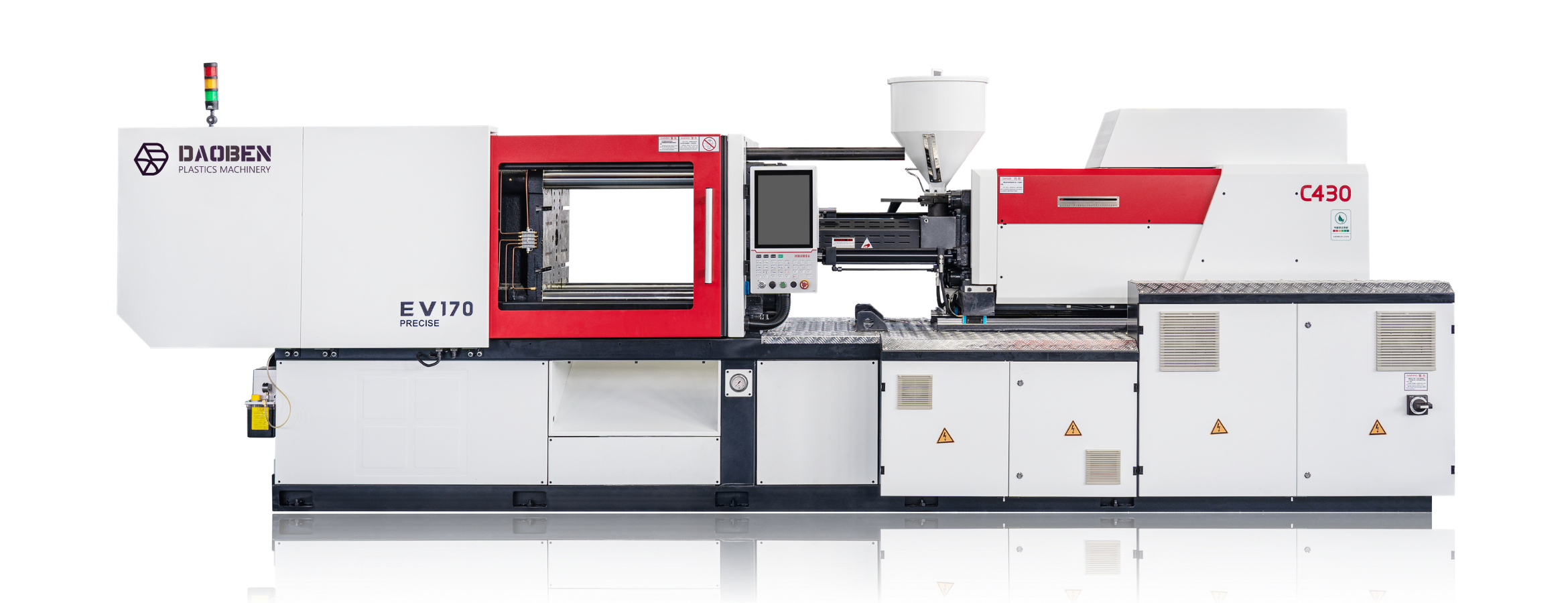
Daoben’s EV Hybrid series pairs a servo-electric injection drive with a hydraulic clamping unit at this tonnage, giving buyers faster cycle times without the full cost jump to an all-electric press. For a deeper breakdown of the trade-offs, our guide on electric vs hydraulic injection molding machines covers energy consumption, precision, and maintenance differences in detail.
Applications of a 300 Ton Plastic Molding Machine
A 300 ton plastic molding machine molds parts ranging from storage buckets and stackable chairs to automotive trim and appliance housings. Its clamping force and shot size cover most mid-volume, mid-size production runs without requiring a larger, costlier press.
Manufacturers choose this tonnage because it balances part size against operating cost. Below are the categories where this class performs consistently well.
Bucket and Container Molding
A bucket moulding machine in the 300-ton range handles pails, crates, and storage bins with wall thicknesses that demand steady clamping pressure. These containers often use HDPE or PP resin, both of which need firm, even clamping to prevent flash at the parting line. Daoben configures screw and barrel combinations specifically for these high-viscosity, high-volume resins.
Chair and Furniture Component Molding
A chair making machine at this tonnage molds full monobloc chairs, stackable seating, and furniture legs in a single shot. Chair molds carry large projected areas because the seat and backrest form one continuous surface, which is exactly the kind of part that benefits from the 300-ton clamping range described earlier.
Automotive and Appliance Parts
Interior trim panels, bumper brackets, dashboard components, and washing machine housings all fall within this machine’s practical range. These parts often use engineering plastics like ABS or PC/ABS blends, which require tighter temperature control than commodity resins — a strength of Daoben’s servo-driven M7 and M8SII platforms.
General Plastic Molding for Industrial Goods
Pallets, industrial bins, electrical enclosures, and packaging crates represent the broader category of plastic molding work suited to 300 tons. These goods share a common trait: moderate wall thickness, large flat surfaces, and production volumes in the tens of thousands per month.
300 Ton Injection Molding Machine Specifications
A typical 300-ton unit delivers a shot weight between 600 and 900 grams (PS material), a tie-bar spacing near 590–610 mm, and a maximum mold height around 650–700 mm. These figures vary by manufacturer, screw configuration, and drive type.
Buyers should confirm four numbers before ordering: clamping force, injection capacity, tie-bar spacing, and platen size. Mismatching any of these against your mold design causes production delays after the machine already sits on your factory floor.
| Specification | Typical Range (300T) | Why It Matters |
|---|---|---|
| Clamping Force | 290–300 metric tons | Determines maximum projected part area |
| Injection Weight (PS) | 600–900 g | Sets maximum shot size per cycle |
| Tie-Bar Spacing | 590 x 590 mm to 610 x 605 mm | Limits maximum mold width |
| Max Mold Height | 650–700 mm | Restricts mold and part depth |
| Screw Diameter | 55–65 mm | Affects plasticizing rate and pressure |
| Drive Type | Hydraulic, hybrid, or full-electric | Impacts energy cost and cycle speed |
Injection Pressure and Cycle Time
Injection pressure on 300-ton machines typically ranges from 1,600 to 2,000 bar, enough to fill thin-wall sections without short shots. Cycle times depend heavily on part geometry and cooling design, but most producers see full cycles between 25 and 60 seconds for mid-size parts once the process stabilizes.
Faster cycles reduce cost per part significantly over a production run. According to one industry analysis on automated plastic injection systems, automation and process optimization can meaningfully cut per-unit manufacturing costs by reducing cycle variance and scrap rates.
300 Ton Injection Molding Machine Cost
A new 300-ton hydraulic injection molding machine from a Chinese manufacturer typically costs between $35,000 and $55,000, while hybrid and all-electric versions range from $60,000 to $90,000 or higher. Price depends on control brand, screw configuration, and automation add-ons.
Several factors push the price up or down beyond the base unit. Robotic arms, hot runner systems, and higher-grade PLC controllers all add cost but also raise output consistency.
What Drives the Price Difference
Hydraulic machines cost less upfront but consume more electricity per cycle, since the pump runs continuously regardless of load. Electric and hybrid machines cost more initially, yet many buyers recover the difference within two to three years through lower power bills and reduced oil maintenance.
Import duties, shipping, and installation also affect the landed cost. Buyers sourcing from China should request a full breakdown covering ex-works price, freight, and any local commissioning fees before comparing quotes across suppliers. For a full pricing breakdown across tonnage classes, see our plastic injection molding machine price guide.
Choosing Between 200, 300, and 500 Ton Machines
Choose 300 tons when your parts have a projected area between roughly 400 and 600 cm² and demand moderate wall thickness. Step down to 200 tons for smaller parts, or up to 500 tons when molds exceed that projected area or need extra clamping headroom for filled resins.
| Tonnage | Typical Projected Area | Common Parts |
|---|---|---|
| 150–200 tons | Up to 400 cm² | Small housings, caps, thin containers |
| 250–300 tons | 400–600 cm² | Buckets, chairs, trim panels |
| 400–500 tons | 600–900 cm² | Large crates, pallets, bumper parts |
| 600+ tons | 900 cm²+ | Large automotive panels, big totes |
Buyers in Turkey and neighboring markets researching bucket and crate production often search using local terminology; our Turkish-language resource on plastik kasa makinası covers crate mold selection in more detail for that audience.
Frequently Asked Questions
What does “300 ton” mean on an injection molding machine?
The number refers to the clamping force the machine applies to hold the mold shut during injection. A 300 ton injection molding machine generates 300 metric tons of closing pressure, which prevents the mold from opening under the internal pressure of molten plastic.
What size parts can a 300 ton machine produce?
A 300-ton press typically handles parts with a projected surface area up to about 600 square centimeters, depending on the resin and cavity pressure involved. This covers most buckets, chairs, appliance panels, and mid-size automotive components.
How much does a 300 ton injection molding machine cost?
Prices generally range from $35,000 for a basic hydraulic model to $90,000 or more for a hybrid or full-electric unit with advanced controls. Automation, hot runners, and brand-name components all raise the final price.
Is a 300 ton machine hydraulic or electric?
Both options exist at this tonnage. Hydraulic models cost less and suit thick-walled, high-viscosity parts, while electric and hybrid models like Daoben’s EV series improve energy efficiency and repeatability for precision work.
What materials work best with a 300 ton plastic molding machine?
HDPE, PP, ABS, and PC/ABS blends all run well on a 300-ton press, since the clamping force and injection pressure suit their typical processing windows. Material choice ultimately depends on the part’s mechanical and cosmetic requirements.
How long does a 300 ton machine last with proper maintenance?
A well-maintained 300-ton machine typically runs 12 to 15 years or longer before major overhaul, though hydraulic seals, barrels, and screws need periodic replacement. Routine oil changes and tie-bar inspections extend service life considerably.
The Right 300 Ton Injection Molding Machine Changes Your Output
Choosing the correct tonnage prevents two costly mistakes: undersizing, which causes flash and short shots, or oversizing, which wastes energy and capital. A 300 ton injection molding machine sits at a genuinely useful middle ground for manufacturers producing buckets, chairs, crates, and mid-size industrial or automotive parts.
Get the mold data right first — projected area, wall thickness, and resin type — then match it against the tonnage tables above. That sequence, done in order, saves far more money than chasing the lowest quoted price.
Daoben Machinery manufactures injection molding machines from 30 tons to 4,000 tons, including hydraulic, hybrid, and all-electric platforms suited to 300-ton production lines. Visit our injection molding machine manufacturer and supplier page to review available series and request a quote for your specific mold requirements.