A single airborne particle measuring 5 microns can scrap an entire batch of insulin pen bodies. That is the reality buyers face when they source cleanroom injection molding equipment for medical devices, diagnostic consumables, or precision electronics housings.
Most machine specification sheets do not mention particles at all. They list clamping force, shot weight, and cycle time. Yet in a controlled environment, the machine itself becomes a contamination source — through oil mist, belt dust, motor brush wear, and the friction of moving tie bars.
Buyers who learn this early avoid expensive retrofits. Buyers who learn it late end up rebuilding validated production lines.
This article explains how cleanroom molding actually works, which ISO class you need, how machine design changes inside a controlled space, what it costs, and which questions to ask before you sign a purchase order.
Quick Answer: Cleanroom injection molding produces plastic parts inside an ISO-classified controlled environment, typically ISO Class 7 or Class 8 under ISO 14644-1. The process uses all-electric or encapsulated hydraulic machines, oil-free drives, stainless steel surfaces, and HEPA-filtered laminar airflow to keep particle counts low enough for medical devices, diagnostics, and precision electronics.
What Cleanroom Injection Molding Actually Means
Cleanroom injection molding is standard plastic molding performed inside a room where airborne particle counts, temperature, humidity, and pressure are controlled and monitored. ISO 14644-1 defines the classification levels. Most medical molders operate at ISO Class 7 or Class 8, while some implant and ophthalmic work requires Class 5.
The classification numbers can confuse first-time buyers. An ISO Class 7 room allows no more than 352,000 particles of 0.5 microns or larger per cubic meter. Class 8 allows ten times that. Class 5 allows only 3,520. Each step down the scale multiplies your air handling cost.
However, the room class alone does not guarantee clean parts. Three factors matter together: the room, the machine, and the people. Weak performance in any one of them ruins the other two.
Where the Molding Machine Sits
There are two common layouts. In a full cleanroom setup, the entire machine sits inside the controlled space. In a wall-through setup, the clamping unit and part exit face the cleanroom while the injection unit, motors, and hydraulics stay outside in a grey room.
The wall-through design costs less to run. Because you condition less air volume, energy bills drop sharply. Moreover, maintenance staff can service the drive side without gowning up or breaking the room seal.
Smaller producers often choose a laminar flow hood instead. A HEPA-filtered canopy sits directly over the mold area and part drop zone. This creates a small clean envelope at a fraction of the cost. It works well for Class 8 requirements but rarely satisfies Class 7 auditors.
Why Standard Machines Fail in Cleanroom Molding
A standard hydraulic press generates oil mist, belt particles, and metal wear debris. Inside a controlled room, those emissions accumulate on part surfaces and drive particle counts above limit. Cleanroom-ready machines eliminate these sources through electric drives, sealed lubrication, encapsulated moving parts, and smooth corrosion-resistant surfaces that wipe down easily.
Oil is the biggest offender. A conventional hydraulic system holds hundreds of liters of fluid under pressure. Seals weep. Fittings mist. Even a small leak coats nearby surfaces with a film that traps particles and resists cleaning.
All-electric machines remove that risk almost entirely. Servo motors drive the screw, clamp, and ejector through ball screws instead of cylinders. They also run quieter and repeat shot volume more precisely, which matters when you mold thin-wall pipette tips or microfluidic channels. Our breakdown of electric versus hydraulic injection molding machines covers the trade-offs in detail.
Machine Features That Actually Matter
Stainless steel or nickel-plated covers replace painted steel, because paint chips and flakes. Tie bars get protective bellows or covers. Belt drives get replaced by direct-drive motors so no rubber dust escapes.
Cooling water lines run outside the clean zone wherever possible. Cable trays get sealed. Even the machine feet change — flat, sealed pads replace open frames, so cleaning staff can mop underneath without trapping residue.
Finally, look at the hopper and dryer. Resin handling creates a surprising amount of dust. Closed-loop desiccant drying with filtered conveying keeps that dust out of the room entirely.
Choosing the Right ISO Class for Your Product
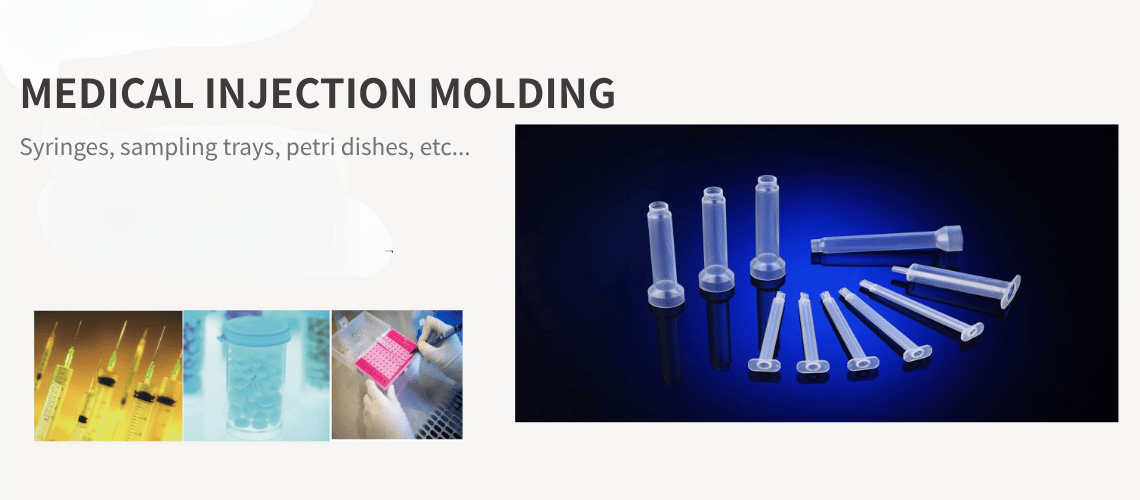
Your ISO class should match your product’s risk profile, not your ambition. Non-sterile device housings and electronics connectors usually pass at ISO Class 8. Sterile-barrier components, syringe parts, and diagnostic consumables typically need ISO Class 7. Implantables and intraocular products demand ISO Class 5, which multiplies both build cost and running cost.
Over-specifying is a common and expensive mistake. Each cleaner class requires more air changes per hour. The Class 8 rooms typically run 20 to 40 air changes hourly. Class 7 rooms need 60 to 90. Class 5 needs 240 to 600, which usually means unidirectional flow across the whole ceiling.
Energy follows the same curve. Filtration, dehumidification, and pressure control run continuously, even on weekends. So a room you never needed will drain margin for the life of the product.
| Requirement | ISO Class 8 | ISO Class 7 | ISO Class 5 |
|---|---|---|---|
| Max particles ≥0.5 µm per m³ | 3,520,000 | 352,000 | 3,520 |
| Typical air changes per hour | 20–40 | 60–90 | 240–600 |
| Typical machine type | Encapsulated hydraulic or electric | All-electric | All-electric, wall-through |
| Common products | Device housings, caps, electronics parts | Syringe bodies, IV components, test cartridges | Implants, ophthalmic lenses |
| Relative operating cost | Baseline | 2–3× baseline | 6–10× baseline |
| Gowning level | Lab coat, hairnet, gloves | Full coverall, hood, booties | Full coverall, double gloves, airlock |
Talk to your regulatory lead before you fix the class. Under ISO 13485 and FDA 21 CFR Part 820, you must justify your environmental controls with documented risk analysis. An auditor will ask why you chose that class. “Because it seemed safer” is not an answer that survives review.
Materials and Plastic Moulding Techniques for Clean Production
Cleanroom molding relies on medical-grade resins with full traceability and stable processing windows. Common choices include polypropylene, polycarbonate, COC/COP, PEEK, and medical-grade TPE. These plastic moulding techniques emphasize tight shot repeatability, validated drying, low-particle mold surfaces, and minimal post-mold handling.
Resin selection drives machine selection. PEEK, for example, processes above 380°C and needs a high-temperature barrel and hardened screw. COC and COP are optically clear but shear-sensitive, so they need gentle screw geometry and precise back-pressure control.
Sterilization method matters too. Gamma radiation yellows some polycarbonate grades. Steam autoclaving deforms standard polypropylene. Confirm the sterilization route before you lock the resin, because changing resin later usually means a new mold.
Handling Parts After the Mold Opens
Human contact is the largest contamination risk in most cleanrooms. So automation earns its cost quickly here. A side-entry or top-entry robot removes parts, places them on a conveyor, and drops them straight into sealed bags or trays.
In-line vision inspection can check dimensions and cosmetic defects before packaging. That reduces sorting labor and, more importantly, reduces the number of gowned operators inside the room.
Automated cells also cut per-unit cost. Industry analysis on how automation reduces per-unit molding costs shows the savings compound as volumes grow.
What Cleanroom Injection Molding Equipment Costs
A cleanroom injection molding setup usually costs 30% to 60% more than the same tonnage in a standard shop. The machine premium runs roughly 15% to 40% for all-electric and cleanroom-prepared versions. Room construction, HEPA filtration, gowning airlocks, monitoring, and validation add the rest.
Break the budget into four parts. First, the machine and auxiliaries. Second, the room shell and air handling. Third, automation and part handling. Fourth, validation, documentation, and ongoing particle monitoring.
That fourth item surprises buyers most often. Installation Qualification, Operational Qualification, and Performance Qualification each require test protocols, executed runs, and signed reports. Budget several weeks of engineering time, not several days.
Machine tonnage still drives the base price. For current tonnage-by-tonnage figures, see our plastic injection molding machine price guide. Buyers producing enclosures and cases may also find our notes on plastic case molding machines useful for sizing.
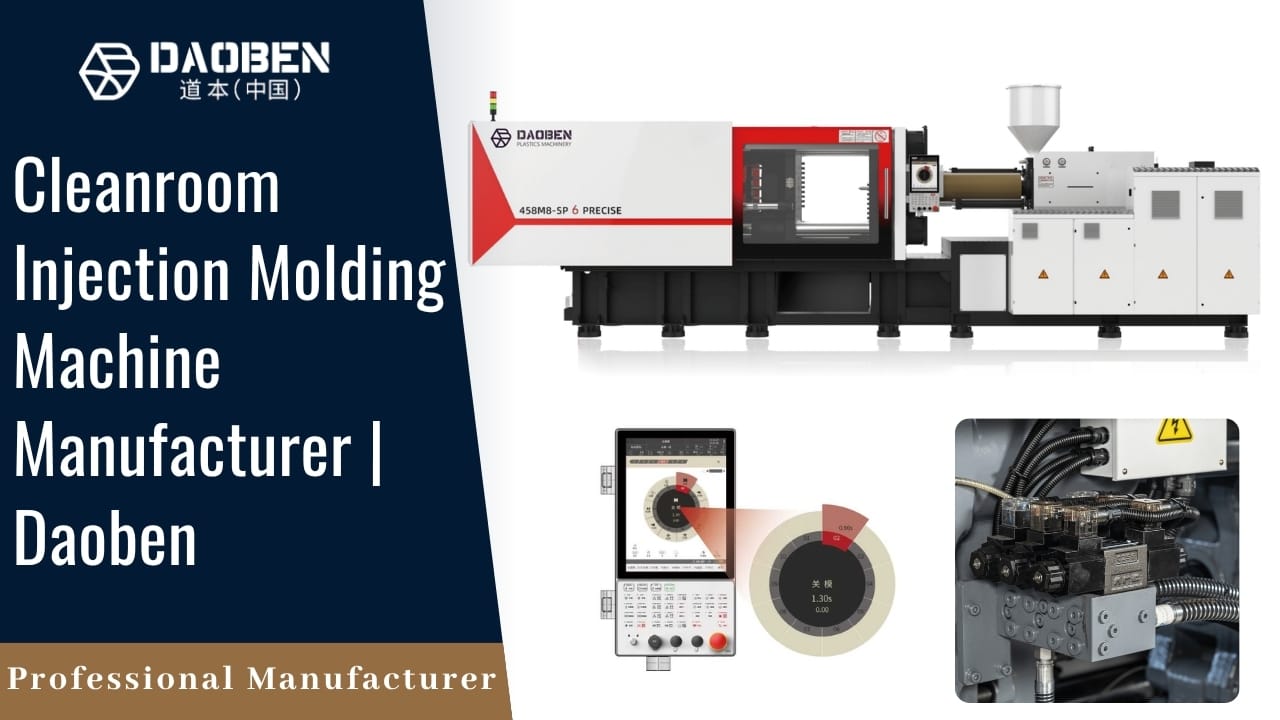
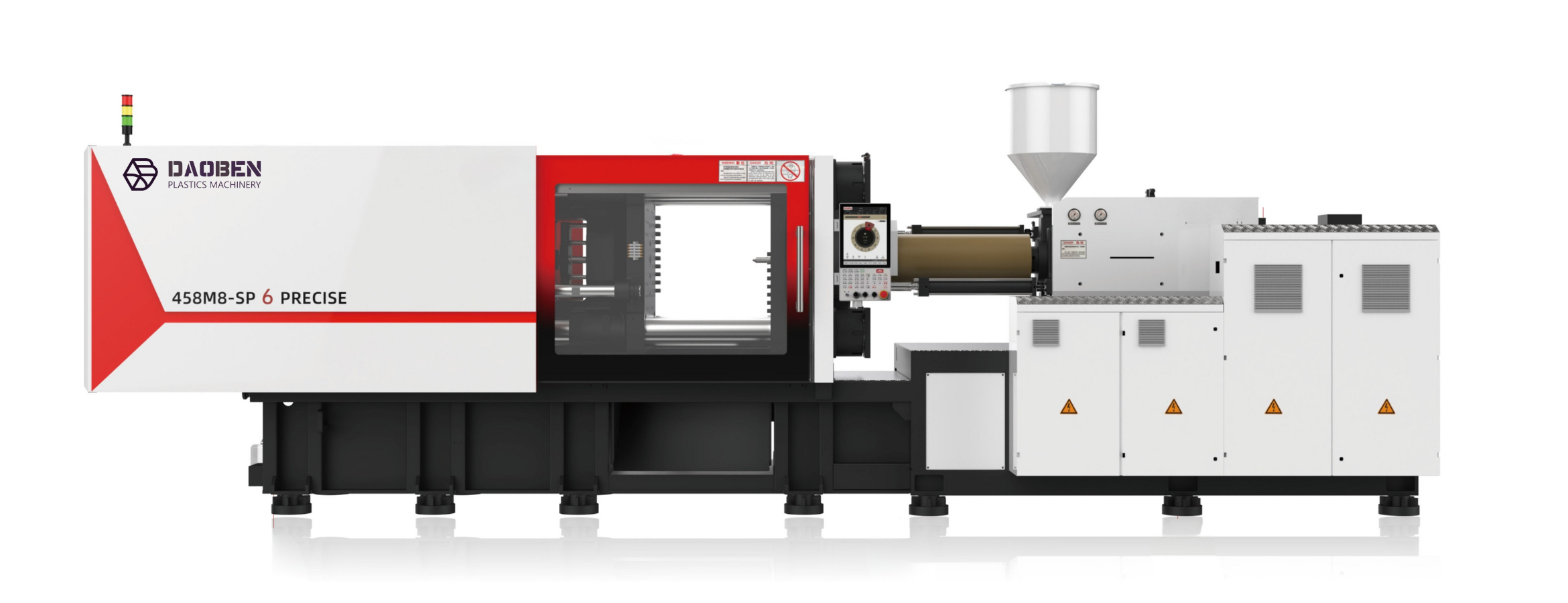
At Daoben Machinery, we build injection molding machines from 30 to 4,000 tons, including all-electric and cleanroom-prepared configurations with stainless covers, sealed lubrication, and wall-through mounting options.
Frequently Asked Questions
What ISO class is required for medical injection molding?
Most medical injection molding runs at ISO Class 7 or Class 8 under ISO 14644-1. Class 7 suits sterile-barrier components like syringe bodies and diagnostic cartridges. Class 8 covers non-sterile housings and caps. Implantable products generally require Class 5 cleanroom injection molding with unidirectional airflow.
Do you need an all-electric machine for cleanroom injection molding?
All-electric machines are strongly preferred for cleanroom injection molding because they produce no oil mist and shed fewer particles. Encapsulated hydraulic machines can still qualify at ISO Class 8 with sealed lubrication and full covers. For Class 7 and cleaner, all-electric is the practical standard.
How much more does cleanroom molding cost than standard molding?
Cleanroom molding typically adds 30% to 60% to total project cost. The machine premium is 15% to 40%. Room construction, HEPA filtration, gowning areas, and validation make up the balance. Ongoing costs include filter replacement, particle monitoring, gowning consumables, and higher energy use.
Can an existing injection molding machine be converted for cleanroom use?
Conversion is possible but limited. Adding stainless covers, tie-bar bellows, sealed lubrication, and a laminar flow hood can bring a hydraulic machine to ISO Class 8. Reaching Class 7 through retrofit rarely works, because the hydraulic system itself remains a particle and oil-mist source.
What plastic moulding techniques work best inside a cleanroom?
Effective plastic moulding techniques inside a cleanroom include all-electric molding for shot repeatability, closed-loop resin drying, hot-runner tooling to cut sprue waste, and robotic part removal with direct bagging. Each technique reduces human contact, which remains the leading contamination source in controlled molding environments.
Getting Cleanroom Injection Molding Right From the First Machine
The buyers who succeed here start with the product, not the equipment. Define the sterilization route, the regulatory pathway, and the acceptable particle limit first. The correct ISO class, machine type, and automation level then follow logically from those three answers.
Cleanroom injection molding rewards planning and punishes shortcuts. A machine that seems adequate during a trial run can fail a particle count six months into validated production. Conversely, an over-specified room quietly erodes margin every single day it operates.
Ask suppliers for particle test data, not just brochures. Ask which specific covers, seals, and drives change on a cleanroom version. Also ask whether wall-through mounting is supported on the tonnage you need.
If you are sizing equipment for a medical or electronics program, our engineering team can help you match tonnage, shot size, and cleanroom configuration to your part. Reach out through our injection molding machine manufacturer page with your part drawing and target volume, and we will send a configuration proposal.