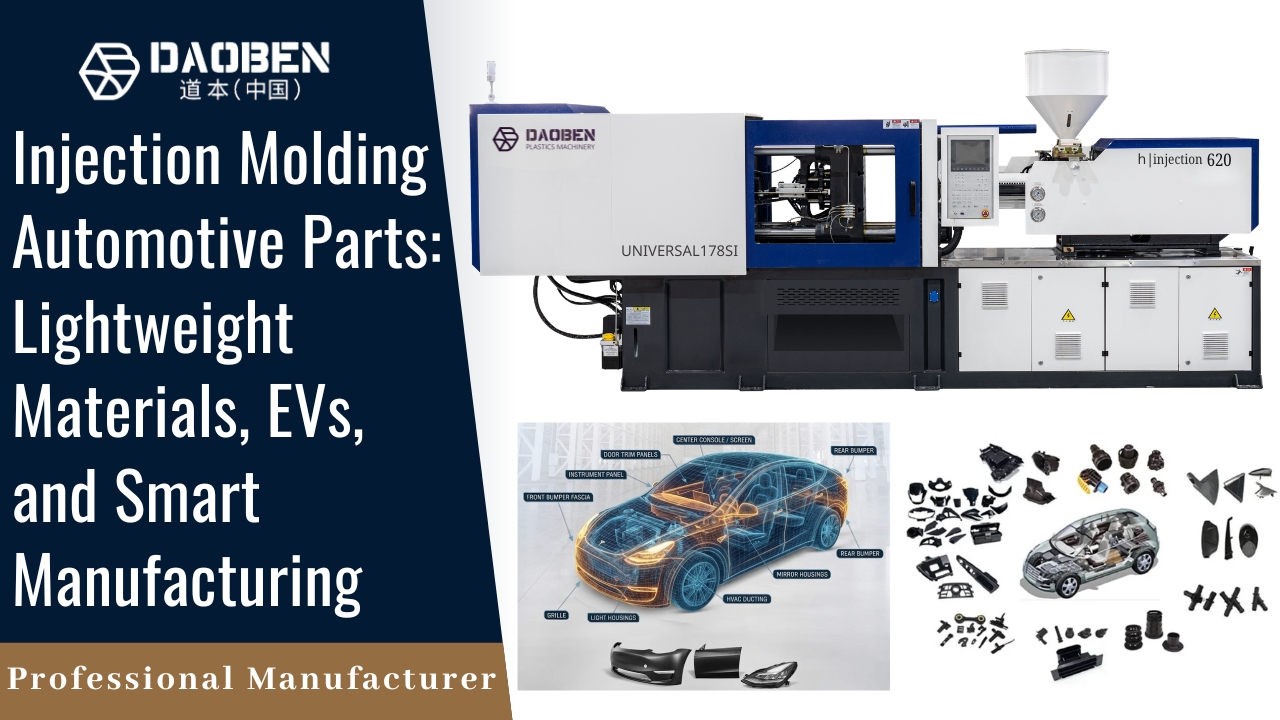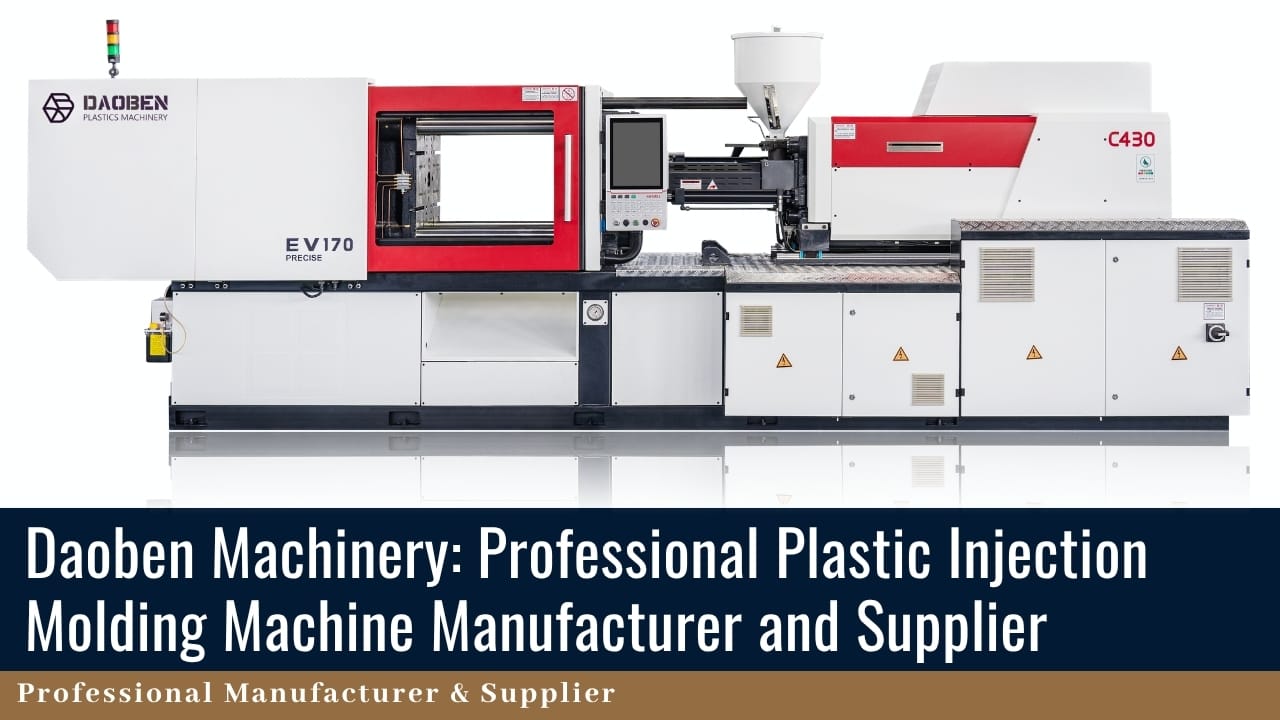
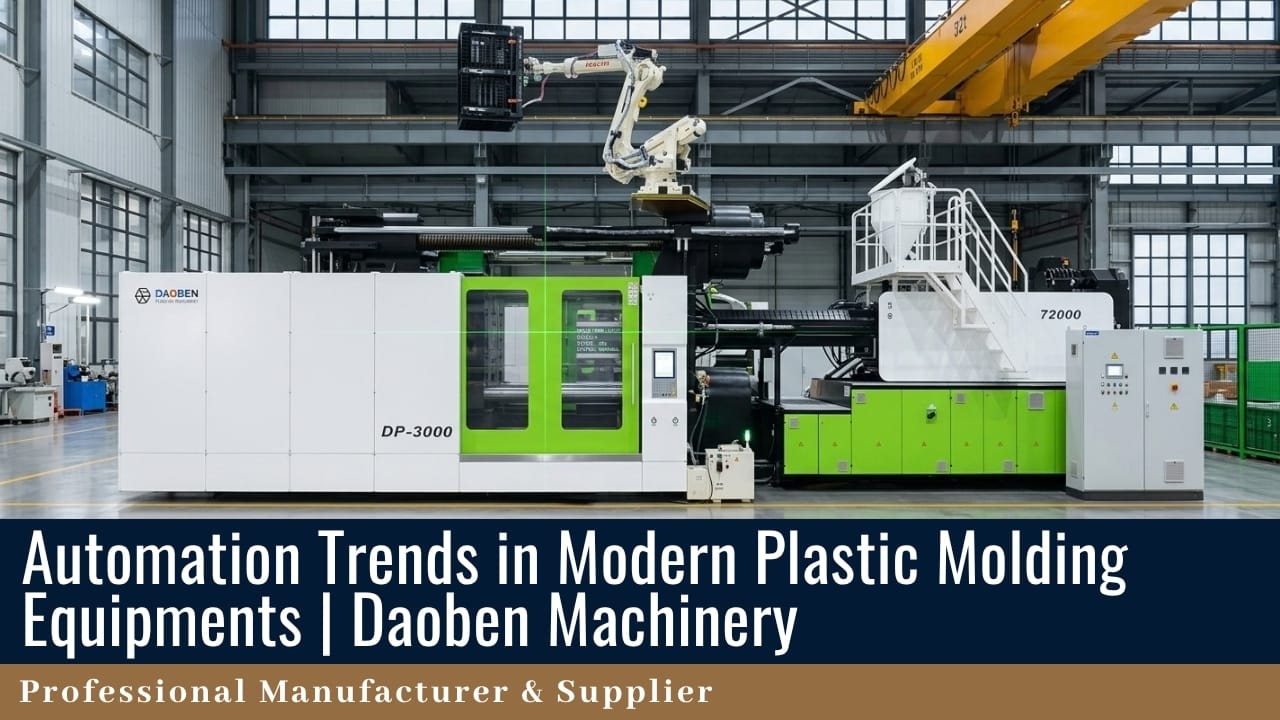
An automatic injection moulding machine can run a full shift without an operator at the mould. It melts resin, fills the mould, cools the part, and hands it to a robot. Then it starts again, often every few seconds.
That simple loop now shapes how factories make bottle caps in Istanbul, car parts in Detroit, and syringes in Johor. Wages are rising, buyers want tighter tolerances, and energy bills keep climbing. As a result, more plants are moving from manual presses to automatic injection molding.
The numbers support this shift. The International Federation of Robotics reports that factories installed more than 600,000 new robots in 2025. That lifted the global fleet to a record 5 million units. Meanwhile, Future Market Insights values the injection molding machine market at USD 17.4 billion in 2025, with 4.9% yearly growth forecast to 2035.
This article explains what an automatic injection moulding machine is and how it changes five major industries. It also covers the core technology and a buyer checklist for the USA, UK, Türkiye, Malaysia, the Gulf, and Africa.
Quick Answer: An automatic injection moulding machine runs the full moulding cycle without manual steps between shots. It clamps, injects, cools, opens, and ejects on its own. Paired with robots, servo drives, and connected controls, it cuts labour per part, lowers energy use, and keeps quality steady. Packaging, automotive, medical, and electronics makers gain the most.
What Is an Automatic Injection Moulding Machine?
An automatic injection moulding machine is a press that repeats every step of the moulding cycle on its own, shot after shot. A PLC or industrial PC controls clamping, injection, holding pressure, cooling, mould opening, and ejection. Robots, conveyors, and material loaders then take over routine handling, so one technician can supervise several machines.
Semi-Automatic vs Fully Automatic Operation
A semi-automatic press still needs a person to close the safety gate and start each cycle. That person also removes parts, checks them, and clears runners. In contrast, a fully automatic press starts the next cycle by itself once the robot signals that the mould area is clear.
Because of this handshake, the cycle no longer waits for a human hand. Most modern presses can run in either mode. So the right choice depends on part volume, part value, and quality needs.
The Three Systems That Make Automation Work
Three systems do the heavy lifting. First, servo drives control pump speed or screw motion with fine accuracy. Second, a robot interface such as EUROMAP 67 lets the machine and robot share safety and timing signals. Third, closed-loop sensors track pressure, temperature, and screw position every shot. As a result, the control can correct drift before it turns into scrap.
How Automatic Injection Moulding Machines Are Changing Key Industries
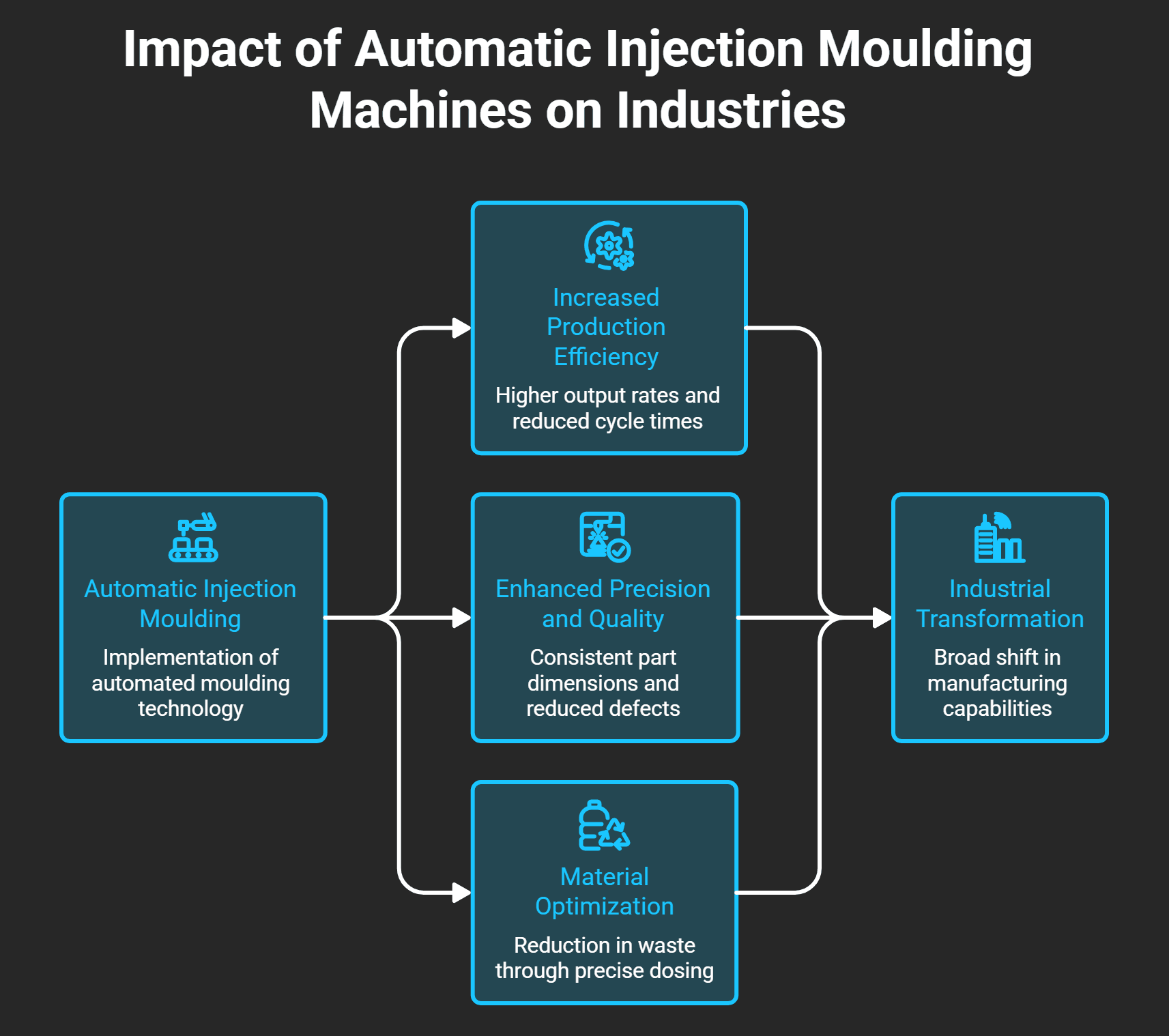
Automatic injection moulding machines change industries in three ways. They raise output per worker, they make each part match the last one, and they let plants run unattended night shifts. However, the impact looks different in each sector. Packaging chases speed, medical chases traceability, and automotive chases size and strength.
Packaging and PET Preforms: Speed Above All
Packaging runs on cycle time. For example, saving 0.5 seconds on a 6-second cycle lifts output by about 9%.
Fast take-out robots, in-mould labelling (IML), and stack moulds keep these lines moving. For PET preforms, dedicated presses such as the Daoben PET Series handle the high-speed work. In a typical preform cell, a take-out plate moves hot preforms to cooling stations, so the next shot can start at once.
Automotive: Bigger Parts, Tighter Limits
Car makers use automatic injection molding for bumpers, door panels, dashboards, battery housings, and clips. Large parts need high clamping force and a wide mould opening. That is why many plants choose two-platen presses such as the Daoben DU Series.
Robots also load metal inserts, trim gates, and stack finished panels. Suppliers in the USA, Türkiye, Morocco, and South Africa often work under IATF 16949, which demands documented process control. An automatic molding machine makes that record keeping easier, since it logs the data of every shot.
Medical Devices: Clean, Traceable, Repeatable
Syringes, IV parts, pipette tips, and blood collection tubes come off the line by the million, often inside cleanrooms. Here, the key gain is traceability. Plants certified to ISO 13485 must prove that each batch ran inside a validated process window.
An automatic injection moulding machine with robot take-out keeps human hands away from the parts. Its data log also supports process validation and audits.
Electronics: Small Parts, Fine Tolerances
Connectors, switch housings, and device frames need tolerances measured in hundredths of a millimetre. Electric or hybrid injection units hold shot weight steady, so small parts fill the same way every time. For instance, the Daoben EV Hybrid Series pairs a servo-electric injection drive with a hydraulic clamping unit.
Our guide to injection molding solutions for the electronics industry covers material and machine choices in more detail.
Household Goods and Construction: Volume at Low Cost
Crates, chairs, buckets, pallets, and pipe fittings sell on price. For these parts, an automatic molding machine cuts labour and scrap, which often decide the profit margin. This matters in growing markets such as Malaysia, Saudi Arabia, and Morocco, where local makers compete with imports.
| Industry | Typical parts | Typical clamping force | Automation that matters most | Key standard |
|---|---|---|---|---|
| Packaging | Caps, cups, tubs, PET preforms | 100–600 t | Fast take-out robots, IML, stack moulds | FDA 21 CFR 177 / EU 10/2011 (food contact) |
| Automotive | Bumpers, panels, clips, battery housings | 250–4,000 t | Two-platen clamps, insert-loading robots, MES data | IATF 16949 |
| Medical | Syringes, IV parts, blood tubes | 50–300 t | Cleanroom robots, full shot data logging | ISO 13485 |
| Electronics | Connectors, housings, frames | 30–250 t | Electric or hybrid injection, vision inspection | UL 94 (material flammability) |
| Household and construction | Crates, chairs, pallets, pipe fittings | 200–2,500 t | Servo energy saving, robot stacking | ISO 9001 |
Which Technologies Power Automatic Injection Molding Today?
Four technologies power automatic injection molding today: servo drives, robots with standard interfaces, closed-loop process control, and connected factory software. Each one removes a manual task or a source of variation. Together, they turn a single press into a production cell that reports its own output and health.
Servo Drives Cut Energy Where It Counts
On a conventional hydraulic press, the pump motor runs at full speed all the time, even during cooling. A servo motor, by contrast, slows or stops the pump when the system needs no oil.
According to a Plastics Technology study with Wittmann Battenfeld, hydraulic drives use about 48% of a machine’s energy. Servo-driven pumps cut that energy use by up to 35%. In the same 240-ton test, a 15-second cycle used 0.39 kWh with servo pumps, compared with 0.58 kWh with fixed-speed pumps.
The Daoben M7 Series uses a high-precision servo hydraulic platform built on this principle. For more on green production, read our article on eco-friendly injection molding machine technologies.
Robots Talk to the Press Through EUROMAP 67
A robot cannot enter the mould area until the press says it is safe. EUROMAP 67 defines that conversation with shared signals for mould position, ejector position, and robot status. Because the standard works across brands, a plant can pair a Chinese press with a Japanese or European robot without custom wiring. In North America, the matching standard is SPI AN-146.
Smart Controls Correct Drift Shot by Shot
Resin batches vary in viscosity, and factory temperature changes through the day. Modern controls compare each shot’s pressure curve with a reference curve. Then they adjust the injection profile within the same cycle. Premium systems such as ENGEL’s iQ weight control work this way. As a result, plants see fewer short shots and less flash, even when material or weather shifts.
Connected Factories Run on EUROMAP 77
EUROMAP 77 is the first OPC UA interface for plastics machinery. It lets an injection moulding machine share job data, machine status, and process values with a manufacturing execution system (MES). The OPC Foundation explains that the MES can set parameters and monitor process data, but it never takes over safety functions.
For a plant manager, this means live output and scrap figures for every press on one screen. Our overview of automation trends in modern plastic molding equipment shows how these systems fit together.
What Does an Auto Injection Machine Change for Cost and Labour?
An auto injection machine changes the cost of each part more than the price of the machine. It lowers labour per part, energy per kilogram, and scrap per shift. In many plants, these savings repay the extra cost of robots and controls. However, payback depends on volume, local wages, and power prices.
Labour: One Technician, Several Machines
In a manual cell, one operator usually serves one press. With an automatic injection moulding machine, robot take-out, and central material loading, one technician can watch several presses instead. That person then focuses on setup, mould changes, and quality checks.
This shift matters in the UK and the USA, where wages are high. It also matters in Qatar and the UAE, where many plants run with small skilled teams.
Energy: Pay Less for Every Kilogram
Energy is a major running cost in moulding. Servo drives, insulated barrels, and sleep modes during idle time all reduce the kWh used per kilogram of product. In hot climates such as Saudi Arabia, Qatar, and Yemen, servo pumps also heat the oil less. Therefore, they reduce the load on chillers and cooling towers.
Quality: Less Scrap, Fewer Complaints
An automatic injection moulding machine removes the biggest source of variation: the human hand. Each cycle keeps the same cooling time and the same opening speed. Combined with shot-by-shot monitoring, this keeps scrap low. It also speeds up root-cause analysis when a defect appears.
How to Choose an Automatic Injection Moulding Machine for Your Market
Choose an automatic injection moulding machine by matching clamping force and shot size to your part first. Then check the local power grid, climate, safety rules, and service support. A press that suits a factory in Manchester may need a different motor, cooler, or certificate for a plant in Riyadh or Durban.
Match the Machine to the Local Power Grid
Electric supply differs across export markets. The USA and Saudi Arabia run on 60 Hz power, while the other markets below use 50 Hz. Motors, pumps, and heater bands must match the local frequency and voltage. So always state both in your inquiry.
| Market | Typical three-phase supply | Grid frequency |
|---|---|---|
| USA | 480 V | 60 Hz |
| Saudi Arabia | 400 V | 60 Hz |
| UK, Türkiye, UAE, South Africa | 400 V | 50 Hz |
| Malaysia, Qatar | 415 V | 50 Hz |
| Morocco, Yemen | 380–400 V | 50 Hz |
Check Safety and Compliance Rules
ISO 20430:2020 sets global safety requirements for injection moulding machines, and ISO confirmed it again in 2025. In the USA, buyers also follow ANSI/PLASTICS B151.1. Buyers in Türkiye and the EU look for CE marking, while UK buyers accept CE or UKCA marking. Saudi importers must also meet SASO conformity rules.
From 20 January 2027, the EU Machinery Regulation 2023/1230 replaces the Machinery Directive. Ask your supplier how it plans to meet the new rules.
Plan for Heat, Interfaces, and Service
Summer temperatures in Riyadh, Doha, and Abu Dhabi often pass 45 °C. In these plants, size the oil cooler, chiller, and cooling tower for peak heat, not average heat. Matching auxiliary machines such as chillers and dryers help keep the process stable.
Next, ask for a EUROMAP 67 robot interface and EUROMAP 77 data output, either as standard or as options. Also confirm local service coverage, spare-part stock, and remote diagnostics. Our comparison of leading injection moulding machine brands can help you weigh service networks against price.
Turn Automation Into Profit With Daoben Machinery
Automatic injection moulding machines are no longer only for global giants. Today, a mid-size moulder in Kuala Lumpur or Casablanca can run robot-tended, data-connected cells that rival European plants on quality. The key is choosing the right press for each part, then building automation around it step by step. Many plants start with one automatic injection moulding machine and one robot, prove the savings, and then scale the cell across the floor.
Daoben Machinery has built injection moulding machines in Ningbo since 2014, with models from 30 to 4,000 tons. The company exports to more than 35 countries. Its range covers servo hydraulic, hybrid, PET, and two-platen designs, so buyers can match each application to the right platform. For new factories, Daoben also supplies complete turnkey projects.
To compare models for your parts, explore Daoben Molding Machines. You can also contact the Daoben team with your part drawing, resin, and yearly volume. Its engineers can then suggest a machine and automation setup that fits your plant.
Frequently Asked Questions About Automatic Injection Moulding Machines
What is the difference between an automatic and a semi-automatic injection moulding machine?
A semi-automatic press needs an operator to start each cycle, usually by closing the safety gate. In contrast, an automatic injection moulding machine starts the next cycle by itself once the robot clears the mould area. As a result, automatic mode suits high-volume parts, while semi-automatic mode suits trials, insert work, and very small batches.
How much energy can an automatic injection moulding machine save?
Savings depend on the drive system. Servo-driven hydraulic pumps can cut energy use by up to 35% compared with fixed-speed pumps, according to Plastics Technology. All-electric machines often save more on small and medium parts. Therefore, an automatic injection moulding machine with a servo drive usually pays back fastest on long cycles and large parts.
Which industries use automatic injection moulding machines the most?
Packaging, automotive, medical devices, electronics, and household goods are the largest users. Packaging values speed, automotive needs high clamping force, and medical needs traceable data. In each case, an automatic injection moulding machine lowers labour per part. It also keeps quality stable across millions of cycles, which helps plants meet tight customer audits.
Can an older hydraulic press be upgraded to run automatically?
Yes, in many cases. A plant can add a servo pump, a EUROMAP 67 robot interface, and a take-out robot to an older press. However, old controls may lack data output or safe robot signals. For heavy upgrades, a new automatic injection moulding machine can cost less over its working life than patching an old one.
What safety standards apply to an automatic injection moulding machine?
ISO 20430:2020 sets global safety rules for injection moulding machines. In the USA, ANSI/PLASTICS B151.1 also applies, while buyers in Türkiye and the EU look for CE marking. From January 2027, the EU Machinery Regulation 2023/1230 replaces the Machinery Directive. So check that any automatic injection moulding machine you buy has a clear compliance plan.