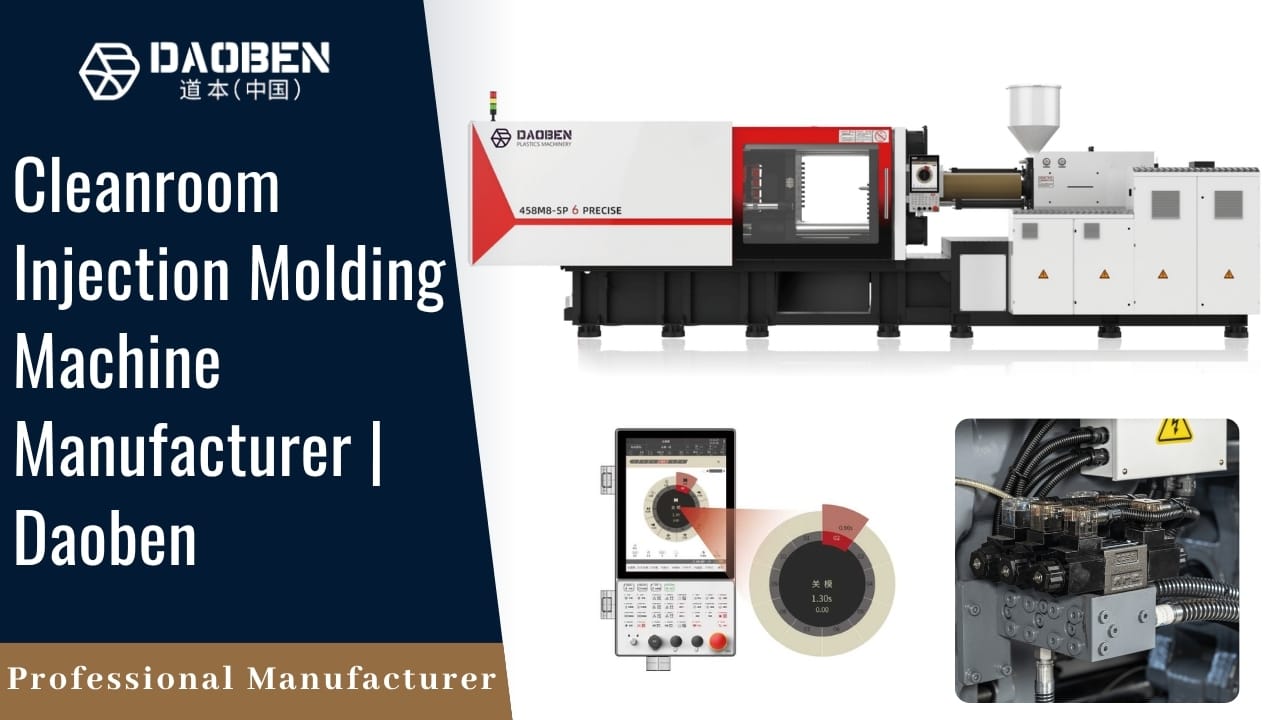
Buying an injection molding machine direct from the factory usually cuts 15–35% off the price, because it removes trader and distributor margins. It also gives you direct control over specifications, the factory acceptance test (FAT), and spare parts.
Why Buy Injection Molding Machine Direct from Factory Instead of a Trader?
Buying direct removes the middle layer that adds cost but rarely adds value. A factory sells at its own price, answers technical questions itself, and builds to your exact specification. A trader, by contrast, resells another company’s machine, adds a margin, and passes your questions down a long chain.
Lower price with no hidden margin
Trading companies and import agents often add 15–35% on top of the factory price. Some also mark up spare parts later in the machine’s life. When you buy from the source, that margin stays in your budget. You can then spend it on a take-out robot, a mold temperature controller, or a larger screw instead.
Faster and clearer technical answers
A trader often waits a day or two for replies from the plant. Meanwhile, your project clock keeps running. That is one more reason teams buy injection molding machine direct from factory engineers. A factory engineer, however, can confirm screw L/D ratio, shot weight, or tie-bar spacing in a single call. That speed matters most when you size a machine for a brand-new mold.
Custom builds without guesswork
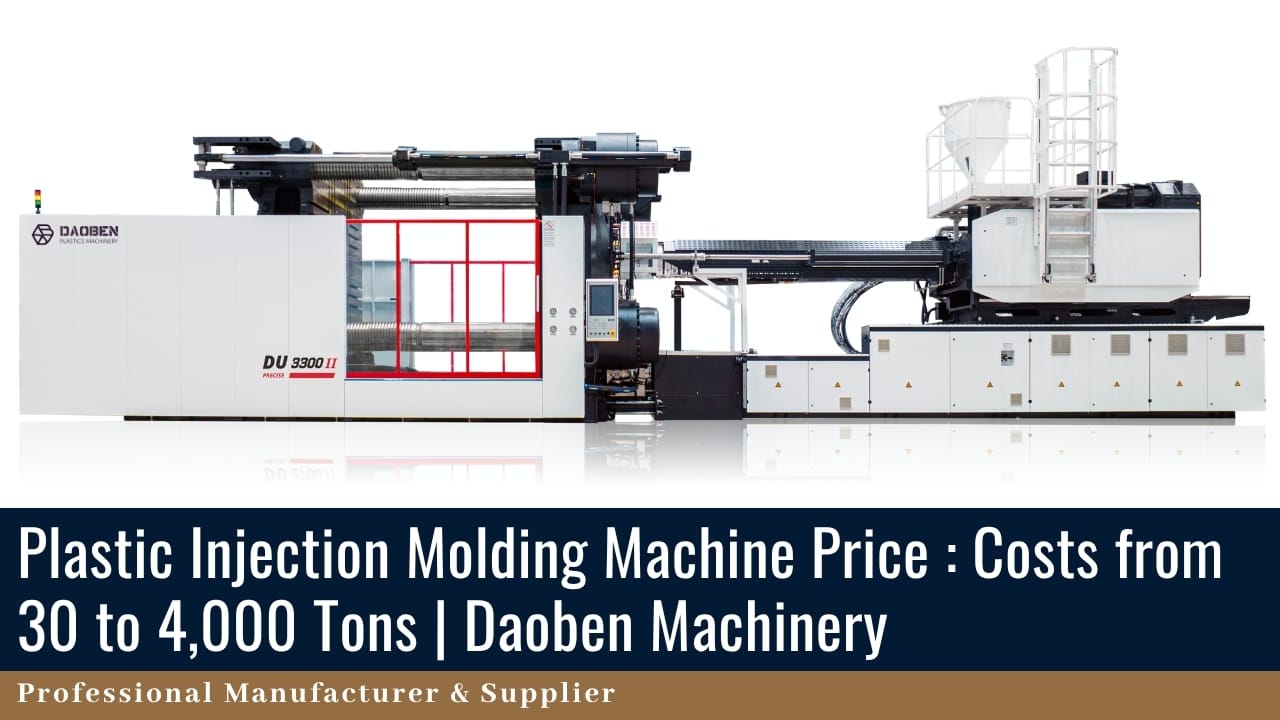
Factory-direct buyers can ask for changes such as a larger injection unit, a special voltage, or an extra core-pull circuit. For example, the Daoben Molding Machines range covers 30 to 4,000 tons across hybrid, servo-hydraulic, PET, and two-platen series. Because your order goes straight to production, nothing gets lost in translation.
How Much Can You Save? 50 Ton Injection Molding Machine Price vs 650 Ton Injection Molding Machine
Savings grow with machine size. On a small 50-ton press, buying direct usually saves a few thousand dollars. On a 650 ton injection molding machine, however, the gap can reach US$20,000 to US$40,000 or more. The table below shows typical 2026 price ranges for new servo-hydraulic machines.
| Machine size | China factory-direct (FOB) | Through trader or local distributor | New premium European/Japanese brand | Typical parts |
|---|---|---|---|---|
| 50 ton | US$9,000–16,000 | US$11,000–20,000 | US$45,000–80,000 | Bottle caps, small housings, medical clips |
| 250 ton | US$30,000–48,000 | US$36,000–60,000 | US$120,000–200,000 | Appliance parts, buckets, auto trim |
| 650 ton | US$95,000–160,000 | US$115,000–200,000 | US$350,000–600,000 | Crates, plastic chairs, large bins, washer tubs |
What the 50 ton injection molding machine price includes
A factory quote for a 50-ton machine usually includes the standard screw and barrel, the controller, a hopper, a basic tool kit, and the manual. Many buyers also add a hopper dryer and a vacuum loader at the same time. Since a 50-ton machine fits inside one 20-foot container, freight stays low.
What drives the cost of a 650 ton injection molding machine
At 650 tons, the injection unit, tie bars, and hydraulic system make up most of the cost. Platen size and tie-bar spacing also matter, because they decide which molds will fit. A machine this size usually ships in two or three containers, often with a flat rack for the clamp unit. For very large molds, a two-platen injection molding machine saves floor space compared with a toggle design.
Compare landed cost, not just the FOB price
The FOB price is only one part of the bill. You also need to add sea freight, insurance, import duty, port fees, and installation. The Incoterms rules published by the ICC define who pays for what, so agree on FOB, CIF, or DAP in writing. US buyers should also check Section 301 and other Chapter 99 duties with a licensed customs broker, because these extra layers change often.
How Does Factory-Direct Buying Protect Machine Quality?
Buying direct protects quality because you can inspect the machine where it is built. You can attend the factory acceptance test, check component brands, and confirm safety compliance before you pay the balance. A trader can rarely give you this level of access to the production line.
Attend the factory acceptance test (FAT)
Ask to run your own mold during the FAT. Then record the dry cycle time, shot weight repeatability, and platen parallelism. A well-built machine holds shot weight within about ±0.3% over 50 cycles. If you cannot travel, ask for a live video FAT instead. Most serious factories now offer this at no extra cost.
Check the key component brands
The controller, servo motor, hydraulic pump, and valves decide how long a machine lasts. So ask the factory to list each brand in the sales contract. Common choices include KEBA or Techmation controllers and Yuken or Rexroth valves. A factory names these suppliers openly, while a trader often cannot.
Confirm safety and electrical compliance
UK and EU buyers need CE marking. In addition, the machine should meet ISO 20430, the international safety standard for injection molding machines, which replaced EN 201 in Europe. Electrical specs matter too. The USA and Saudi Arabia run on 60 Hz, while the UK, Türkiye, Malaysia, the UAE, Qatar, Yemen, South Africa, and Morocco use 50 Hz. The factory sets voltage and frequency during assembly, so state them clearly in your order.
What Are the Risks When You Buy Injection Molding Machine Direct from Factory?
The main risks are slow after-sales service, spare-part delays, and payment exposure. Fortunately, each risk has a simple fix. Choose a factory with a real export team and a clear spare-parts policy, and then use staged payment terms that tie money to results.
After-sales service and installation
First, ask who will install the machine and how quickly an engineer can reach your plant. Next, check whether the factory offers remote support by video and has service partners in your region. Export experience also counts. Daoben, for example, has more than 17 years of foreign trade experience and ships to over 35 countries.
Spare parts and wear items
Order a starter kit of wear parts together with the machine. This kit should include heater bands, thermocouples, a check ring, a nozzle tip, and seals. It costs little, yet it prevents weeks of downtime. Also, ask for a full parts list with part numbers, so local suppliers can match items quickly.
Payment terms and contract safety
Most factories accept a 30% T/T deposit and 70% before shipment. For larger orders, a letter of credit (L/C) at sight protects both sides. Tie the final payment to a passed FAT whenever you can. Finally, write the specs, the warranty length (12 months is common in the industry), and the delivery date into the contract.
How to Size the Right Machine Before You Request a Factory Quote
Size the machine by clamp force, shot size, and mold dimensions. As a simple rule, multiply the part’s projected area in square inches by 2 to 5 tons, depending on the resin. Then confirm that the mold fits between the tie bars and that the shot weight sits at 30–80% of barrel capacity.
Quick clamp-force guide by resin
Use these starting values, and then confirm the result with the factory’s engineers:
- PP and PE: 2–3 tons per square inch
- ABS and PS: 2.5–4 tons per square inch
- PC and nylon (PA): 3–5 tons per square inch
- Thin-wall packaging: up to 5–6 tons per square inch
Match tonnage to your product
A 50-ton press suits caps, small electrical parts, and medical components. By contrast, a 650-ton press suits crates, plastic chairs, large bins, and appliance parts. If you plan to add robots later, read our notes on automation trends in plastic molding equipment. And if power bills worry you, our guide to sustainable injection molding explains how servo drives can cut energy use by 30% or more compared with fixed-pump hydraulics. Electronics makers can also see how machine choice affects part quality in our article on injection molding solutions for the electronics industry.
Get Factory Pricing and Engineering Support Direct from Daoben
Buying direct gives you a lower price, a straight line to engineers, and full control over quality checks. It works best when you plan the full landed cost, attend the FAT, and lock the warranty terms into your contract. In short, the decision to buy injection molding machine direct from factory partners pays off when you treat it as an engineering project, not just a purchase.
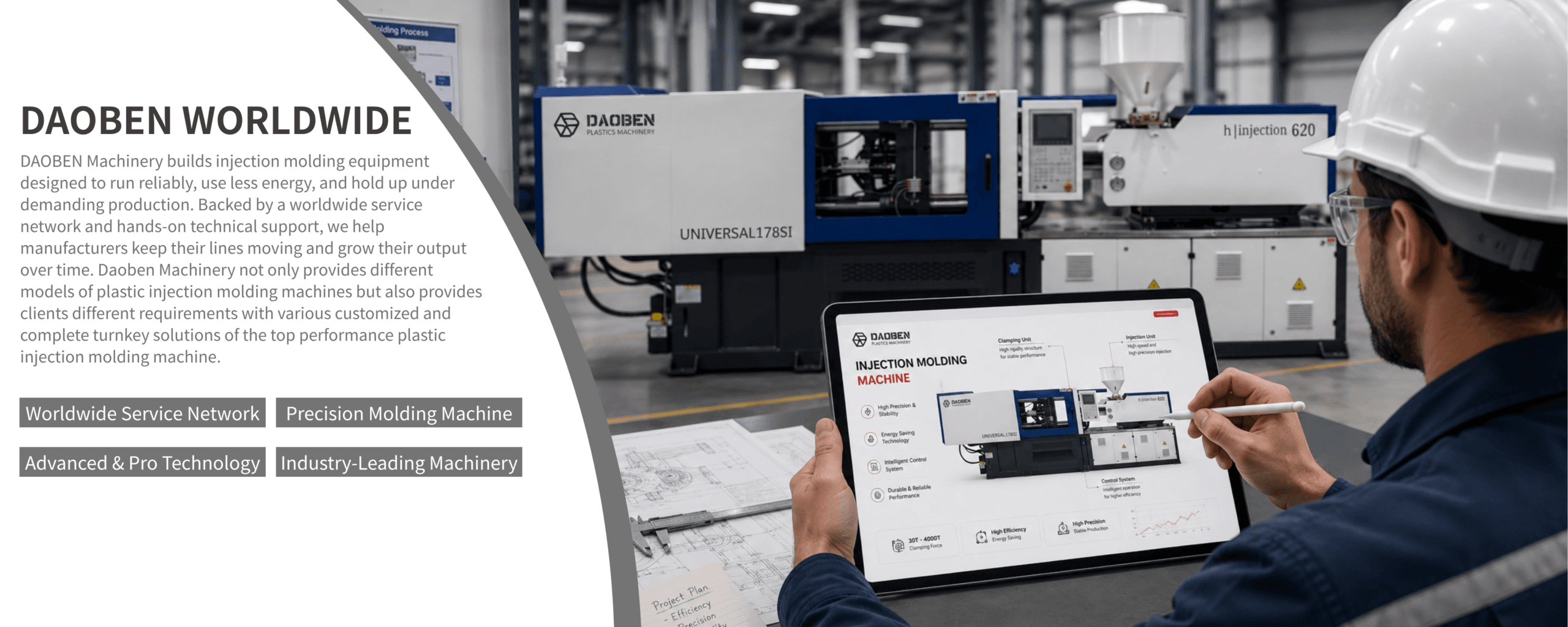
Daoben started in 2014 in Ningbo, China, a major hub for injection molding machine production. Today, the company builds machines from 30 to 4,000 tons, including EV hybrid, M7, M8SII, UNIVERSAL, PET, and DU two-platen series. As a result, buyers can source a 50-ton precision press and a 650-ton crate machine from one supplier.
Ready to compare a factory quote with your current offers? Browse the full range of Daoben Molding Machines, or contact the Daoben sales team with your part drawing, resin, and target cycle time. The team will reply with a factory price and a tonnage recommendation.
FAQ: Buying an Injection Molding Machine Direct from the Factory
Is it cheaper to buy an injection molding machine direct from the factory?
Yes, in most cases. When you buy injection molding machine direct from factory suppliers, you skip the trader or distributor margin, which is often 15–35% of the price. You also avoid inflated spare-part prices later. However, you should compare the full landed cost, including freight, duty, and installation, before you decide.
What is the 50 ton injection molding machine price from a Chinese factory?
A new 50-ton servo-hydraulic machine usually costs about US$9,000 to US$16,000 FOB from a Chinese factory. The price changes with screw size, controller brand, and options such as a robot interface. Buyers who buy injection molding machine direct from factory sources should always request a written, itemized quote.
How much does a 650 ton injection molding machine cost?
A new 650-ton injection molding machine from a Chinese factory typically costs between US$95,000 and US$160,000 FOB. Premium European or Japanese brands often cost US$350,000 or more. If you buy injection molding machine direct from factory sellers, you also gain direct input on tie-bar spacing, platen size, and shot volume.
How long does delivery take when buying direct from a factory?
Standard models usually ship within 30 to 60 days after the deposit. Custom builds can take longer. Sea freight then adds about two to six weeks, depending on your port. When you buy injection molding machine direct from factory teams, you get production updates straight from the plant instead of through an agent.
How can I check machine quality before shipment?
Attend the factory acceptance test in person or by live video. Run your own mold, record cycle time, and check shot weight repeatability. Also confirm the brands of the controller, servo motor, and valves. Buyers who buy injection molding machine direct from factory sites can link the final payment to a passed test.
Do factory-direct machines come with a warranty?
Yes. Most manufacturers offer a written warranty, and 12 months is common across the industry. Ask what the warranty covers, such as hydraulic parts, electronics, and the screw and barrel. When you buy injection molding machine direct from factory suppliers, the warranty comes from the builder itself, so claims move faster.