You have plastic waste. You want to turn it into products and revenue. Precious plastic machines look like the perfect solution — affordable, open-source, community-backed. But before you spend your startup budget, you need to know what these machines can and cannot do. The honest answer might surprise you.
What Are Precious Plastic Machines?
Precious plastic machines are a set of open-source recycling tools developed by the Precious Plastic community, originally designed by Dave Hakkens in the Netherlands. The project makes blueprints freely available online so makers, social enterprises, and small businesses can build or buy machines to shred, melt, and reshape post-consumer plastic waste.
The core lineup includes:
- Shredder – breaks plastic waste into flakes
- Extruder – melts flakes and pushes them into shapes or filament
- Sheet Press – compresses melted plastic into flat sheets
- Injection Machine – forces molten plastic into molds under pressure
Each machine targets a different phase of plastic recycling. Together, they form a small-scale production system. That sounds powerful on paper. In practice, there are real limits every buyer needs to understand before committing.
The Appeal Is Real — So Is the Gap
Small business owners and social enterprise founders are drawn to precious plastic machines for three reasons: low entry price, sustainability branding, and community support. All three are legitimate. The Precious Plastic ecosystem has helped hundreds of makers launch products ranging from recycled furniture to phone cases.
But many buyers discover something important only after purchase: these machines were designed for experimentation, community workshops, and proof-of-concept production — not for sustained commercial output at scale.
If your business plan requires consistent volume, tight tolerances, or fast cycle times, the gap between expectation and reality becomes a serious operational problem.
What Can a Precious Plastic Injection Machine Actually Do?
The precious plastic injection machine is arguably the most commercially relevant tool in the set. It works by manually or mechanically injecting melted plastic into a custom mold. Products like small tiles, keychains, handles, and basic household items are within reach.
Typical Specs of a Precious Plastic Injection Machine
| Feature | Precious Plastic Injection Machine |
|---|---|
| Injection pressure | Low (manual lever or basic hydraulic) |
| Shot size | Very small (typically under 50g) |
| Cycle time | 2–5 minutes per shot |
| Mold compatibility | Custom-built or basic aluminum molds |
| Clamping force | Minimal — not rated in tons |
| Production volume | Low (hobbyist to micro-batch) |
| Repeatability | Inconsistent without operator skill |
| Material range | Limited (HDPE, PP, PS — no engineering plastics) |
For a solo maker or community workshop, these numbers are workable. For a small business trying to fulfill wholesale orders, they create a hard ceiling.
The Real Cost of Precious Plastic Machines for Small Business
Purchase price is only one line in the budget. Let’s look at the full picture.
Upfront Costs
Pre-built precious plastic machines from certified builders typically range from $500 to $3,000 per unit depending on the machine type and supplier. Building from scratch using the open-source plans is cheaper but requires metalworking skills, tools, and time. Many first-time builders underestimate both.
Hidden Operational Costs
- Mold fabrication: Custom molds are not included. A single aluminum mold machined to your product specs can cost $200–$1,500.
- Feedstock processing: Collected plastic needs sorting, cleaning, and shredding before it reaches the injection machine. That means you also need a shredder.
- Labour intensity: Manual operation is slow. Each piece requires hands-on attention. Labour cost per unit is high.
- Reject rates: Inconsistent melt temperatures and pressure make quality control difficult. Reject rates of 20–30% are not unusual for new operators.
- Maintenance: Open-source machines lack standardised parts. Repairs require fabrication or sourcing from the original builder.
ROI Scenario: Small Product Line
Suppose you want to produce 500 recycled plastic keychains per month to sell wholesale at $2.00 each ($1,000 revenue/month).
| Cost Factor | Monthly Estimate |
|---|---|
| Machine amortisation (24 months) | $100 |
| Mold amortisation | $50 |
| Labour (slow cycle, high touch) | $400–$600 |
| Feedstock + utilities | $80 |
| Rejects + scrap loss | $60 |
| Total estimated cost | $690–$890 |
| Revenue | $1,000 |
| Gross margin | $110–$310 (11–31%) |
The margin exists, but it is thin. Any increase in reject rate, labour cost, or order volume quickly erodes it. For a social enterprise where labour has non-commercial value, this model works. For a business trying to grow, it becomes a bottleneck.
Precious Plastic Machines vs. Industrial Injection Molding — A Direct Comparison
This is the comparison most buyers never see before they commit. Understanding it helps you make the right call for your business stage.
| Factor | Precious Plastic Machines | Industrial Injection Molding Machine |
|---|---|---|
| Initial cost | $500–$3,000 | $15,000–$100,000+ |
| Clamping force | Not rated | 30 Ton – 4,000 Ton |
| Cycle time | 2–5 minutes | 15–60 seconds |
| Shot repeatability | Low | High (±0.01mm tolerance) |
| Max product size | Very small | Small to very large |
| Material versatility | Limited | Wide range including engineering plastics |
| Automation capability | None | Semi to fully automated |
| Production volume (monthly) | Hundreds | Tens of thousands |
| Quality certification | None | ISO, CE-compliant options |
| Scalability | Very limited | Easily scalable |
| Best for | Workshops, makers, proof-of-concept | Commercial production, wholesale, export |
The gap between these two categories is not about brand prestige. It is about what your business actually needs to grow.
When Precious Plastic Machines Make Sense — and When They Don’t
They make sense if you:
- Run a community recycling workshop or makerspace
- Want to test a product concept before investing in tooling
- Operate a social enterprise where process visibility is part of the brand story
- Produce in very small quantities for local, direct-to-consumer sales
- Have access to skilled volunteers who reduce labour costs
They do not make sense if you:
- Need consistent product quality for wholesale buyers or retail chains
- Plan to scale to more than a few hundred units per month
- Want to use engineering-grade plastics (ABS, nylon, polycarbonate)
- Require certified machinery for export or commercial compliance
- Are building a business that depends on speed and margin
For founders in the second category, the honest path is to start with precious plastic for validation — then move to proper industrial equipment when orders justify the investment.
What Happens When Small Businesses Outgrow Precious Plastic?
This is a conversation many founders have eighteen months after they launch. The product works. Buyers want more. The injection machine becomes the bottleneck.
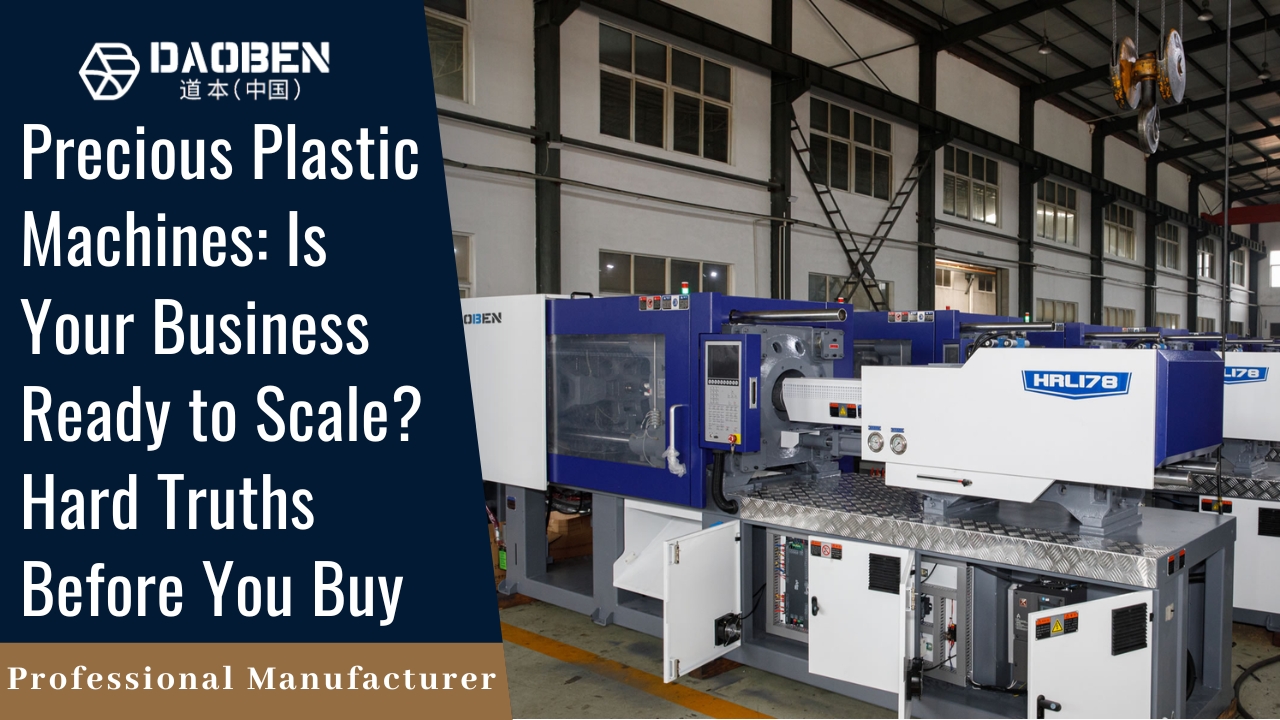
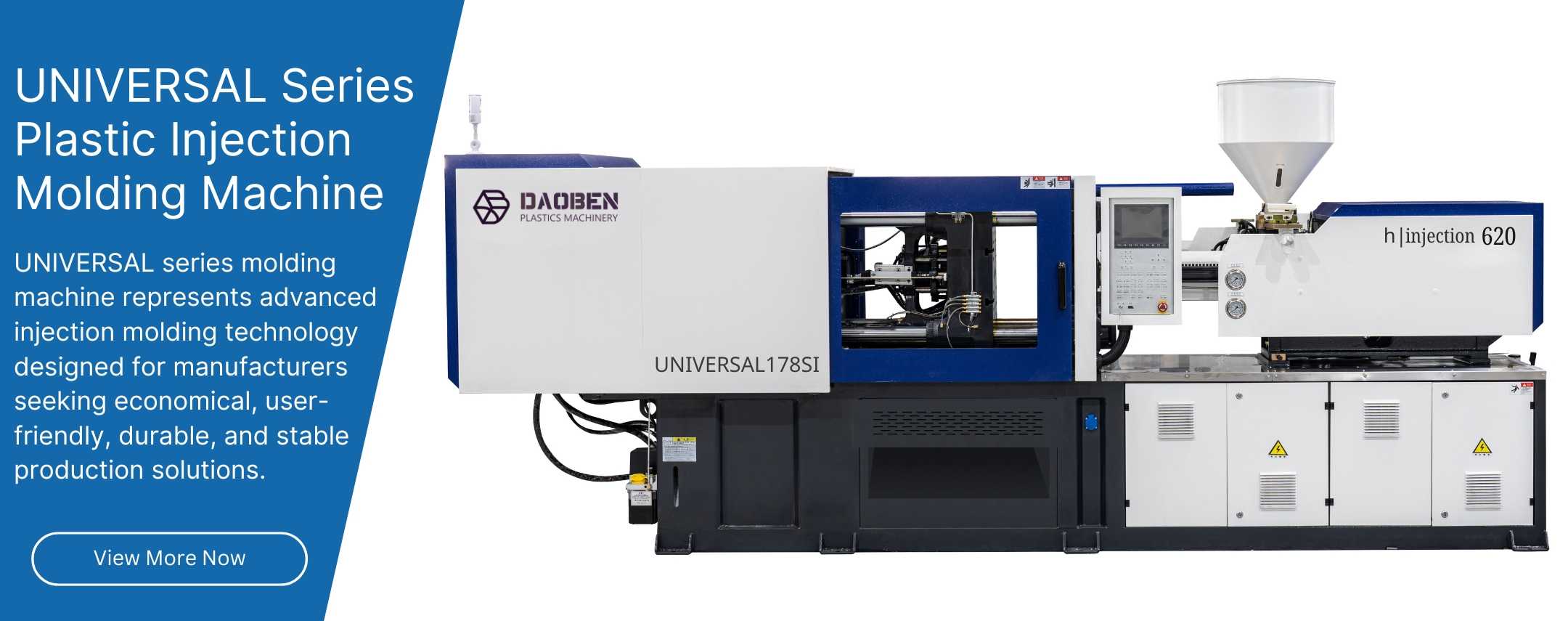
At that point, most businesses face a real decision: stay small and stable, or invest in machinery that can actually scale. Upgrading to a commercial plastic injection molding machine does not mean buying a factory. Entry-level industrial machines start at 30 tons of clamping force — enough to produce a wide range of small consumer and industrial products with proper automation, tight tolerances, and fast cycle times.
Understanding the parts of a plastic molding machine helps you make that transition more confidently. When you know what each component does — injection unit, clamping unit, hydraulic system, control panel — you can speak to suppliers clearly and avoid costly misconfigurations.
For reference on what leading manufacturers offer across different segments, this breakdown of the top 10 injection molding machine brands gives a useful market overview.
The Injection Machine Precious Plastic Users Eventually Ask About
The phrase injection machine precious plastic shows up constantly in search because buyers are trying to bridge exactly this gap. They started with the open-source version. Now they want something more serious.
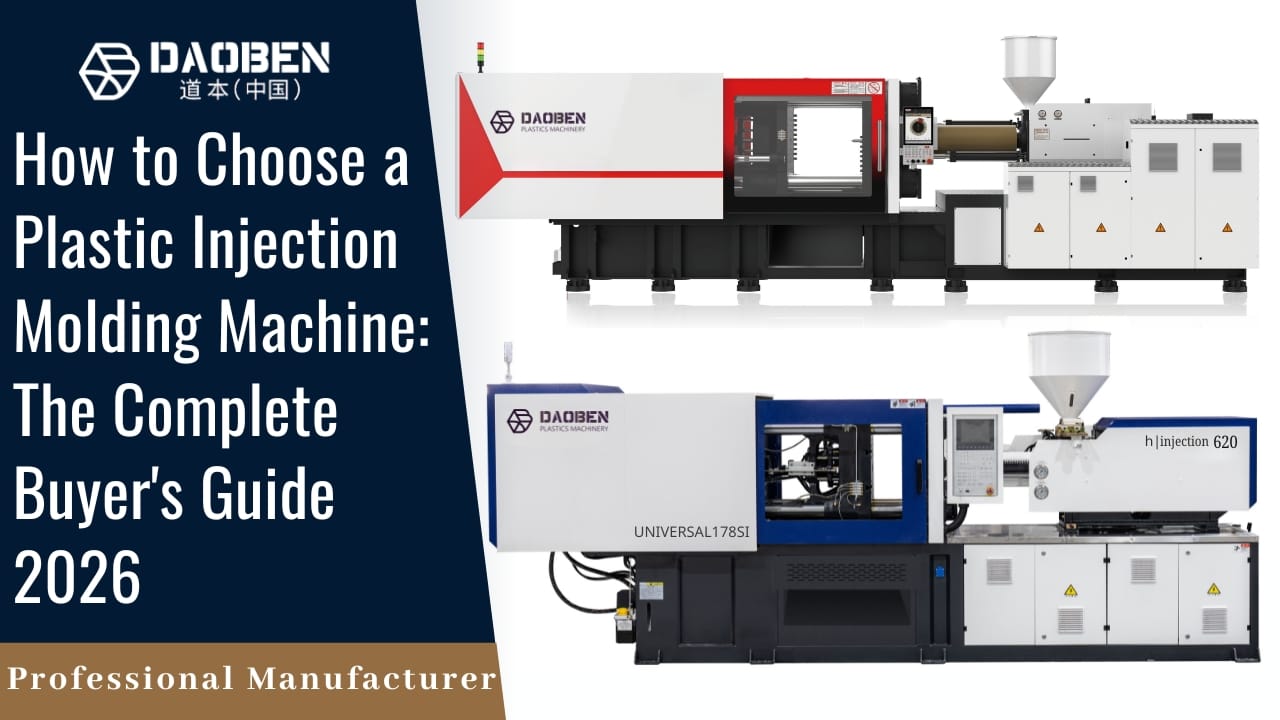
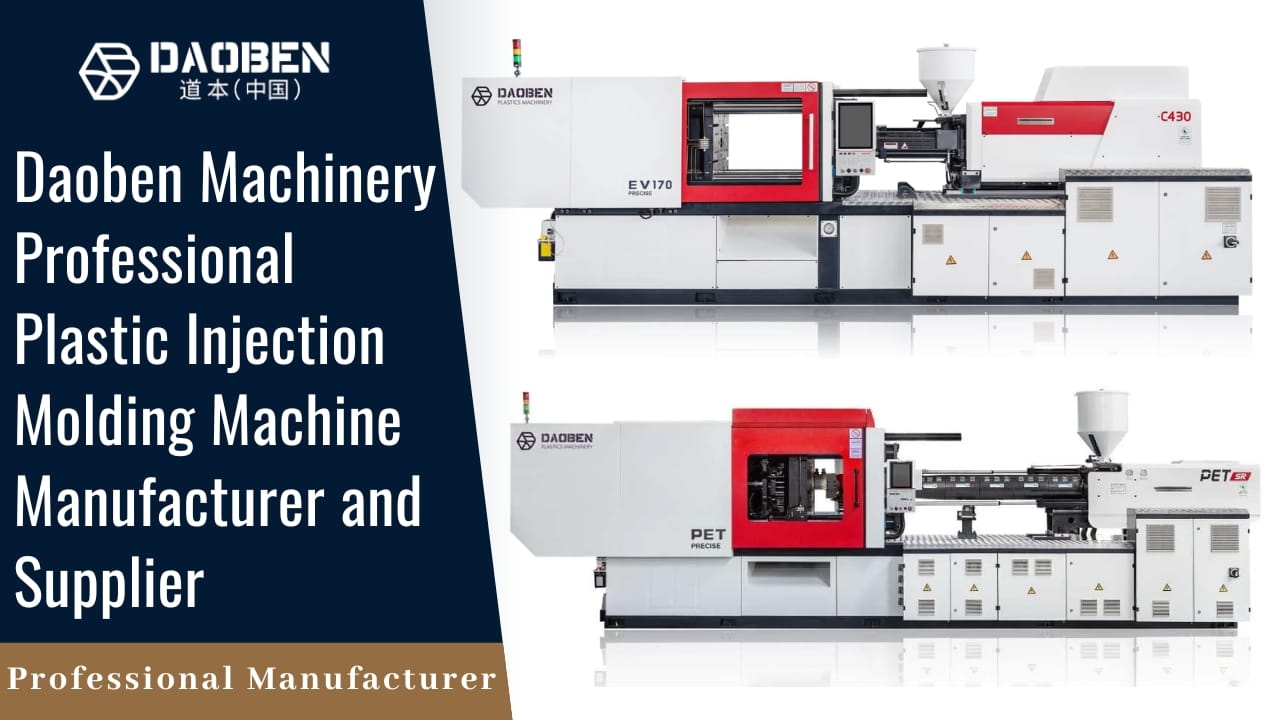
What most of these searchers actually need is a low-tonnage commercial injection molding machine — typically between 30 and 160 tons — that can run the same product types at dramatically higher volume, consistency, and efficiency.
For buyers thinking about plastic crate and container production specifically, there is useful context in this overview of plastic crate machines for 2025. Crates are a classic early product for small businesses moving from recycled artisan goods into commercial plastics manufacturing.
The Precious Plastic community’s contribution is real: it lowers the barrier to entry, proves demand, and trains the next generation of plastic product makers. But the machinery itself was never designed to be a permanent commercial solution. It is a starting line, not a finish line.
How to Evaluate Your Next Machine Investment
Before you spend money on any injection molding equipment — open-source or industrial — answer these questions honestly:
1. What is your monthly target volume? Under 500 units, precious plastic may suffice. Over 1,000 units, you need industrial equipment.
2. What materials do you need to process? HDPE and PP are manageable with low-cost equipment. ABS, nylon, and polycarbonate require proper barrel temperatures and screw design.
3. What does your buyer expect? Retail buyers and distributors will require consistent quality and often request material certifications. Precious plastic machines cannot reliably deliver either.
4. What is your growth horizon? If you plan to grow, buy equipment that grows with you. Replacing a $2,000 machine with a $40,000 machine twelve months later is a costly learning curve.
5. Do you need after-sales support? Open-source machines rely on community forums. Industrial machines from established manufacturers offer technical support, spare parts, and service contracts.
Frequently Asked Questions
Q1: Are precious plastic machines suitable for commercial production? They work well for small-batch, artisan, or community production. For commercial wholesale or retail supply, the cycle time, tolerance, and output volume are too limited. Most growing businesses transition to industrial injection molding equipment within one to two years.
Q2: What is the difference between a precious plastic injection machine and an industrial injection molding machine? A precious plastic injection machine is a manually operated, low-pressure tool designed for small hobby or workshop use. An industrial injection molding machine delivers controlled clamping force (measured in tons), automated injection, precise temperature control, and repeatable cycle times — all necessary for consistent commercial production.
Q3: How much clamping force do I need for my first commercial injection molding machine? For small consumer products (under 200g), a 30–80 ton machine is typically sufficient. For larger or multi-cavity products, 100–250 tons is more appropriate. A reputable manufacturer can advise based on your specific product dimensions and material.
Q4: Can I use recycled plastic feedstock in an industrial injection molding machine? Yes, with conditions. Recycled plastic must be properly sorted, cleaned, and pelletised or granulated to consistent particle size before use. Mixed or contaminated feedstock can cause blockages, degraded output, and machine wear. Industrial machines offer better melt control than precious plastic equivalents, making them more tolerant of minor feedstock variation.
Make the Right Investment the First Time
Precious plastic machines have earned their place in the recycling and maker community. They are a real tool for real work. But if your goal is to build a business that supplies products at volume, they are a starting point — not a long-term production solution.
When you are ready to move beyond micro-batch production, Daoben Machinery manufactures plastic injection molding machines from 30 to 4,000 tons. Every machine is built for commercial output, backed by full technical support, and priced for manufacturers — not distributors.
Talk to us directly. Tell us your product, your volume target, and your material. We will tell you exactly which machine fits — and what it costs.