A yogurt cup and a car bumper both come out of an injection molding machine. However, they need very different presses. The cup runs on a fast machine that cycles every few seconds. The bumper needs a two-platen press with well over 1,000 tons of clamping force.
That is why the best molding machine is never one model. Instead, it is the machine that fits your part, your volume and your industry. A press that earns money in a packaging plant can lose money in a medical cleanroom.
Buyers in the USA, UK, Türkiye, Malaysia, Saudi Arabia, the UAE, Qatar, Yemen, South Africa and Morocco ask us the same question. Which machine type, tonnage and features match my parts?
This guide answers that question for four industries: packaging, automotive, medical and household goods. For each one, you will see the right machine type, a tonnage range, the must-have features and the matching Daoben series.
Quick Answer: The best molding machine depends on your industry. Packaging needs high-speed machines of 100–650 tons with fast dry cycles. Automotive bumpers and panels need two-platen machines of 800–4,000 tons. Medical parts need clean-running electric or servo-hybrid machines of 50–250 tons. Household goods run well on servo-hydraulic machines of 150–1,000 tons.
Best Injection Molding Machines by Industry at a Glance
The best injection molding machines for each industry differ in three ways: tonnage, drive type and special features. Packaging rewards speed. Automotive rewards mold space. Medical rewards cleanliness and repeatability. Household goods reward low cost per part. The table below matches each use to a machine class and a Daoben series.
| Industry / Use | Typical Parts | Tonnage Range | Best Machine Type | Must-Have Features | Daoben Series |
|---|---|---|---|---|---|
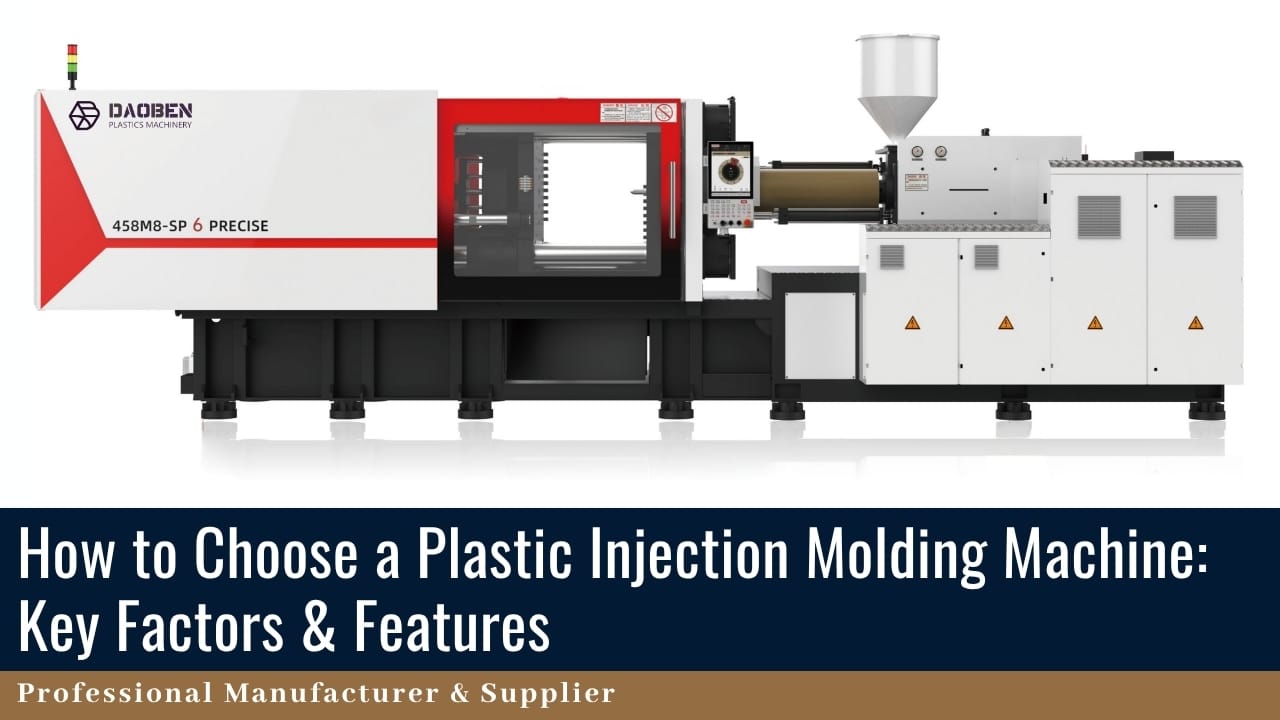
| Thin-wall packaging | Cups, lids, caps, IML tubs | 100–650 t | High-speed toggle, servo or hybrid | Fast injection, short dry cycle, stiff platens | M8-SP6 (270–650 t) |
| PET preforms | Water and soft-drink preforms | 200–700 t | Dedicated PET machine | PET screw (25:1 L/D), 16–72 cavity molds | PET series (218–700 t) |
| Large automotive parts | Bumpers, dashboards, door panels | 800–4,000 t | Two-platen | Large mold space, long opening stroke | DU Two-Platen |
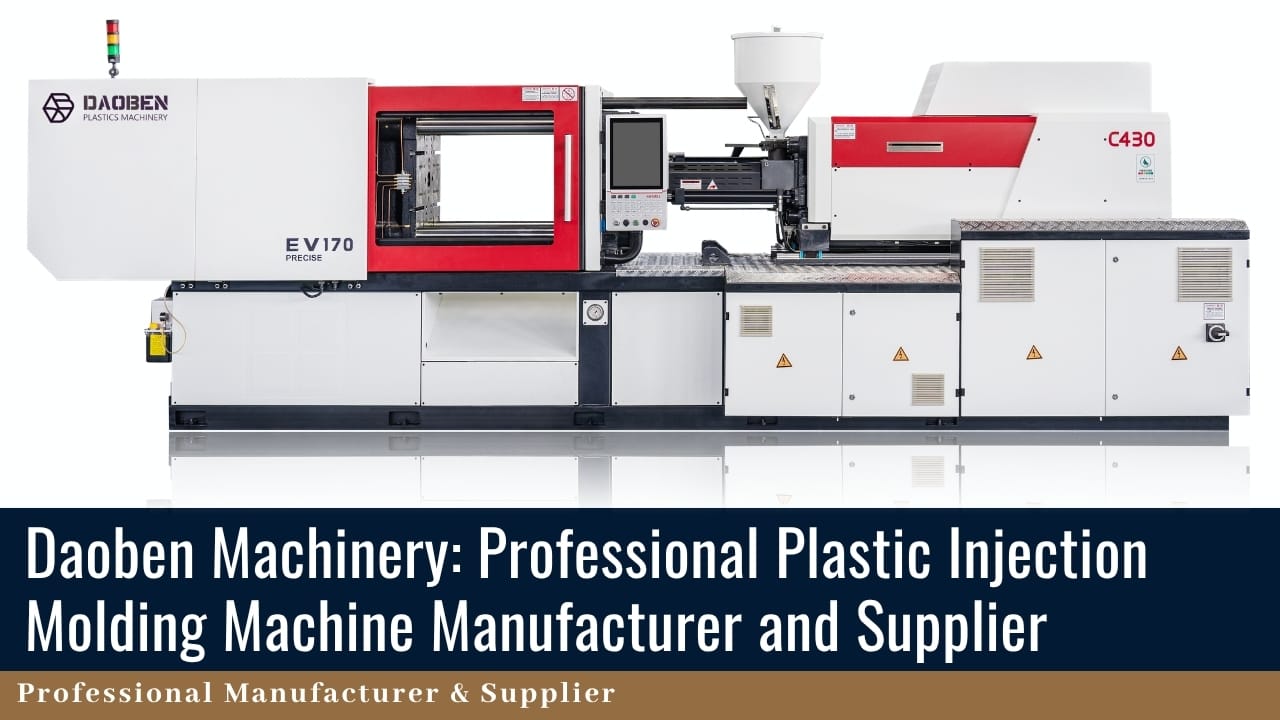
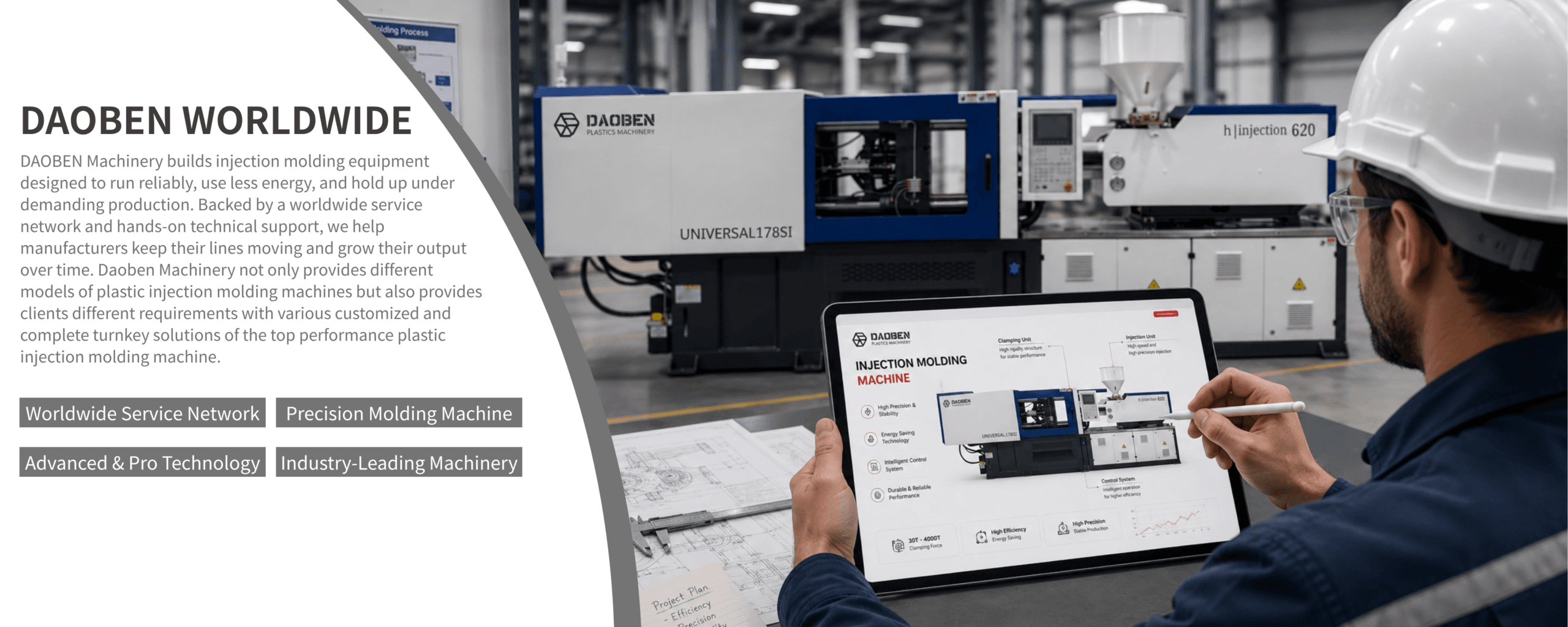
| Small automotive parts | Clips, connectors, lamp housings | 100–500 t | Servo-hydraulic toggle | Repeatability, MES data link | M7, UNIVERSAL |
| Medical devices | Syringes, diagnostic consumables | 50–250 t | All-electric or servo-hybrid | Cleanroom-ready, low particles, data logging | EV hybrid (90–268 t) |
| Household goods | Buckets, basins, storage boxes, chairs | 150–1,000 t | Servo-hydraulic toggle | Low energy per part, large shot | UNIVERSAL (110–1,250 t), M7 |
| Toys | Figures, blocks, ride-on parts | 50–250 t | Servo-hydraulic or electric | Fast color change, strong guarding | M7, EV |
Use the table as a starting shortlist for the best molding machine, not a final answer. First, find your industry row. Next, check that your part sits inside the tonnage range. Then confirm the features with your mold maker.
Packaging is the largest single use for these machines. In fact, packaging held 32.1% of global injection molding revenue in 2025, according to Grand View Research’s injection molding market report. As a result, most builders design their fastest models around cups, caps and closures.
How to Choose the Best Molding Machine for Any Application
To choose the best molding machine, start with the part, not the brochure. Work out the clamping force from the part’s projected area. Then check shot size, cycle time and cleanliness. Finally, match the drive type to your power costs and your factory’s climate.
Size the Clamping Force First
Clamping force keeps the mold shut while hot plastic fills it. A simple rule works for most parts. Multiply the projected area by the cavity pressure of your resin. Then add a 10–15% safety margin. For example, polypropylene often needs 0.3–0.5 tons per cm², while polycarbonate needs more. Our step-by-step machine buyer’s guide walks through the full math.
Check Shot Size and Cycle Time
Shot weight should use about 30–80% of the barrel’s capacity. Below that range, the melt sits too long and can degrade. Above it, the screw struggles to fill every cavity. Also, set a target cycle time early. A 4-second cup and a 60-second bumper need very different hydraulics.
Plan for Your Market’s Power and Climate
Your location changes the spec sheet, too. The USA and Saudi Arabia run on 60 Hz power. By contrast, the UK, Türkiye, Malaysia, the UAE, Qatar, Yemen, South Africa and Morocco use 50 Hz. Motors, pumps and chillers must match the grid, or even the best molding machine will struggle. Moreover, plants in the Gulf often face summer heat above 45 °C. So size the chiller and oil cooling with extra margin.
Best Molding Machine for Packaging: Speed Wins
The best molding machine for packaging is a high-speed press of 100–650 tons with a fast dry cycle and quick injection. Thin-wall cups, lids, caps and closures run in seconds, so every tenth of a second counts. PET preforms are the exception, because they need a dedicated PET machine.
What a Packaging Injection Molding Machine Needs
A good packaging injection molding machine fills thin walls before the plastic freezes. Therefore, it needs high injection speed, a stiff clamp and a short dry cycle. Many thin-wall jobs also use stack molds or in-mold labeling (IML), which demand precise mold-open positions. In addition, the screw must melt PP and PE evenly at high output.
Daoben M8-SP6 for Thin-Wall and IML
The Daoben M8-SP6 series covers 2,700–6,500 kN (about 270–650 tons) in ten clamping tiers. Its injection runs 15% faster than the previous generation, and repeat positioning holds at ±0.2 mm. Daoben also tuned the screw and barrel for packaging resins. As a result, the series suits caps, closures, IML tubs and, on larger models, pails. Daoben reports parts 5–10% lighter than on standard machines. Lighter parts cut resin use, a theme we cover in our guide to sustainable injection molding.
Daoben PET Series for Preforms
Water and soft-drink preforms need their own platform. The Daoben PET series spans 218–700 tons and takes 16–72 cavity molds. It uses a dedicated PET screw with a 25:1 L/D ratio and a chrome-plated surface. Furthermore, an extra-large ejection stroke helps release deep preforms cleanly.
Molding Machine for Automotive Parts: Two-Platen for Big Tools
The best molding machine for large automotive parts is a two-platen press of 800–4,000 tons. Bumpers, dashboards and door panels need huge molds, long opening strokes and room for robots. Smaller parts, such as clips, connectors and lamp housings, run well on servo-hydraulic toggle machines of 100–500 tons.
Why Two-Platen Wins on Large Parts
A molding machine for automotive parts must hold a heavy, deep mold steady. A two-platen design builds clamping force with hydraulic cylinders and tie-bar locks instead of a long toggle linkage. Consequently, the machine is shorter for the same tonnage. It also opens wider, so a robot can lift a bumper out in one move.
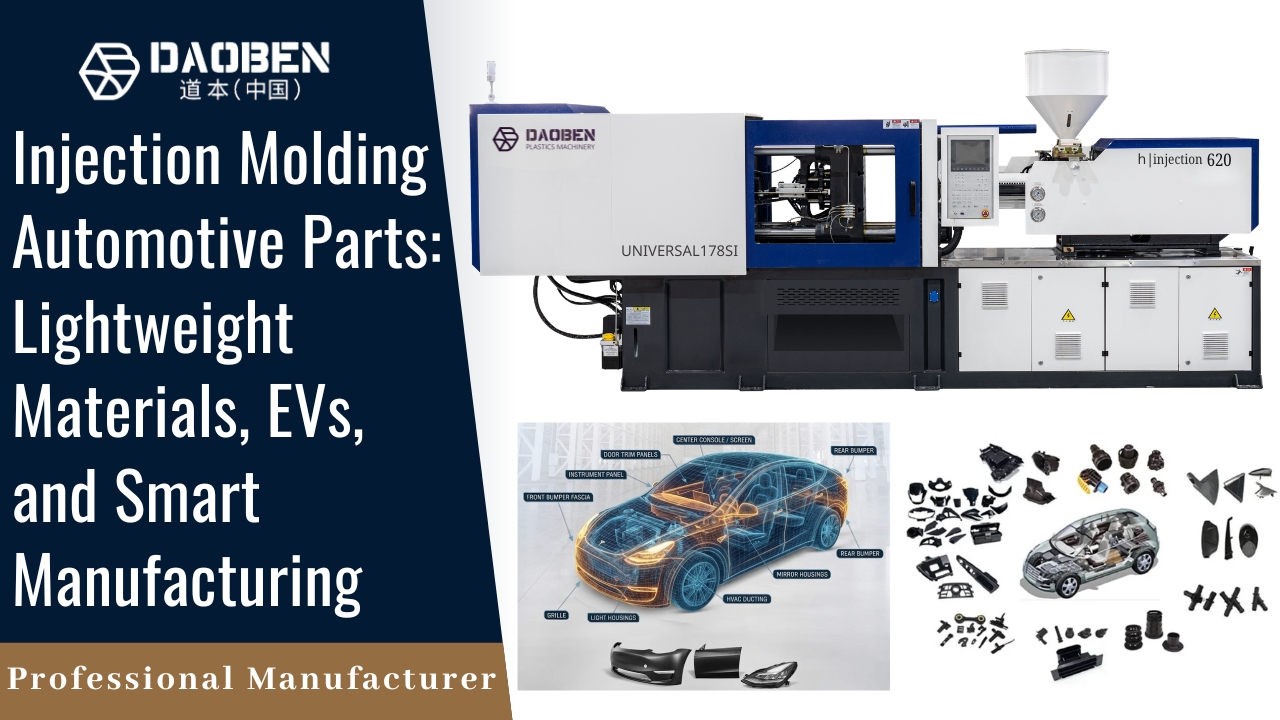
Daoben DU Two-Platen Series
The Daoben DU two-platen injection molding machine uses a European-style two-platen clamp. Its non-contact tie bar system avoids tie bar wear. Meanwhile, a mechanically synchronized moving platen stays parallel through the full stroke. On the drive side, an oil-cooled servo system with a permanent magnet motor controls pressure and flow in a closed loop. In addition, a KEBA controller from Austria handles speed, pressure, position and temperature. Daoben reports up to 20% lower part weight on suitable parts.
Materials and Quality Systems for Auto Suppliers
Auto parts often use PP-EPDM for bumpers, PC/ABS for interior trim and glass-filled PA for under-hood parts. Each resin needs the right screw design. Also, most tier-one buyers expect suppliers to run an IATF 16949 quality system. So the best molding machine for a tier-one supplier offers data logging and an MES link for traceability.
Best Molding Machine for Medical Parts: Clean and Repeatable
The best molding machine for medical parts is a clean-running electric or servo-hybrid press of 50–250 tons. It must work inside an ISO 14644-1 cleanroom, usually Class 7 or Class 8. It must also repeat every shot within tight limits and log data for audits.
Cleanroom-Ready Machine Features
Oil mist and grease are the enemies of a cleanroom. Therefore, medical buyers look for enclosed or low-lube clamps, smooth covers and few dust traps. Many plants add a laminar-flow hood over the mold area. The ISO 14644-1 standard sets the particle limits for each class. Our full guide to cleanroom injection molding explains the classes, features and costs in detail.
Validation and Data for Medical Buyers
In the United States, the FDA’s Quality Management System Regulation took effect on February 2, 2026. It brings ISO 13485:2016 into 21 CFR Part 820, as the FDA’s QMSR FAQ page explains. As a result, molders must prove a stable, validated process. So choose a machine that stores process curves, flags drift and exports shot data for IQ, OQ and PQ.
Daoben EV Series for Precision Parts
The Daoben EV series is a hybrid with a servo-electric injection unit and a toggle clamp. It covers 90–268 tons, reaches 440 mm/s injection speed and holds mold-close position within 0.2 mm. That makes it a strong fit for thin, precise parts such as diagnostic consumables. Before you order, ask Daoben about cleanroom options for your class. The same precision logic applies to connectors and housings, as our electronics industry guide shows.
Injection Molding Machine Applications in Household Goods and Toys
The best molding machine for household goods is a servo-hydraulic toggle press of 150–1,000 tons. Buckets, basins, storage boxes, chairs and kitchenware need large shots, fair speed and low energy cost per part. Toys use smaller presses, usually 50–250 tons, with fast color changes and strong safety guards.
What Household Goods Need
Household products sell on price, so cost per part decides the winner. A servo pump runs only during motion, so it uses far less power than a fixed pump. Also, large items such as laundry baskets need wide tie-bar spacing and long opening strokes. Food-contact items like containers must use resins that meet rules such as EU Regulation 10/2011 or FDA food-contact rules.
Daoben M7 and UNIVERSAL Series
The Daoben M7 series is a servo-hydraulic platform from 130 to 380 tons with ±0.1 mm repeat positioning and a standard MES interface. For bigger items, the UNIVERSAL series runs from 110 to 1,250 tons. Together, they cover most household lines, from kitchen tools to storage bins. Larger M8-SP6 models also handle pails.
Toys: Small Tonnage, Fast Color Changes
Toy plants change colors many times a week. So a quick purge and a clean screw save real money. Toys must also pass EN 71 in Europe and ASTM F963 in the USA. Our guide to the plastic toy injection molding machine covers tonnage, safety standards and color-change tips.
Get the Best Molding Machine Matched to Your Parts
The best molding machine is the one that fits your industry’s real demands. Packaging needs speed. Automotive needs mold space and stiffness. Medical needs clean running and proof. Household goods need low cost per part.
Daoben Machinery builds injection molding machines from 30 to 4,000 tons in Ningbo, China, and ships to buyers in more than 40 countries. The lineup covers every case in this guide, from the PET series and M8-SP6 to the DU two-platen and EV hybrid.
Before you request a quote, gather three facts: the part’s projected area, its resin and your yearly volume. With those numbers, our engineers can confirm tonnage, shot size and drive type. They can then suggest the right series and quote it for your local 50 Hz or 60 Hz power supply.
Ready to compare models? Browse Daoben Molding Machines or send your part drawing to our engineers for a tonnage recommendation and quote.
Frequently Asked Questions
What is the best molding machine for packaging?
The best molding machine for packaging is a high-speed press of 100–650 tons with fast injection and a short dry cycle. Thin-wall cups, lids and caps need speed to fill before the plastic freezes. PET preforms are different, because they need a dedicated PET machine with a special screw and 16–72 cavity molds.
Which molding machine is best for automotive parts?
Large parts like bumpers and door panels need a two-platen press of 800–4,000 tons. This design gives wide mold space and long opening strokes in a shorter frame. For clips, connectors and lamp parts, the best molding machine is usually a servo-hydraulic toggle press of 100–500 tons.
Do medical parts need an all-electric molding machine?
Not always. All-electric machines run cleanest, but servo-hybrid machines also work in ISO Class 7 and Class 8 cleanrooms when the clamp area stays enclosed. The best molding machine for medical work must repeat every shot, log process data and support validation under ISO 13485 and FDA rules.
What tonnage do household plastic products need?
Most household goods run on 150–1,000 tons. Small kitchen tools fit at the low end, while laundry baskets, chairs and large storage boxes need more. To size the best molding machine, multiply the projected part area by the resin’s cavity pressure, then add a 10–15% margin.
What are the main injection molding machine applications?
The main injection molding machine applications are packaging, automotive, medical, electronics, household goods and toys. Packaging is the largest, with 32.1% of global revenue in 2025. Each sector needs a different best molding machine, so match tonnage, drive type and features to the part before you buy.
Can a Chinese supplier provide the best molding machine for export markets?
Yes, when the supplier matches your power supply, safety rules and service needs. Check for 50 Hz or 60 Hz motors, CE marking for Europe and Türkiye, and local spare parts. Daoben ships its best molding machine models to more than 40 countries, so ask for references from your region.