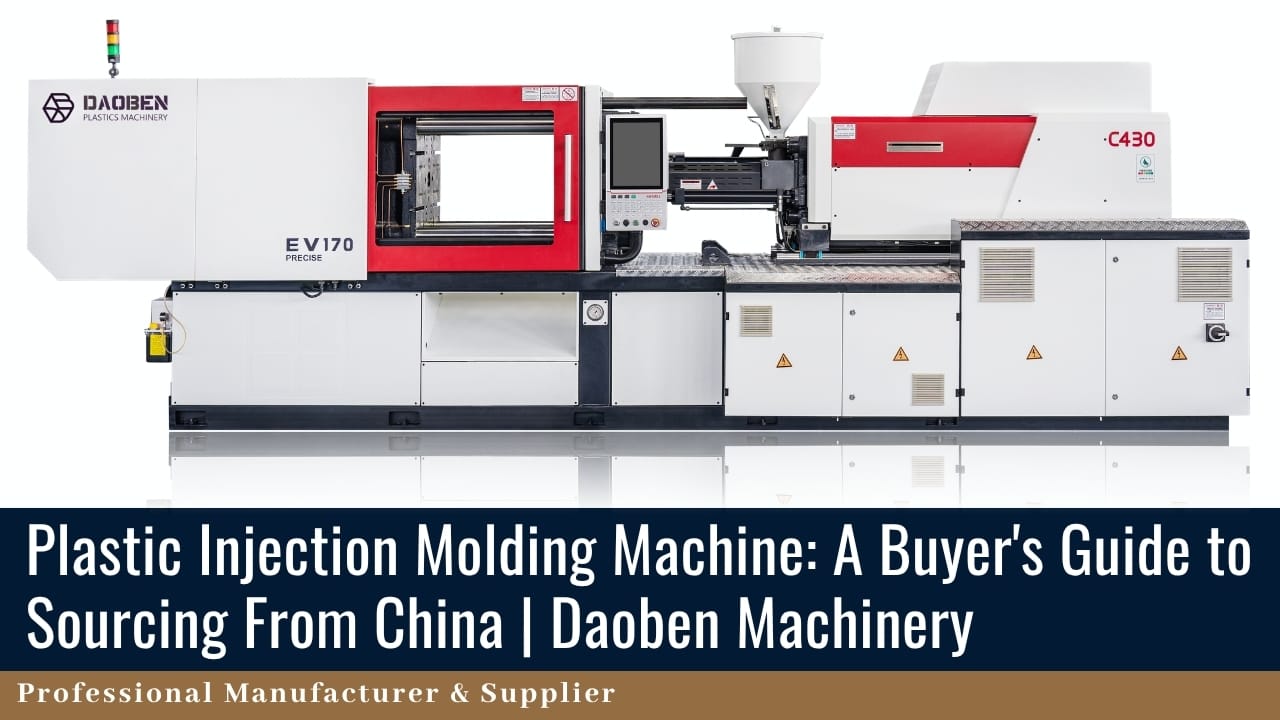
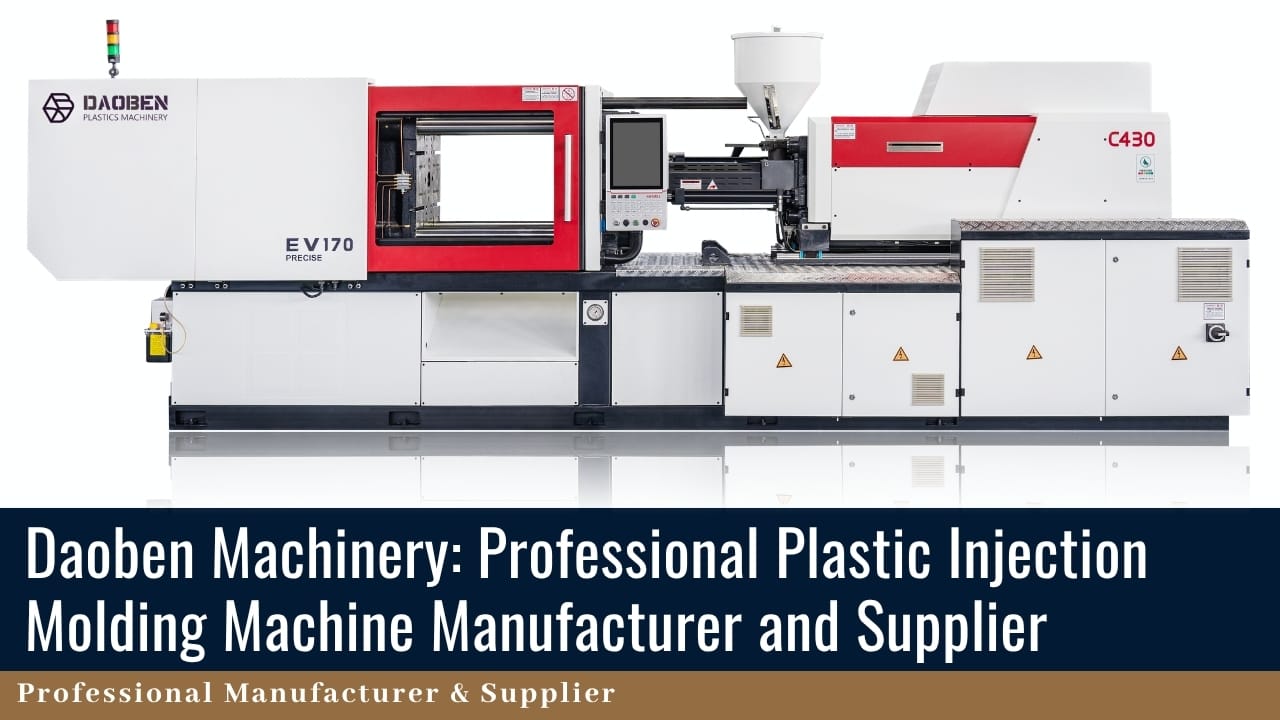
To choose plastic injection molding machine suppliers, first match clamping force and shot size to your part. Next, check that the machine type suits your production volume. Then compare total cost, lead time, and after-sales support, including spare parts stock, service response time, and training. Direct manufacturers usually offer better pricing and technical access than resellers.
What Should You Look for in Plastic Injection Molding Machine Suppliers?
Good plastic injection molding machine suppliers combine the right machine range, proven build quality, fair pricing, and reliable after-sales support. They also give clear technical data, meet safety standards for your market, and answer engineering questions before the sale. A supplier that cannot size a machine for your mold is a warning sign.
Manufacturer or Reseller?
First, decide whether you want to buy from a direct manufacturer or a trading company. Plastic injection molding machine suppliers fall into these two broad groups. A direct manufacturer designs and builds the machine in its own plant. Therefore, it can adjust screw size, platen size, or tie-bar spacing for your mold. A reseller, by contrast, can only sell what is in the catalog. In addition, direct buying removes one layer of margin from the price.
Safety and Quality Standards
Next, check that the machine meets the rules of your market. In Europe and the UK, buyers look for CE marking and ISO 20430, the international safety standard for injection moulding machines. In the USA, buyers check compliance with ANSI/PLASTICS B151.1 safety requirements. Also ask for the supplier’s ISO 9001 certificate. These documents show that the supplier controls its design and production process.
How Do You Match Clamping Force to Your Part Requirements?
Clamping force should match the projected area of your part multiplied by a material factor. For most plastics, that factor sits between 2 and 5 tons per square inch (about 0.3–0.8 tons/cm²). Add a 10–20% safety margin, then confirm that shot size, tie-bar spacing, and mold height also fit.
A Simple Sizing Example
Say your part is an appliance housing with a projected area of 150 square inches. The material is ABS, which needs about 3 tons per square inch. So 150 × 3 gives 450 tons. With a 10% margin, you need roughly 500 tons. As a result, a 500-ton machine is the right starting point.
Beyond Tonnage
Tonnage alone does not decide fit. Your shot weight should use about 30–80% of the machine’s barrel capacity. Below that, the resin can degrade from long residence time. Above that, you risk short shots. Moreover, the mold must fit between the tie bars and open far enough to eject deep parts like buckets or crates. A good supplier checks all of this against your mold drawing.
The table below shows typical applications by tonnage range.
| Tonnage Range | Typical Parts | Common Industries | Suggested Machine Type |
|---|---|---|---|
| 30–200 tons | Caps, closures, connectors, syringes, small gears | Medical, electronics, packaging | Servo hydraulic or all-electric |
| 200–500 tons | Appliance housings, buckets, toys, PET preforms | Consumer goods, packaging | Servo hydraulic or hybrid |
| 500–1,000 tons | Crates, chairs, auto interior trim, storage boxes | Logistics, furniture, automotive | Servo hydraulic |
| 1,000–2,000 tons | Bumpers, dashboards, large bins, TV frames | Automotive, home appliances | Servo hydraulic or two-platen |
| 2,000–4,000 tons | Pallets, wheelie bins, tanks, large automotive parts | Logistics, waste management, automotive | Two-platen |
How Does Production Volume Change the Machine You Need?
Production volume decides how much speed, automation, and energy efficiency you should pay for. High-volume, multi-shift plants gain the most from servo or electric drives, fast cycles, and robots. Lower-volume or job-shop plants often do better with a flexible servo hydraulic machine that handles many molds.
High-Volume Production
For packaging, caps, or crates running 24/7, every second of cycle time counts. For example, cutting a 12-second cycle by one second adds over 200,000 extra parts a year on one machine. Therefore, high-volume buyers should ask about dry cycle time, injection speed, and robot integration. Servo-driven pumps also cut energy use, which is often the largest running cost.
Low to Medium Volume
Job shops change molds often. So they need wide platens, generous tie-bar spacing, and easy setup. In this case, a mid-range servo hydraulic machine usually gives the best balance. You can learn more in our guide on high-volume injection molding machines.
Planning for Growth
Finally, think three to five years ahead. If you plan to add larger molds, a slightly bigger platen today saves you from buying a second machine later. Ask suppliers which models share molds, parts, and controls across sizes.
What Drives Machine Price and Lead Time?
Machine price depends mainly on tonnage, drive type, injection unit size, control system, and options such as robots or hot-runner controls. Lead time depends on whether the model is standard or custom, plus shipping. Standard machines from direct manufacturers often ship in 30–60 days, while custom builds can take longer.
What Affects the Price
Tonnage is the biggest factor, because larger machines need more steel and bigger hydraulics. In addition, servo or electric drives cost more upfront but lower power bills. Brand also plays a role, and plastic injection molding machine suppliers from different regions price very differently. European machines often cost more than Asian machines of the same size. For a fair look at that gap, read our comparison of Chinese vs. European injection molding machines. For a line-by-line view of costs, see our injection machine price breakdown.
Lead Time and Delivery
Always ask plastic injection molding machine suppliers for a written delivery schedule. It should include build time, factory acceptance testing, packing, and sea freight to your port. Also ask whether the supplier can run your mold at the factory before shipping. A factory trial catches problems early, when they are cheap to fix.
How Do Plastic Injection Molding Machine Suppliers Compare on After-Sales Support?
After-sales support covers installation, operator training, spare parts supply, remote diagnostics, and on-site service. The best plastic injection molding machine suppliers commit to clear response times, keep common parts in stock, and provide manuals and wiring diagrams in your language. Weak support turns small faults into long, costly shutdowns.
Questions to Ask About Service
Use these questions in your next supplier call:
- How fast do you respond to a breakdown, and is it remote or on-site?
- Do you have service engineers or partners in my country or region?
- Is installation and operator training included in the price?
- Can you diagnose faults remotely through the controller?
Questions to Ask About Spare Parts
- Which wear parts do you include with the machine, such as heater bands, seals, and nozzle tips?
- How long does a spare part take to reach my plant?
- Do you use standard global brands for hydraulics, servo motors, and electrics?
- How many years will you supply parts for this model?
Questions to Ask About Machine Specifications
- What are the dry cycle time and maximum injection speed?
- What is the shot weight range for my resin?
- What are the tie-bar spacing, maximum mold height, and opening stroke?
- What is the warranty period, and what does it cover?
Daoben Machinery: A Direct Manufacturer from 30 to 4,000 Tons
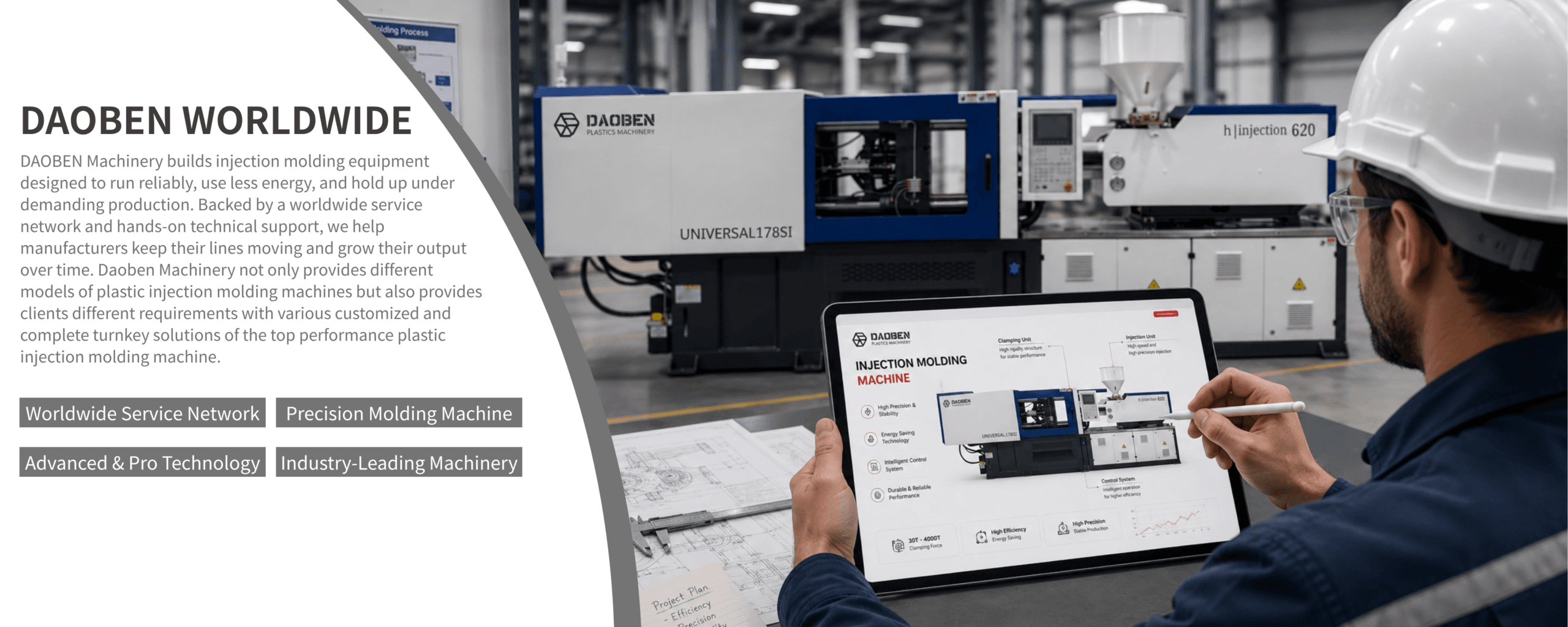
Among plastic injection molding machine suppliers, Daoben Machinery is a direct manufacturer. Its range runs from 30 to 4,000 tons, so one supplier can cover small precision parts and large logistics products. Buyers deal directly with the factory’s engineers, which speeds up sizing, customization, and after-sales support.
Applications Across the Range
At the small end, Daoben’s 30–200 ton machines mold caps, medical components, and electronic connectors. In the middle range, 300 to 800 ton models produce household goods, buckets, chairs, and crates. For example, a typical 600 × 400 mm vegetable crate runs on a 500–700 ton machine. At the top end, two-platen machines up to 4,000 tons handle pallets, large bins, and automotive bumpers. You can see a large-tonnage example in our 2000-ton injection molding machine guide.
Why Buyers Choose a Direct Manufacturer
Daoben supplies plants across the Middle East, Africa, Southeast Asia, Türkiye, Europe, and the Americas. Because it builds its own machines, it can adapt platens, screws, and controls to a buyer’s mold. Moreover, its engineers size each machine from the customer’s part and mold data before quoting.
Build Your Shortlist with Confidence
Choosing between plastic injection molding machine suppliers comes down to fit, support, and total cost. Start with your part and mold. Then size the clamping force, shot weight, and platen. After that, match the drive type to your production volume and compare suppliers on lead time and service, not price alone.
A short list of three plastic injection molding machine suppliers is usually enough. Send each one the same part drawing, resin type, and target cycle time. Then compare their answers to the questions above. The supplier that asks the most questions about your part is often the one that will support you best after the sale.
If you are ready to compare options, explore Daoben Molding Machines and send us your part or mold details. Our engineers will recommend the right tonnage and configuration and send you a clear quote. You can also review our injection molding machine brands comparison to see how different makers stack up.
Frequently Asked Questions
How do I choose plastic injection molding machine suppliers?
Start by sizing clamping force, shot weight, and platen size to your part and mold. Then shortlist plastic injection molding machine suppliers that build that range directly. Compare their safety certifications, lead times, and spare parts stock. Finally, ask for references from buyers in your industry or region before you place an order.
Are Chinese injection molding machine suppliers reliable?
Many Chinese manufacturers now build machines with global-brand hydraulics, servo motors, and controllers. Reliability depends on the specific supplier, not the country. Ask plastic injection molding machine suppliers in China for ISO 9001 certification, CE marking, factory test videos, and customer references. A factory visit or video audit also helps confirm build quality.
What clamping force do I need for my part?
Multiply your part’s projected area by a material factor, usually 2–5 tons per square inch. Then add a 10–20% safety margin. For example, a 150 square inch ABS part needs about 500 tons. Good plastic injection molding machine suppliers will check this against your mold drawing before quoting.
How long does it take to receive an injection molding machine?
Standard models often ship within 30–60 days of order. Custom machines, very large tonnage, or special options can take longer. Then add sea freight time to your port. Ask plastic injection molding machine suppliers for a written schedule that includes factory testing, packing, shipping, and installation dates.
What after-sales support should a supplier provide?
A supplier should provide installation, operator training, a spare parts kit, remote diagnostics, and clear breakdown response times. Plastic injection molding machine suppliers should also supply manuals and electrical diagrams in your language. Ask how long they will stock parts for your model, since machines often run for 10–15 years.