
Every production manager faces the same dilemma when sourcing equipment: how much should you actually pay for an injection molding machine? Without transparent pricing information, you risk overpaying by 30% or more. This injection molding machine price list removes the guesswork by showing real-world costs across different tonnages, configurations, and manufacturers.
Why Injection Molding Machine Prices Vary So Dramatically
The gap between the lowest and highest quotes can reach hundreds of thousands of dollars. Three factors create this spread.
Tonnage capacity determines the machine’s physical size and clamping force. A 150-ton unit starts around $35,000, while a 1,000-ton system exceeds $200,000. The metal, hydraulics, and structural components scale exponentially with size.
Control systems separate basic machines from precision equipment. Standard relay-based controls cost less initially but lack the repeatability modern production demands. PLC-based systems with closed-loop monitoring add $8,000-$15,000 to the base price, yet they reduce scrap rates and improve cycle consistency.
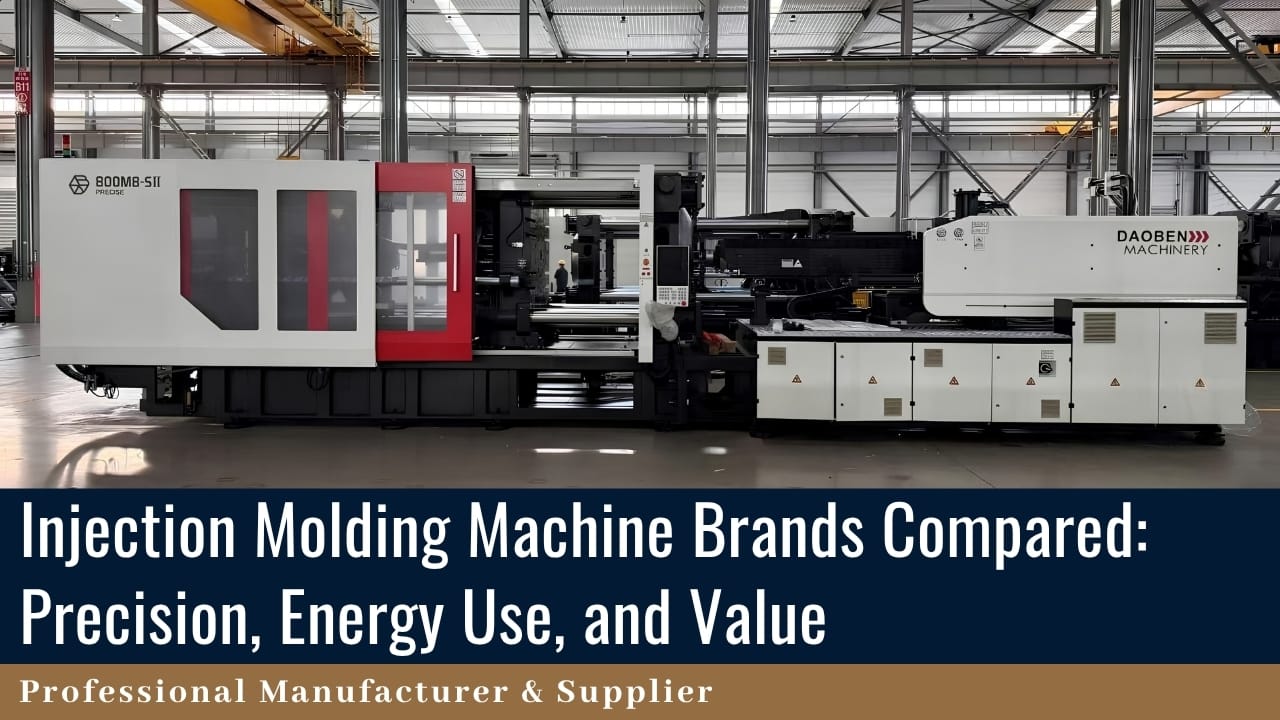
Brand positioning affects price without always reflecting capability. European brands command premium prices based on legacy reputation. Chinese manufacturers like Daoben Machinery deliver comparable specifications at 40-60% lower cost by optimizing production processes and direct-to-buyer sales models.

2025 Injection Molding Machine Price List by Tonnage
Here’s what you should expect to pay based on current market rates. These figures represent standard configurations with servo motors, PLC controls, and basic safety features.
Small Tonnage Range (30-150 Tons)
| Tonnage | Price Range (USD) | Typical Applications | Shot Size |
|---|---|---|---|
| 30 Ton | $18,000 – $28,000 | Medical components, connectors | 28-45g |
| 60 Ton | $22,000 – $35,000 | Electronic housings, caps | 55-90g |
| 90 Ton | $28,000 – $42,000 | Automotive clips, consumer goods | 90-140g |
| 120 Ton | $32,000 – $48,000 | Thin-wall containers, closures | 130-200g |
| 150 Ton | $38,000 – $58,000 | Small furniture parts, tool handles | 180-280g |
Small tonnage machines handle precision work where material savings matter. A 150 ton injection molding machine price sits in the sweet spot for many manufacturers producing moderate-volume parts with reasonable complexity. These machines fit in facilities with standard ceiling heights and electrical infrastructure.
Medium Tonnage Range (200-500 Tons)
| Tonnage | Price Range (USD) | Typical Applications | Shot Size |
|---|---|---|---|
| 200 Ton | $48,000 – $72,000 | Automotive interior parts, storage boxes | 280-420g |
| 250 Ton | $58,000 – $85,000 | Industrial crates, large housings | 380-580g |
| 350 Ton | $75,000 – $115,000 | Furniture components, appliance parts | 550-850g |
| 450 Ton | $95,000 – $145,000 | Large automotive components, pallets | 750-1,200g |
| 500 Ton | $110,000 – $165,000 | Industrial containers, large panels | 900-1,400g |
The 200 ton injection molding machine price represents a common entry point for manufacturers scaling up production. These machines handle most industrial applications without requiring specialized facility modifications. Power consumption rises significantly above 250 tons, so factor in long-term operating costs when comparing quotes.
Large Tonnage Range (600-2000 Tons)
Machines above 600 tons serve specialized applications where part size demands extra clamping force. A 1,000-ton unit typically costs $220,000-$320,000. At 2,000 tons, expect $380,000-$550,000 for a standard configuration.
These systems require reinforced floors, three-phase 480V power, and overhead crane access. Installation adds another $15,000-$40,000 depending on facility readiness. Production managers rarely purchase this equipment without detailed ROI analysis and multi-year production contracts in place.
Understanding the Haitian Injection Molding Machine Price List
Haitian machines dominate global market share through aggressive pricing and reliable performance. Their haitian injection molding machine price list typically runs 15-25% below European equivalents while matching core specifications.
A Haitian MA series 180-ton machine costs approximately $42,000-$52,000 with standard servo drives. Their Venus II series adds advanced controls and energy efficiency for $8,000-$12,000 more. Many procurement teams use Haitian pricing as a baseline when negotiating with other suppliers.
What these machines offer:
- Proven hydraulic systems with 12+ year service life
- Global parts availability through regional distributors
- Standard warranty coverage of 12-18 months
- Training resources in multiple languages
- Retrofit compatibility with third-party auxiliary equipment
What they don’t always include:
- Customized control interfaces for specific production needs
- Rapid response technical support in all time zones
- Factory acceptance testing before shipment
- Detailed documentation for regulatory compliance
For standard production runs with established processes, Haitian equipment delivers solid value. Operations requiring tight process control or frequent changeovers may need more sophisticated alternatives.
Configuration Options That Impact Your Injection Molding Machine Price List
Every machine purchase involves dozens of specification decisions. Five categories create the largest price differences.
Injection Unit Type
Standard screw designs suit general-purpose molding with common resins. They cost $0 additional but lack optimization for specific materials.
Barrier screws improve mixing quality for glass-filled and flame-retardant compounds. Add $3,500-$6,000 to base price. The investment reduces purging time and improves part consistency when running engineering resins.
Reciprocating screws with specialized geometry handle thin-wall applications or fiber-reinforced materials. Expect $8,000-$14,000 premiums. These become cost-effective above 100,000 annual production volumes.
Clamping System Architecture
Toggle mechanisms dominate the market through mechanical efficiency and lower maintenance. They represent the standard configuration in most price quotes.
Hybrid systems combine toggle clamping with hydraulic assists. They improve opening speed and reduce tie bar stress. Add $12,000-$22,000 for machines above 300 tons.
Full hydraulic clamping offers maximum flexibility for insert molding and multi-stage operations. Premium ranges from $18,000-$35,000 depending on tonnage.
Control System Sophistication
Basic PLC controllers handle simple two-stage molding cycles. They’re included in base pricing and work fine for single-material production.
Advanced PLCs with touchscreen HMIs enable real-time process monitoring and data collection. Budget an additional $6,000-$11,000. The interface allows operators to track trends and identify problems before defects occur.
Industry 4.0 integration packages connect machines to MES systems and enable remote diagnostics. Premium costs run $15,000-$28,000 but become essential for lights-out manufacturing and automated quality verification.
Energy Efficiency Features
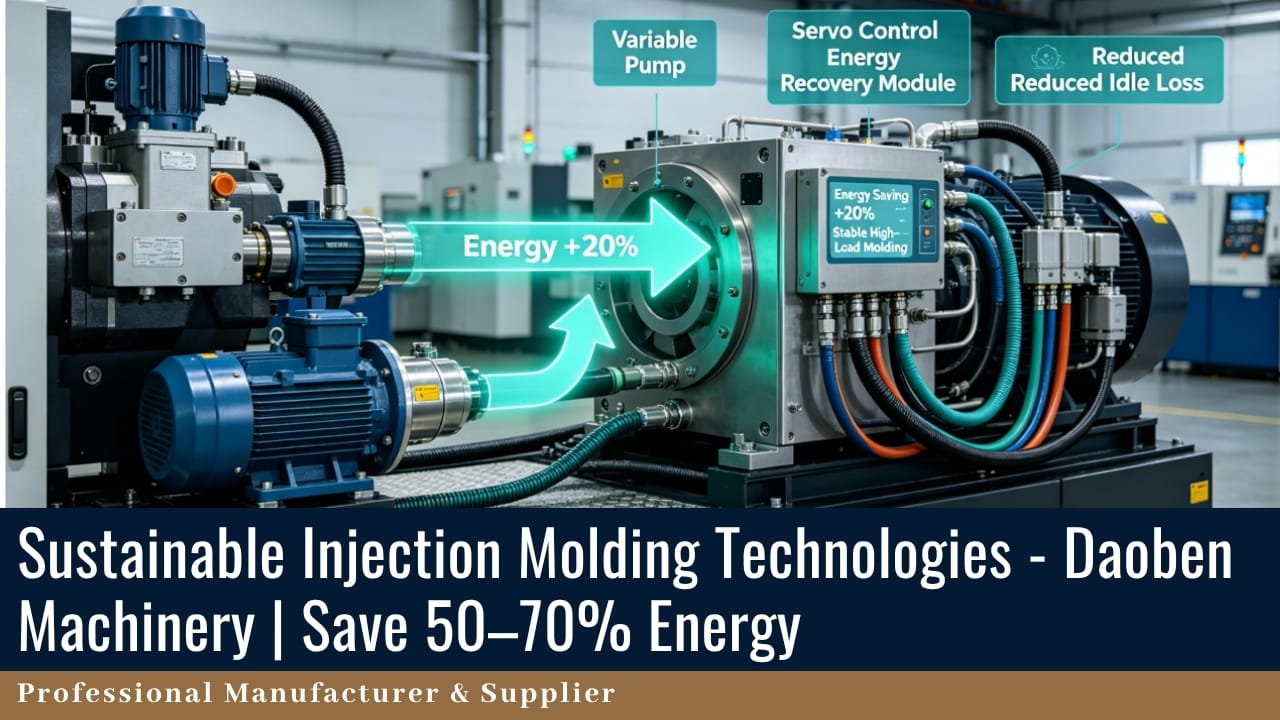
Standard servo motors replace fixed-displacement pumps and reduce energy use by 40-60% compared to older hydraulic systems. Most 2025 machines include servos in base pricing.
Variable frequency drives optimize motor speed throughout the molding cycle. They add $4,000-$7,000 but generate payback within 18-24 months through lower utility bills.
Accumulator systems recover and reuse hydraulic energy during clamp opening. Expect $8,000-$14,000 additional cost with 2-3 year payback periods on high-volume production.
Safety and Ergonomics
Standard light curtains meet basic OSHA requirements and cost $2,000-$3,500 installed.
Full perimeter guarding with interlocked gates provides enhanced protection for facilities with multiple operators. Budget $5,000-$9,000 extra. Insurance carriers sometimes reduce premiums when comprehensive guarding is documented.
Operator platforms with anti-fatigue surfaces improve accessibility for tool changes and maintenance. These range from $3,000-$6,000 but reduce injury rates and downtime.
Hidden Costs Beyond the Injection Molding Machine Price List
The purchase price represents just 60-75% of total acquisition cost. Smart buyers budget for these additional expenses before signing contracts.
Freight and logistics add 3-8% of machine value depending on origin and destination. Ocean freight from China to U.S. ports costs $8,000-$15,000 for a 200-ton machine. Inland transportation, customs clearance, and drayage add another $3,000-$6,000.
Installation and commissioning require skilled technicians and specialized equipment. Plan for $8,000-$18,000 on medium tonnage machines. This includes electrical connections, coolant systems, material handling integration, and initial process setup.
Auxiliary equipment often equals 25-40% of machine cost:
- Mold temperature controllers: $2,500-$6,000
- Material dryers: $3,000-$12,000
- Granulators: $4,000-$15,000
- Robots: $18,000-$65,000
- Water chillers: $6,000-$25,000
Tooling investments vary wildly based on part complexity. Simple two-cavity molds start around $8,000. Complex multi-cavity tools with hot runners exceed $150,000. Factor in at least one spare tool when planning production startup.
Training and documentation ensures operators extract full capability from new equipment. Budget $2,000-$5,000 for on-site training and another $1,000-$2,000 for translated manuals and safety documentation if buying internationally.
How Daoben Machinery Pricing Compares in the Current Market
As a direct manufacturer serving global markets since 2003, our pricing structure removes distributor markups and unnecessary complexity.
Our plastic injection molding machine price guide details costs across our full 30-4000 ton range. You’ll find our quotes typically run 25-35% below equivalent European machines while maintaining comparable specifications.
A 180-ton Daoben servo machine costs $44,000-$52,000 depending on control system and automation level. That includes:
- Japanese servo motors and drives
- Siemens or Schneider PLC controllers
- Proportional pressure/flow valves
- Standard safety interlocks and light curtains
- 24-month warranty with parts coverage
- English technical documentation
- Remote diagnostics support
We build specific equipment types that match common production needs. Our plastic chair making machine configurations optimize cycle times for furniture manufacturing. The toggle clamp injection molding machine lineup delivers reliable performance for high-volume consumer goods.
For detailed breakdowns showing where your money goes, review our injection machine price breakdown analysis. We publish component-level costs so procurement teams can evaluate alternatives intelligently.
Making Smart Decisions When Comparing Price Lists
Lowest quote rarely delivers best value. Six evaluation criteria matter more than sticker price.
Operating cost over five years often exceeds purchase price. Calculate energy consumption, maintenance requirements, and expected downtime. A $15,000 premium for servo drives typically saves $30,000-$50,000 in electricity over the machine’s working life.
Parts availability and supply chain reliability prevent catastrophic downtime. Verify the supplier maintains inventory for critical wear components. Ask about average lead times for hydraulic seals, heating elements, and electronic modules.
Technical support responsiveness determines how quickly production resumes after problems occur. Test support systems before signing contracts. Call the help desk with technical questions and measure response quality and speed.
Upgrade pathways and retrofit options extend useful equipment life. Machines with standardized interfaces accommodate improved controls, robots, and process monitoring without requiring wholesale replacement.
Resale value and market acceptance matter when facility needs change. Well-known brands and current model years command stronger secondary market prices. This provides financial flexibility if production shifts or consolidation occurs.
Total cost of ownership calculations require honest assumptions about utilization rates, reject percentages, and maintenance intervals. Most manufacturers underestimate ongoing costs by 15-25% in initial planning.
Regional Price Variations and Sourcing Strategies
Geographic factors create systematic price differences that smart buyers exploit.
Chinese manufacturers offer the lowest base prices through optimized production scale and local supply chains. Quality ranges from problematic to excellent depending on supplier selection. Third-party inspections and factory audits reduce risk substantially.
European suppliers charge premium prices justified by precision engineering and comprehensive support networks. These make sense for applications where process repeatability drives profitability or regulatory requirements demand validated systems.
Japanese brands balance quality and cost while commanding loyalty through reliability records. Their pricing typically falls 10-20% above Chinese equivalents and 15-25% below European options.
North American manufacturers serve specialized niches where customization matters more than standardized production. Expect prices 40-60% above Asian alternatives but with rapid response times and application engineering support.
Used equipment markets provide viable alternatives when capital constraints limit options. Well-maintained machines from reputable sellers cost 40-65% of new equivalents. Insist on detailed maintenance records and operational testing before purchase.
Negotiation Leverage Points That Lower Your Final Price
Suppliers expect negotiation and build margin into initial quotes. Five tactics generate meaningful reductions.
Multiple machine orders trigger volume pricing automatically. Two identical units often cost 12-18% less per machine than single purchases. Suppliers value guaranteed volume over theoretical future orders.
Payment terms affect total cost significantly. Full payment before shipment earns 3-5% discounts. Letters of credit reduce this to 1-2%. Payment after delivery commands premium pricing.
Simplified specifications eliminate unnecessary customization costs. Standard color schemes, control interfaces, and documentation languages cost nothing extra. Each special request adds 2-8% to base price.
Flexible delivery schedules allow manufacturers to optimize production flows. Accepting lead times of 10-14 weeks instead of demanding rush delivery saves 5-10% on most orders.
Package deals including auxiliary equipment leverage supplier relationships with component vendors. Buying everything from one source rarely achieves lowest possible pricing, but consolidated service and warranty coverage often justify small premiums.
Real-World Price Examples from Recent Transactions
These figures represent actual 2024-2025 transactions with transparent breakdowns. All prices are FOB origin before freight and installation.
Medical Device Manufacturer – 60 Ton Electric Machine
- Base machine with servo drives: $28,500
- Cleanroom-compatible guarding: $4,200
- Validated process monitoring: $6,800
- Extended warranty (3 years): $2,100
- Total: $41,600
Automotive Tier 2 Supplier – 350 Ton Hybrid
- Standard hybrid machine: $92,000
- High-speed injection unit: $11,500
- Advanced mold protection: $5,400
- Robot integration package: $8,900
- Total: $117,800
Consumer Goods Producer – Dual 200 Ton Servos
- Two identical 200-ton machines: $47,000 each
- Volume discount: -$8,000 combined
- Spare parts package: $6,500
- Training (two operators, two technicians): $4,200
- Total: $96,700
Questions to Ask Suppliers About Their Price Lists
Get clarity on what’s included and excluded before comparing quotes.
Ask about standard warranty coverage. Some suppliers include just 90 days while others provide 18-24 months. Understand what components fall under warranty and which are considered consumables.
Clarify shipping and duty responsibility. FOB pricing leaves you handling all logistics. DDP pricing includes delivery to your door but builds in contingency that may exceed actual costs.
Request detailed payment schedules. Typical terms require 30% deposit, 60% before shipment, 10% after commissioning. Negotiate terms that align with your cash flow capabilities.
Confirm lead times and penalty clauses for delays. Standard production runs 8-12 weeks, but demand surges extend this to 14-18 weeks. Late delivery compensation protects against revenue loss from missed production targets.
Verify included documentation and training. Basic operations training should be standard. Advanced maintenance training and detailed technical manuals sometimes cost extra.
When to Pay More Than Bottom-Dollar Quotes Suggest
Cheapest option often delivers expensive lessons. Four scenarios justify premium pricing.
Critical production applications where downtime costs exceed $5,000 per hour demand proven reliability over initial savings. The $25,000 premium for a European machine disappears quickly if it prevents just 10 hours of unplanned downtime over five years.
Regulated industries (medical, aerospace, food contact) require extensive documentation and validated processes. Suppliers experienced in these markets charge more but deliver compliance that stands up to regulatory audits.
Startup operations without experienced technical staff benefit from comprehensive training and responsive support. The right supplier acts as an extension of your engineering team during critical startup phases.
Rapid payback projects with confirmed demand and profitable margins can absorb higher equipment costs. When ROI periods fall under 12 months, optimizing cycle time and uptime matters more than minimizing purchase price.
Partner with a Manufacturing Team That Understands Your Reality
Transparent pricing should be the starting point, not a competitive advantage. At Daoben Machinery, we publish detailed cost information because informed buyers make better decisions for their operations.
We manufacture injection molding machines from 30 to 4,000 tons with straightforward pricing based on actual production costs, not market positioning games. Our engineering team works directly with your technical staff to configure equipment that matches your specific applications.
Contact us for detailed quotations on your next machine purchase. We’ll provide component-level breakdowns, operational cost projections, and honest assessments of which configurations deliver real value for your production requirements.
Visit our website to explore specifications, request quotes, and download technical resources. Our team responds to inquiries within 24 hours with practical solutions, not sales scripts.