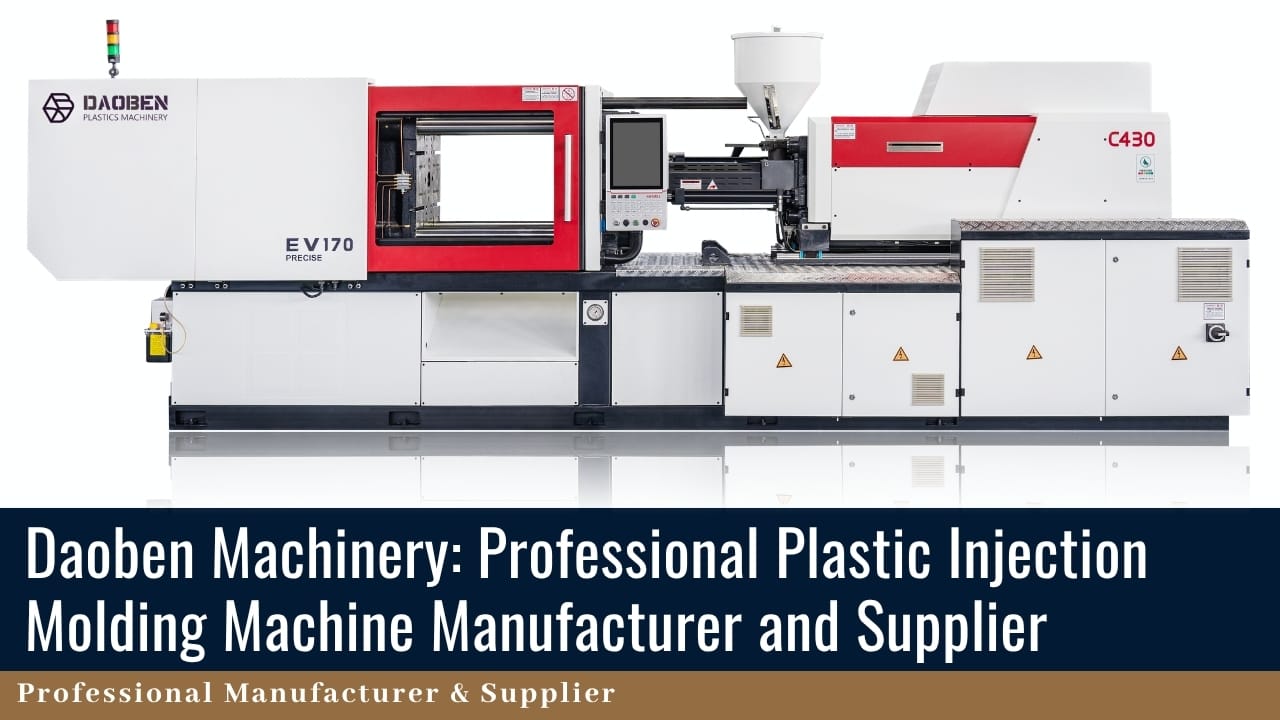
A 120-ton servo-hydraulic press can run caps, clips, and housings around the clock on less floor space than a delivery van. For most small plants, that size is the sweet spot. A small plastic injection molding machine in the 60–250 ton range covers most consumer, packaging, and technical parts that a growing shop sells.
However, “small” does not mean “simple.” The wrong machine wastes power, sits idle, or cannot fill the next mold a customer sends. So the real question is not which brand is best. Instead, it is which drive type, tonnage, and shot size fit your parts and your budget.
This guide compares the main machine types for small-scale production. It also covers tonnage sizing, energy use, and price bands. Finally, it explains how buyers in the USA, UK, Türkiye, Malaysia, and the Gulf can set up a first line without overspending.
Quick Answer: The best small plastic injection molding machine for most small-scale plants is a servo-hydraulic toggle machine between 60 and 250 tons. It costs far less than an all-electric press, cuts energy use by up to 35% versus fixed pumps, and handles PP, PE, ABS, and PC parts. Choose all-electric only for tight-tolerance or cleanroom work.
What Makes a Small Plastic Injection Molding Machine Right for Small-Scale Production?
A small plastic injection molding machine suits small-scale production when its clamping force, shot size, and mold space match your real parts with a 10–20% margin. It should also run on your local power supply, fit your floor, and pay back within two to three years. Tonnage alone never decides the fit.
Match clamping force to projected area
First, size the clamp. A common rule multiplies the part’s projected area (cm²) by a resin factor of about 0.3–0.8 tons per cm². For example, a 150 cm² PP lid needs roughly 60–90 tons. Therefore, a 90- or 120-ton machine gives safe headroom. Our small injection molding machine tonnage guide walks through this math with real examples.
Check shot size and mold space
Next, check the shot. The part plus runner should use 20–80% of the barrel’s shot capacity. Below 20%, the melt sits too long and degrades. Above 80%, the screw struggles to hold steady pressure. Also confirm the tie-bar spacing and daylight opening fit your mold base.
Plan for the next order
Finally, think one year ahead. Many small shops buy too small, then lose a bigger job. Because of this, buyers often step up one size, such as 160 tons instead of 120, when the price gap is small.
Which Types of Small Plastic Injection Molding Machine Should You Compare?
Small-scale plants usually compare four machine types: fixed-pump hydraulic, servo-hydraulic, hybrid, and all-electric. Servo-hydraulic machines offer the best balance of price, power savings, and repair ease. All-electric presses win on precision and quiet running. Vertical machines suit insert molding. Desktop units only suit training and very short runs.
| Machine type | Typical tonnage | Best for | Energy use vs fixed pump | Price level |
|---|---|---|---|---|
| Fixed-pump hydraulic | 60–300 t | Low-cost, simple parts | Baseline | Lowest |
| Servo-hydraulic toggle | 60–300 t | Caps, housings, household goods | Up to 35% lower | Low to mid |
| Hybrid (servo-electric injection + hydraulic clamp) | 90–400 t | Thin-wall and precision technical parts | Often 40–50% lower | Mid |
| All-electric | 30–300 t | Medical, optics, electronics | Often more than 50% lower | High |
| Vertical (C-frame or rotary) | 15–200 t | Insert molding, overmolding cables | Varies by drive | Mid |
| Desktop / benchtop | Under 10 t | Training, lab samples | Very low total use | Very low |
Energy figures come from published tests. For instance, Plastics Technology reports savings of up to 35% for servo-driven hydraulic pumps versus conventional drives. Meanwhile, Engel states that all-electric machines can more than halve power use on average.
When a desktop machine makes sense
Desktop units help schools, makerspaces, and R&D teams test resins. However, they cannot hold the pressure or repeatability a paying customer expects. See our notes on the desktop injection molding machine for its real limits.
How Much Does a Small Plastic Injection Molding Machine Cost to Buy and Run?
A new small plastic injection molding machine from a Chinese factory usually costs USD 15,000–60,000 for 60–250 tons, before freight and duty. European brands often cost two to three times more for the same tonnage. Running costs depend mostly on power, so drive type matters more than sticker price over five years.
Upfront price bands
As a rough guide, servo-hydraulic machines from 90 to 160 tons sit near the low end. Hybrid and all-electric models sit higher. In addition, budget for a chiller, hopper dryer, and mold temperature controller. These auxiliaries often add 15–25% to the machine price.
Power and payback
Power is the largest running cost. For example, a 120-ton press running 6,000 hours a year at 10 kW average draws about 60,000 kWh. If a servo drive cuts that by 30%, the plant saves 18,000 kWh each year. At USD 0.12 per kWh, that is over USD 2,000 a year per machine.
Local grid and duty checks
Also confirm voltage and frequency. The USA and Saudi Arabia run 60 Hz grids. By contrast, the UK, Türkiye, Malaysia, UAE, Qatar, South Africa, and Morocco use 50 Hz. A good supplier builds the motor and cabinet for your grid, so no converter is needed.
Why Do Small Plants Choose Daoben Small Plastic Injection Molding Machines?
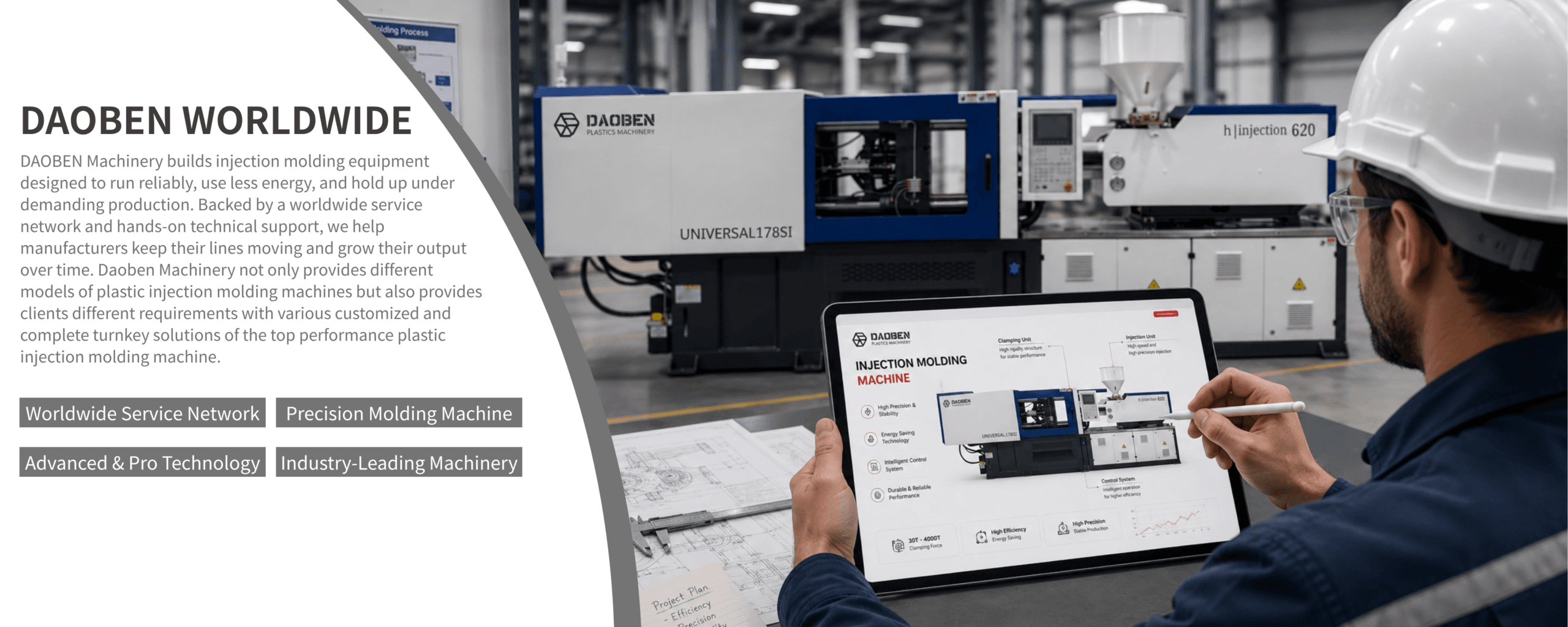
Small plants choose Daoben because the range starts small, the machines use servo-hydraulic drives as standard, and the factory sells direct. Daoben Machinery, based in Ningbo, China since 2014, builds machines from 30 to 4,000 tons and exports to more than 35 countries with OEM options.
Series that fit small-scale work
The Universal series targets buyers who want a stable, easy-to-run, economical machine. Meanwhile, the M8SII series focuses on energy saving for long daily runs. For thin-wall or precision jobs, the EV Hybrid pairs a servo-electric injection unit with a hydraulic clamp.
Room to grow
Because one supplier covers small and mid tonnage, a shop can add a 200-ton injection molding machine later with the same controller layout. As a result, operators need less retraining, and spare parts overlap.
Support for first-time buyers
Daoben also offers turnkey help with auxiliaries such as dryers, chillers, and loaders. So a new plant can source one complete cell instead of dealing with five vendors.
How Do You Set Up a Small-Scale Injection Molding Line Step by Step?
To set up a small-scale line, first confirm your parts and resin, then size the machine, then add drying, cooling, and material handling. After that, plan floor layout, power, and water. Finally, run trial molds before the supplier ships. This order prevents costly rework after delivery.
Start with the part list
List each part, its resin, weight, projected area, and yearly volume. This single sheet drives every later choice. Moreover, it lets suppliers quote the right machine fast.
Add the right auxiliaries
Hygroscopic resins such as PA, PC, and PET need a dryer. Almost every mold needs a chiller. Therefore, plan these before the machine arrives, not after. Hot climates in Saudi Arabia, Qatar, and the UAE need larger chillers because cooling water runs warmer.
Test before shipping
Ask the factory to run your mold, or a similar one, before shipping. Then check part weight, cycle time, and flash. This simple step catches most sizing errors early.
Build a Profitable Small-Scale Plant With the Right Machine
A small plant earns money when its machines stay busy, use little power, and rarely break down. In practice, that means a right-sized servo-hydraulic press, matched auxiliaries, and a supplier who answers the phone after delivery.
Start with your part list and a clear tonnage target. Then compare drive types on five-year cost, not just price. Most small manufacturers find that a 90–200 ton servo machine covers 80% of their work.
When you are ready, explore the full range of Daoben injection molding machines and send your part details for a sizing quote. The team can suggest a machine, auxiliaries, and layout for your floor.
FAQ
What size injection molding machine do I need for a small business?
Most small businesses need a small plastic injection molding machine between 60 and 250 tons. This range covers caps, lids, clips, housings, and household items. Size it by multiplying projected part area by 0.3–0.8 tons per cm², then add 10–20% headroom for future molds and resin changes.
Is a servo-hydraulic or all-electric machine better for small-scale production?
A servo-hydraulic machine suits most small-scale production because it costs less and repairs are simple. All-electric machines use less power and hold tighter tolerances, so they fit medical and electronics parts. For general consumer parts, a servo-hydraulic small plastic injection molding machine usually gives the faster payback.
How much floor space does a 120-ton machine need?
A 120-ton toggle machine usually measures about 4.5–5 meters long and 1.3–1.5 meters wide. Add at least one meter on each side for mold changes and maintenance. Also leave space for a dryer, chiller, and conveyor, since a small plastic injection molding machine rarely runs alone.
Can a small machine run engineering plastics like PC or nylon?
Yes, a small plastic injection molding machine can run PC, PA, and POM if it has the right screw and barrel heaters. These resins need drying before molding and steady melt temperature. Ask the supplier for a screw designed for engineering plastics and confirm the barrel reaches 300 °C or more.
How long does a small injection molding machine last?
A well-maintained small plastic injection molding machine often runs 15–20 years. Regular oil changes, filter swaps, and screw checks extend its life. Servo-hydraulic models also run cooler oil, which slows seal wear. Keep a daily checklist and service log to protect resale value.